

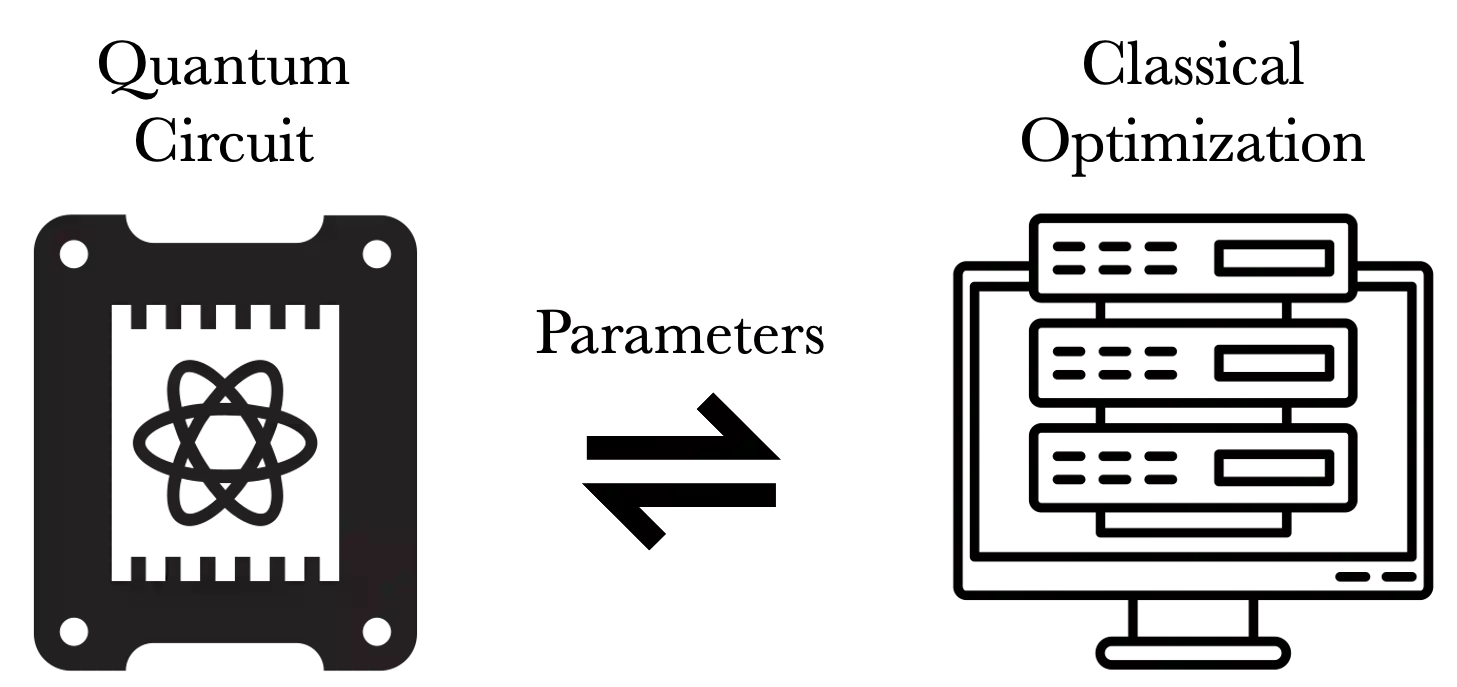
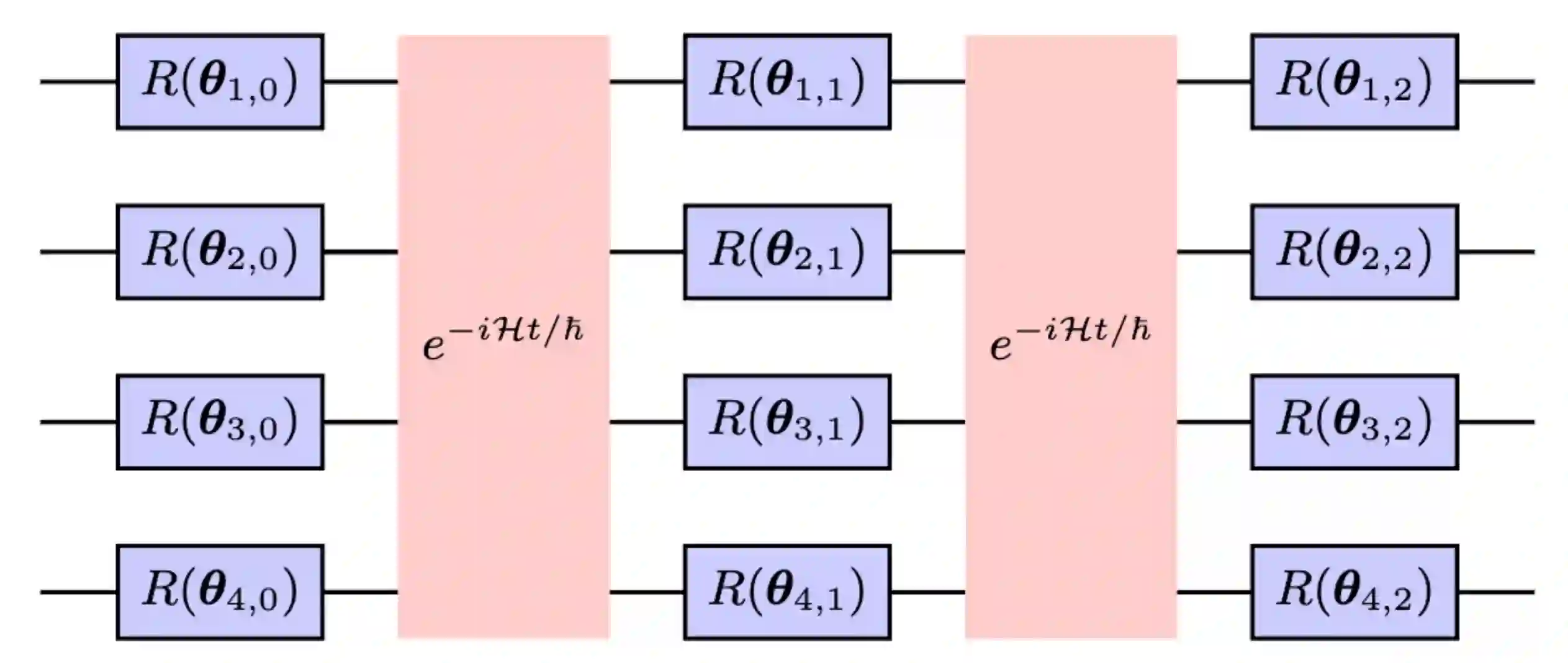
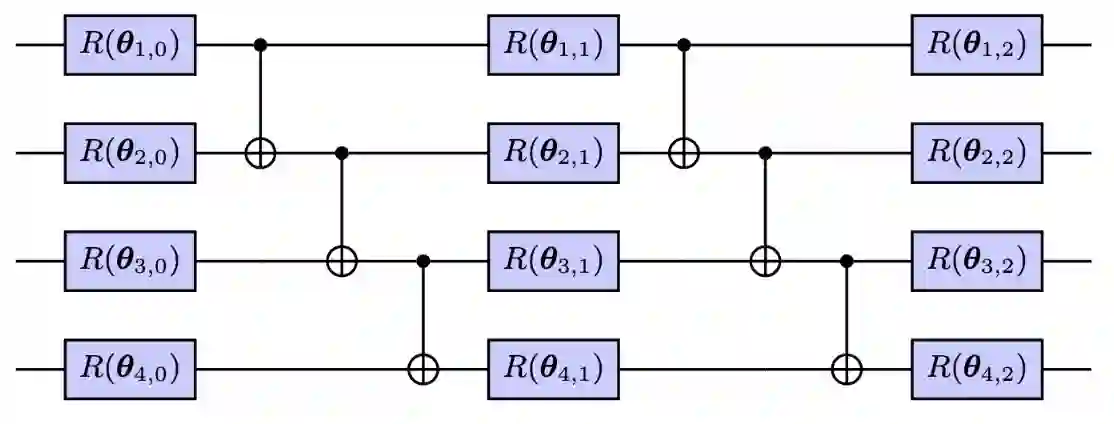
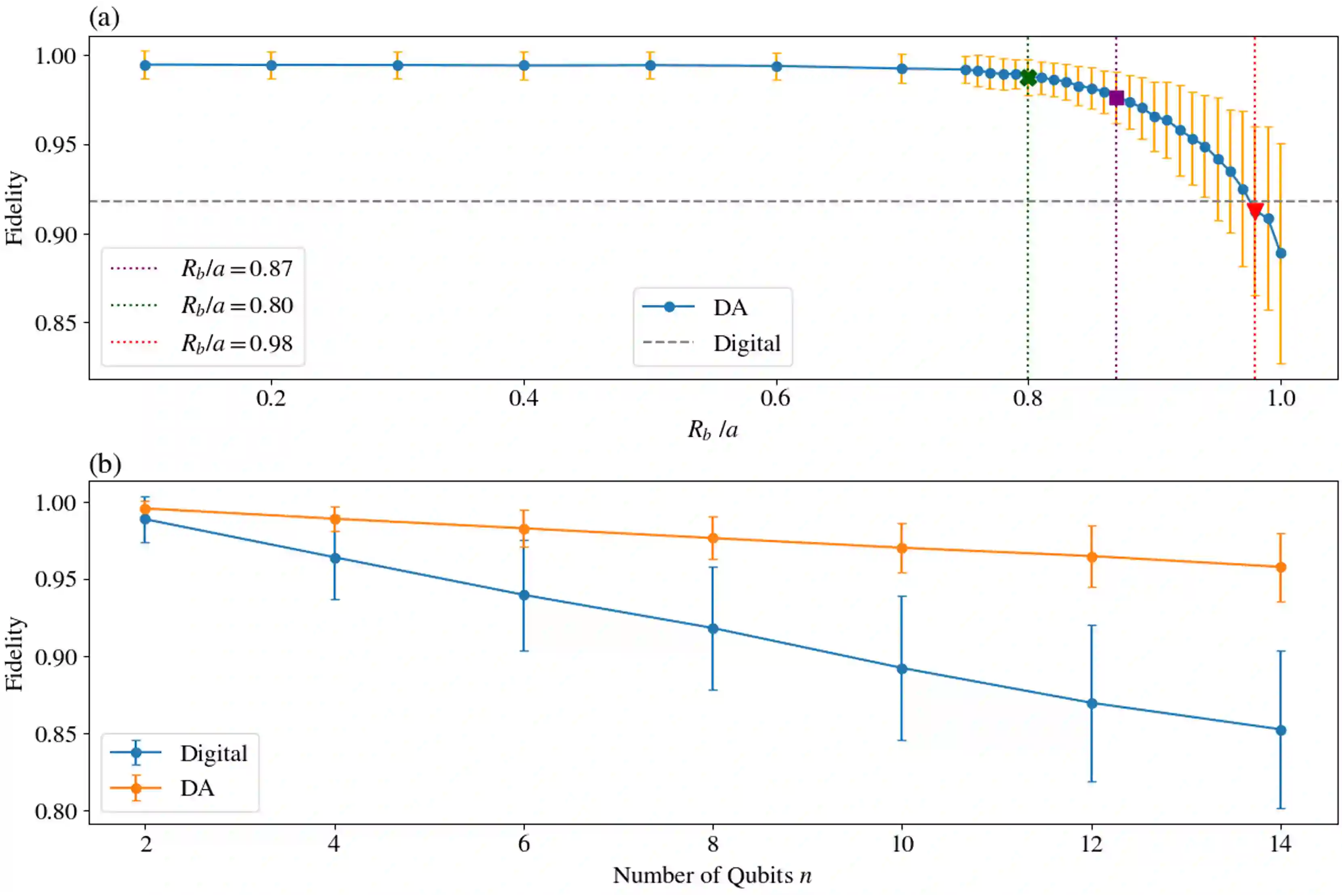
We propose hybrid digital-analog learning algorithms on Rydberg atom arrays, combining the potentially practical utility and near-term realizability of quantum learning with the rapidly scaling architectures of neutral atoms. Our construction requires only single-qubit operations in the digital setting and global driving according to the Rydberg Hamiltonian in the analog setting. We perform a comprehensive numerical study of our algorithm on both classical and quantum data, given respectively by handwritten digit classification and unsupervised quantum phase boundary learning. We show in the two representative problems that digital-analog learning is not only feasible in the near term, but also requires shorter circuit depths and is more robust to realistic error models as compared to digital learning schemes. Our results suggest that digital-analog learning opens a promising path towards improved variational quantum learning experiments in the near term.
翻译:我们提出在里德伯原子阵列上的混合数模学习算法,将量子学习潜在的实际效用和近期可行性,与中性原子快速扩展的架构相结合。我们的构建在数字场景中仅需单量子比特操作,在模拟场景中则需根据里德伯哈密顿量进行全局驱动。我们对算法在经典数据与量子数据上进行了全面的数值研究,分别对应手写数字分类和无监督量子相边界学习。我们在两个代表性问题上表明,数模学习不仅在近期可行,而且与数字学习方案相比,所需电路深度更短,且对实际误差模型更具鲁棒性。我们的结果表明,数模学习为近期改进变分量子学习实验开辟了有前景的路径。




相关内容



 微信扫码咨询专知VIP会员