

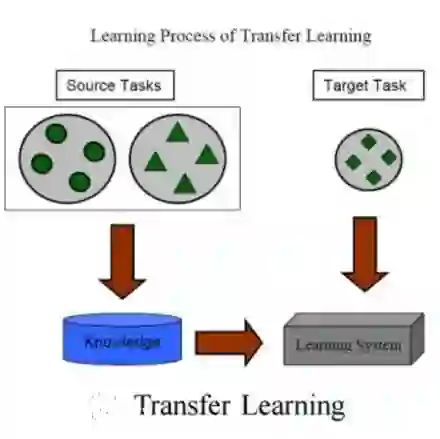
Large Language Models (LLMs) have been shown to perform well for many downstream tasks. Transfer learning can enable LLMs to acquire skills that were not targeted during pre-training. In financial contexts, LLMs can sometimes beat well-established benchmarks. This paper investigates how well LLMs perform in the task of forecasting corporate credit ratings. We show that while LLMs are very good at encoding textual information, traditional methods are still very competitive when it comes to encoding numeric and multimodal data. For our task, current LLMs perform worse than a more traditional XGBoost architecture that combines fundamental and macroeconomic data with high-density text-based embedding features.
翻译:大语言模型(LLMs)已被证明在众多下游任务中表现优异。通过迁移学习,LLMs能够获得预训练阶段未专门针对的技能。在金融领域,LLMs有时能够超越成熟的基准模型。本文探究了LLMs在企业信用评级预测任务中的表现。我们发现,尽管LLMs在编码文本信息方面表现出色,但在处理数值与多模态数据时,传统方法仍具有显著竞争力。对于本研究所关注的任务,当前LLMs的表现不及结合了基本面数据、宏观经济数据以及高密度文本嵌入特征的传统XGBoost架构。




相关内容




 微信扫码咨询专知VIP会员