

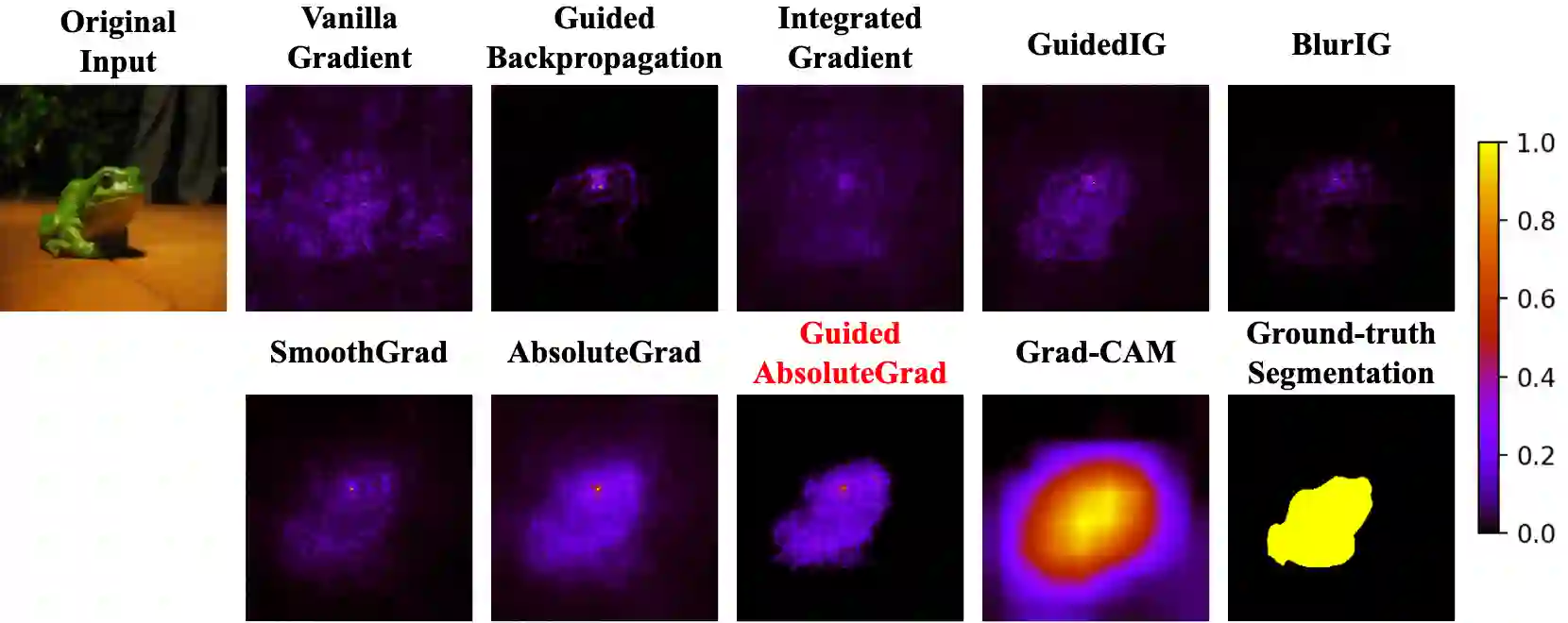
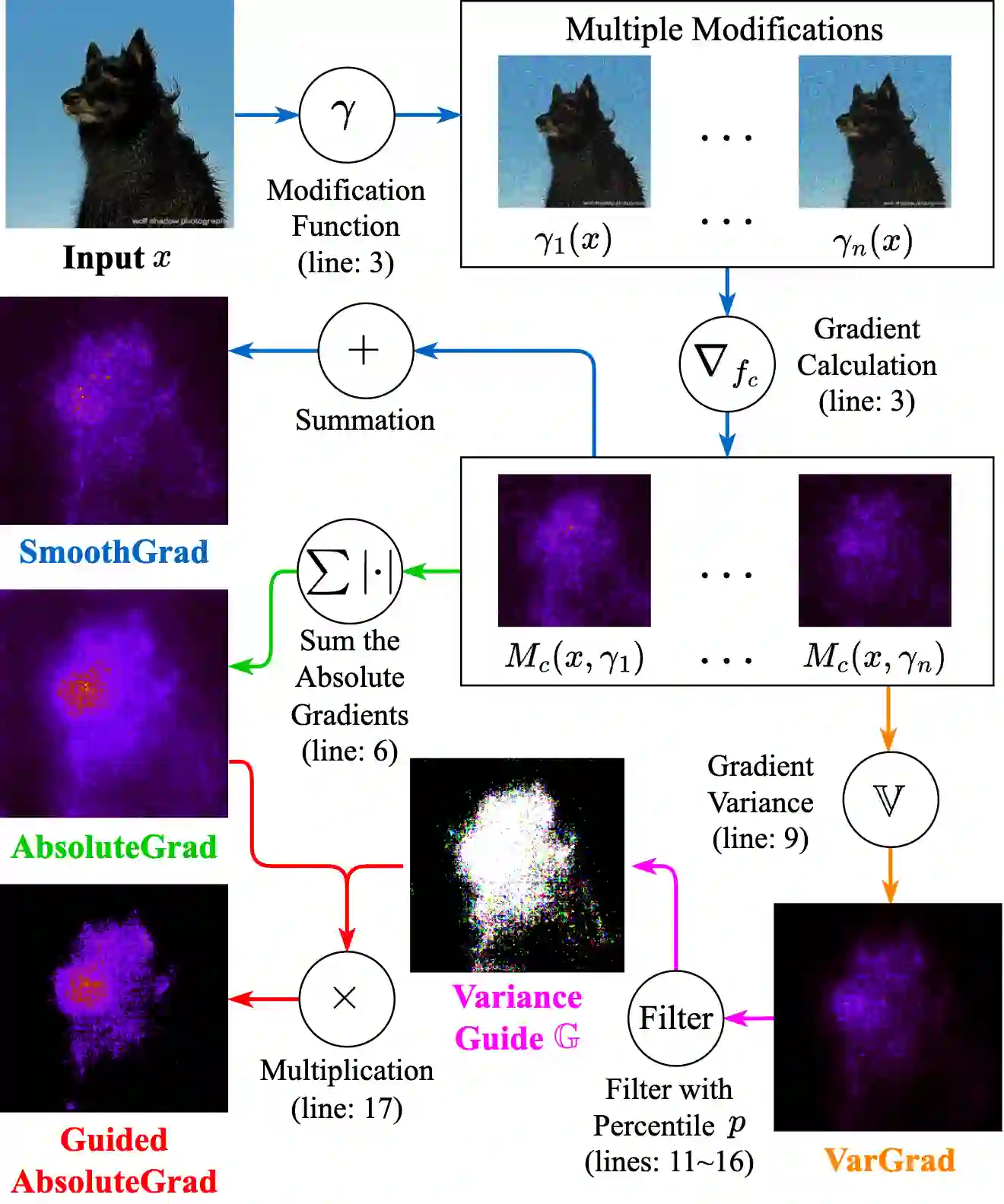
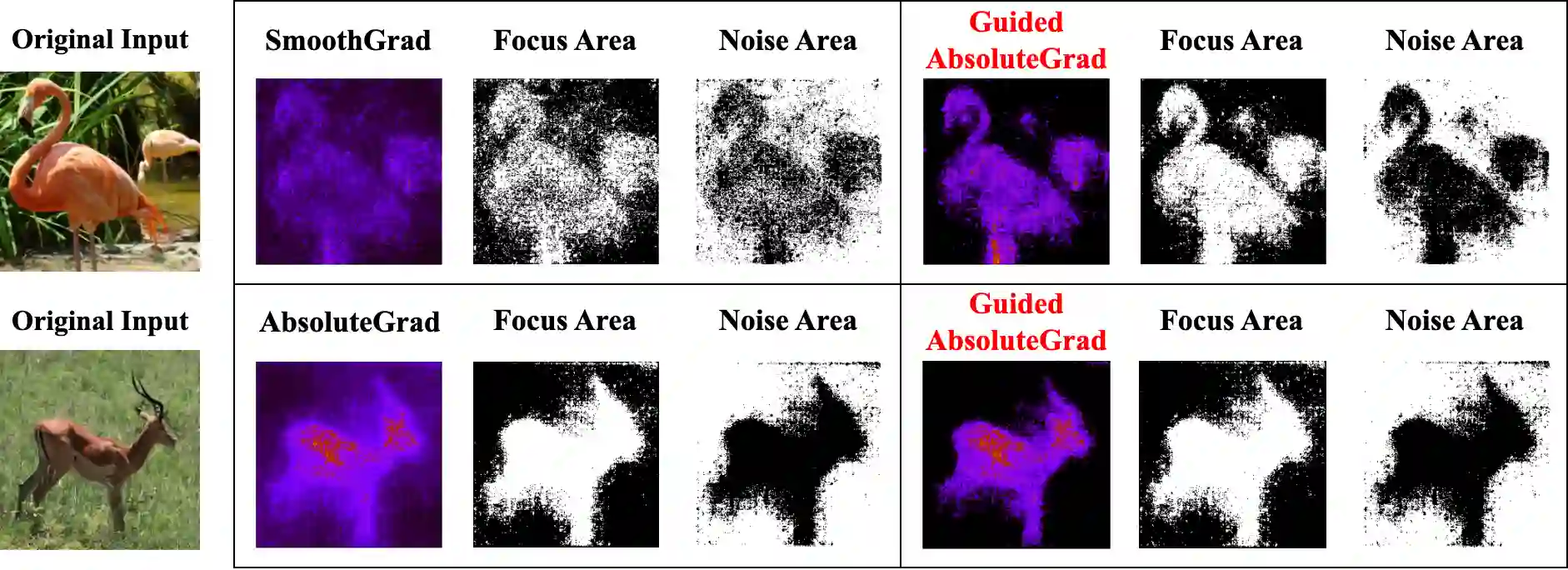
This paper proposes a new gradient-based XAI method called Guided AbsoluteGrad for saliency map explanations. We utilize both positive and negative gradient magnitudes and employ gradient variance to distinguish the important areas for noise deduction. We also introduce a novel evaluation metric named ReCover And Predict (RCAP), which considers the Localization and Visual Noise Level objectives of the explanations. We propose two propositions for these two objectives and prove the necessity of evaluating them. We evaluate Guided AbsoluteGrad with seven gradient-based XAI methods using the RCAP metric and other SOTA metrics in three case studies: (1) ImageNet dataset with ResNet50 model; (2) International Skin Imaging Collaboration (ISIC) dataset with EfficientNet model; (3) the Places365 dataset with DenseNet161 model. Our method surpasses other gradient-based approaches, showcasing the quality of enhanced saliency map explanations through gradient magnitude.
翻译:本文提出一种名为引导型绝对梯度法(Guided AbsoluteGrad)的基于梯度的可解释人工智能(XAI)方法,用于生成显著性图解释。我们利用正负梯度幅度,并采用梯度方差区分重要区域以消除噪声。同时,我们引入一种新型评估指标——覆盖与预测(RCAP),该指标综合考虑解释的定位能力和视觉噪声水平。针对这两个目标,我们提出两项命题并论证其评估必要性。我们在三个案例研究中,采用RCAP指标及其他当前最先进指标,将引导型绝对梯度法与七种基于梯度的XAI方法进行对比:(1)基于ResNet50模型的ImageNet数据集;(2)基于EfficientNet模型的国际皮肤成像协作(ISIC)数据集;(3)基于DenseNet161模型的Places365数据集。实验表明,我们的方法优于其他基于梯度的方法,证明了通过梯度幅度增强的显著性图解释的高质量。




相关内容




 微信扫码咨询专知VIP会员