

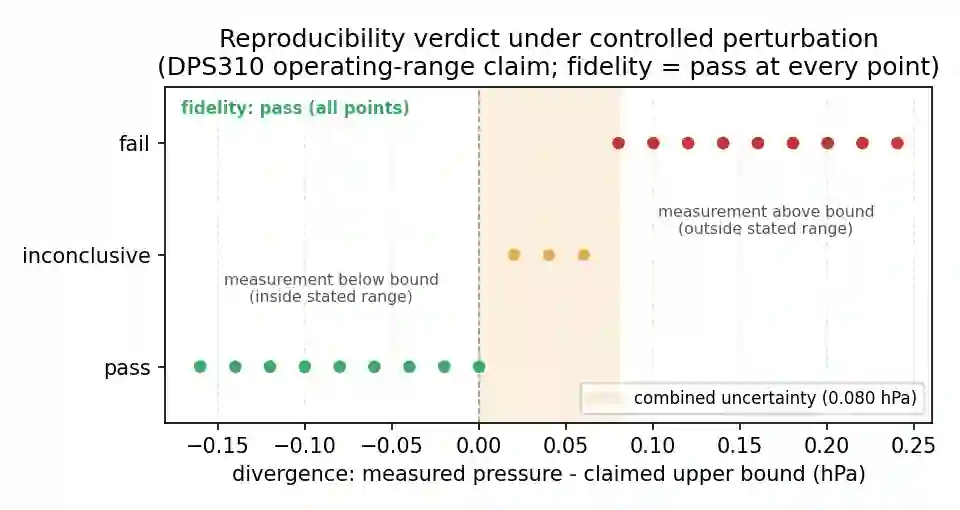
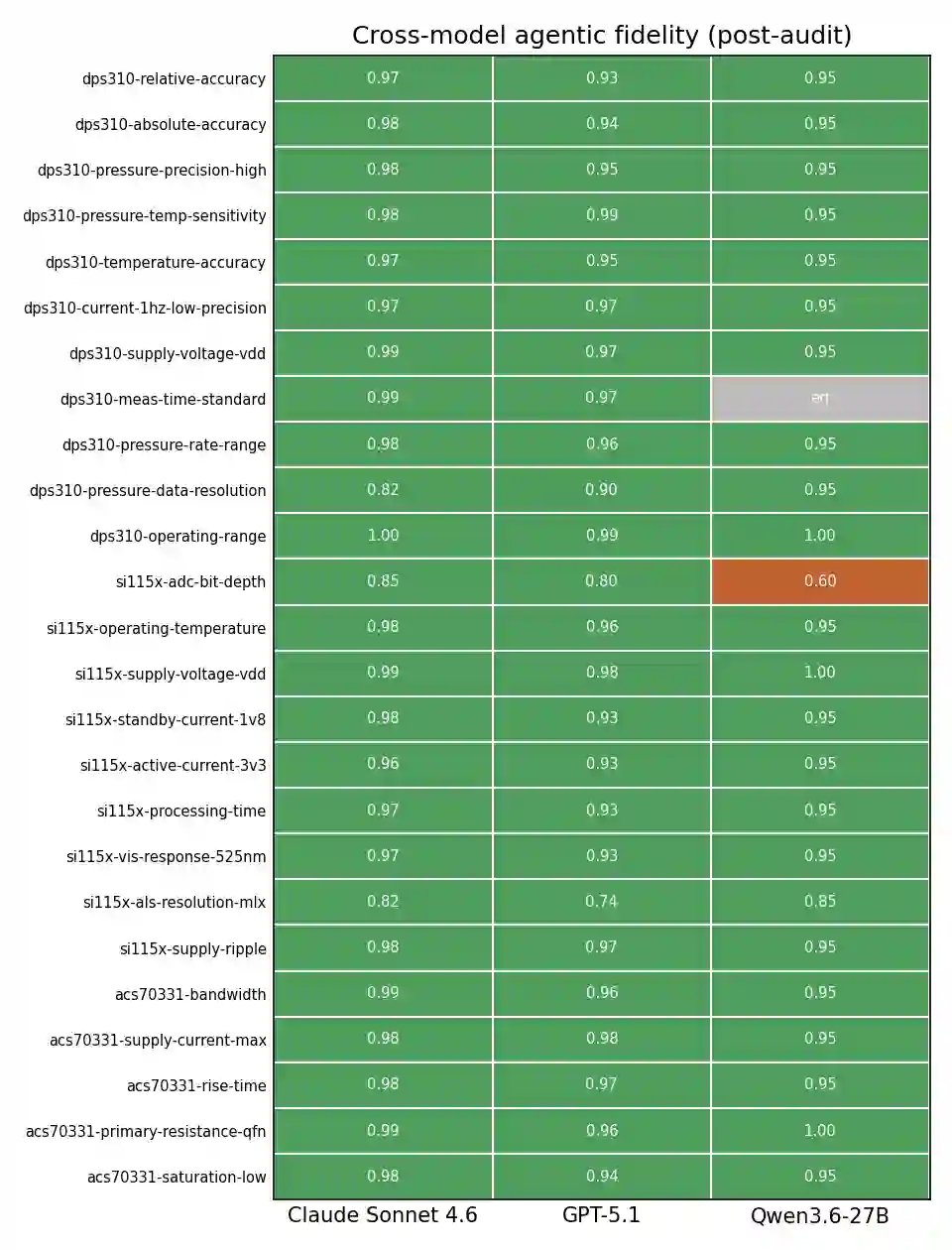
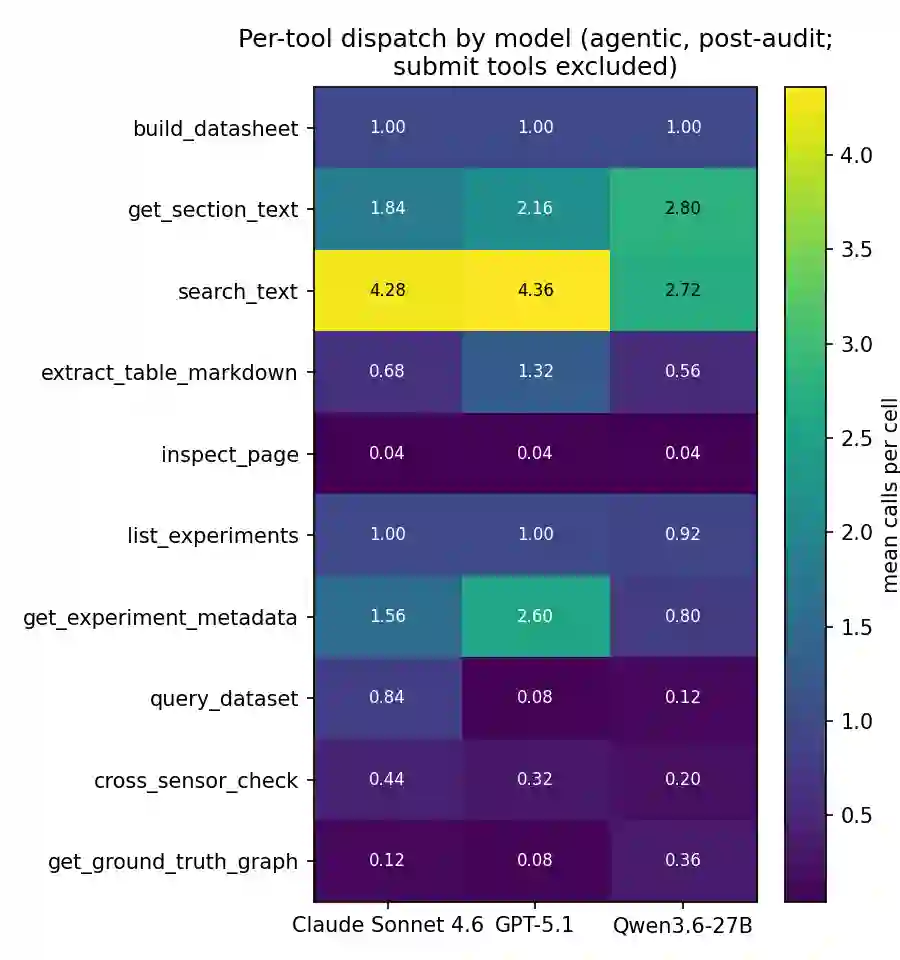
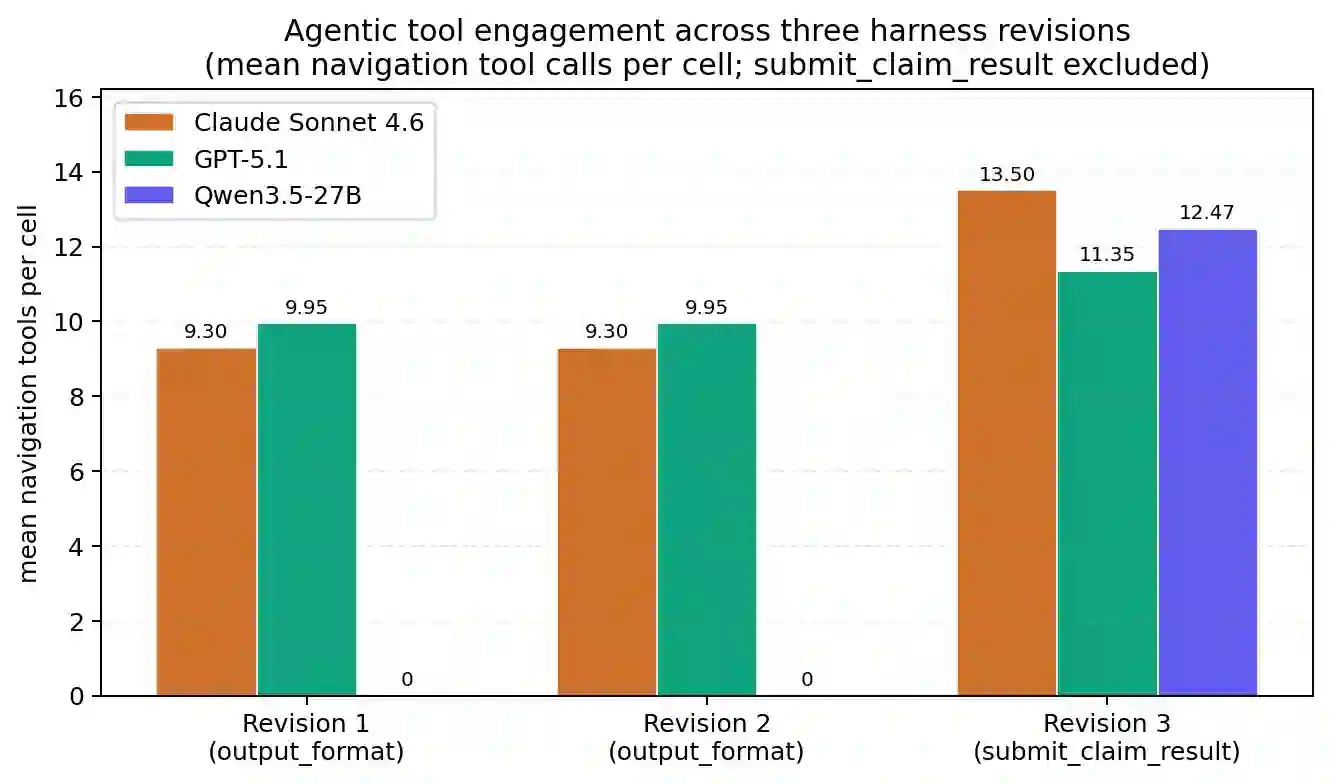
One model passed our fidelity check without ever opening the datasheet. We found it while qualifying models for an internal extraction service: a structured-output constraint had silently disabled tool use, and the model answered anyway, with fabricated source text. Only the per-tool trace exposed it. Fidelity -- whether an extracted value matches the source -- is the standard measure for agentic document extraction, and it scores that run a success. We therefore log every tool call in an agentic benchmark of 25 hand-curated claims over three components, with 12 more on a fourth, 37 in all. From that dispatch record we build two instruments: a rule-based failure-attribution classifier, and a silent-failure detector whose two rules check only which tools were called, never the extracted value. The detector raises no flag on 207 clean fidelity-passing extractions across three model families, and recovers all 50 planted faults that withhold exactly the tools its rules check. The two results are not symmetric: the first bounds the false-positive rate, the second is recall by construction, and detection power against runs that call their tools and still answer wrongly is unmeasured. A second, independent oracle, a causal chamber that tests whether the datasheet's claims hold under physical measurement, is intentionally partial: it confirms only what the apparatus can exercise, a verifiable envelope of 2 of those 37 claims, and we give a taxonomy of why the rest are not physically gradable. Under a controlled perturbation, fidelity passes throughout while the chamber verdict flips exactly at the measurement uncertainty. Across three deployed model stacks (one destabilised by its serving stack, not by any capability gap) the tool layer buys portability and observability rather than accuracy, and earns its premium only once a document outgrows the context window.
翻译:暂无翻译




相关内容





 微信扫码咨询专知VIP会员