

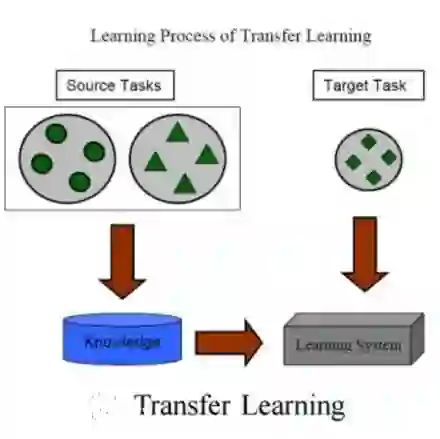
Modern precision medicine aims to utilize real-world data to provide the best treatment for an individual patient. An individualized treatment rule (ITR) maps each patient's characteristics to a recommended treatment scheme that maximizes the expected outcome of the patient. A challenge precision medicine faces is population heterogeneity, as studies on treatment effects are often conducted on source populations that differ from the populations of interest in terms of the distribution of patient characteristics. Our research goal is to explore a transfer learning algorithm that aims to address the population heterogeneity problem and obtain targeted, optimal, and interpretable ITRs. The algorithm incorporates a calibrated augmented inverse probability weighting (CAIPW) estimator for the average treatment effect (ATE) and employs value function maximization for the target population using Genetic Algorithm (GA) to produce our desired ITR. To demonstrate its practical utility, we apply this transfer learning algorithm to two large medical databases, Electronic Intensive Care Unit Collaborative Research Database (eICU-CRD) and Medical Information Mart for Intensive Care III (MIMIC-III). We first identify the important covariates, treatment options, and outcomes of interest based on the two databases, and then estimate the optimal linear ITRs for patients with sepsis. Our research introduces and applies new techniques for data fusion to obtain data-driven ITRs that cater to patients' individual medical needs in a population of interest. By emphasizing generalizability and personalized decision-making, this methodology extends its potential application beyond medicine to fields such as marketing, technology, social sciences, and education.
翻译:现代精准医学旨在利用真实世界数据为个体患者提供最佳治疗方案。个体化治疗规则将每位患者的特征映射至推荐治疗方案,以最大化患者的预期临床结局。精准医学面临的核心挑战是人群异质性,因为关于治疗效果的研究通常在源人群中进行,而源人群与目标人群在患者特征分布上存在差异。本研究旨在探索一种迁移学习算法,以解决人群异质性问题并获取针对性强、最优且可解释的个体化治疗规则。该算法采用校准增强逆概率加权估计器来评估平均处理效应,并运用遗传算法对目标人群进行价值函数最大化,从而生成所需的个体化治疗规则。为验证其实用价值,我们将此迁移学习算法应用于两大医疗数据库:电子重症监护协作研究数据库与重症监护医疗信息集市III。我们首先基于两个数据库确定重要协变量、治疗方案及目标结局指标,进而为脓毒症患者估计最优线性个体化治疗规则。本研究引入并应用了新的数据融合技术,以获取数据驱动的个体化治疗规则,从而满足目标人群中医患个体的医疗需求。通过强调普适性与个性化决策,该方法学可拓展至医学以外的领域,如市场营销、技术开发、社会科学及教育等。




相关内容



 微信扫码咨询专知VIP会员