

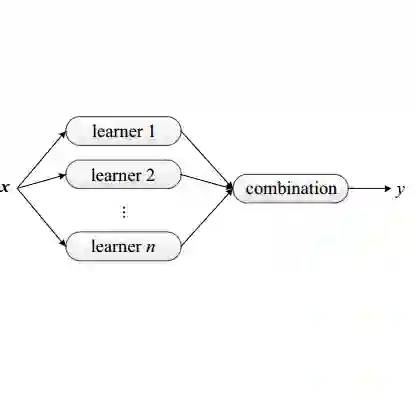
Stacking, a potent ensemble learning method, leverages a meta-model to harness the strengths of multiple base models, thereby enhancing prediction accuracy. Traditional stacking techniques typically utilize established learning models, such as logistic regression, as the meta-model. This paper introduces a novel approach that integrates computational geometry techniques, specifically solving the maximum weighted rectangle problem, to develop a new meta-model for binary classification. Our method is evaluated on multiple open datasets, with statistical analysis showing its stability and demonstrating improvements in accuracy compared to current state-of-the-art stacking methods with out-of-fold predictions. This new stacking method also boasts two significant advantages: enhanced interpretability and the elimination of hyperparameter tuning for the meta-model, thus increasing its practicality. These merits make our method highly applicable not only in stacking ensemble learning but also in various real-world applications, such as hospital health evaluation scoring and bank credit scoring systems, offering a fresh evaluation perspective.
翻译:堆叠作为一种强大的集成学习方法,通过元模型整合多个基模型的优势,从而提升预测精度。传统的堆叠技术通常采用成熟的机器学习模型(如逻辑回归)作为元模型。本文提出一种创新方法,通过融合计算几何技术——特别是求解最大加权矩形问题——构建了一种适用于二分类任务的新型元模型。我们在多个公开数据集上对所提方法进行了评估,统计分析表明该方法具有稳定性,且相较于当前基于袋外预测的先进堆叠方法,其准确率有所提升。该新型堆叠方法还具备两大显著优势:更强的可解释性以及无需对元模型进行超参数调优,从而提升了其实用性。这些优点使得该方法不仅适用于堆叠集成学习,还可广泛应用于医院健康评估评分、银行信用评分系统等现实场景,为评估任务提供了全新的视角。




相关内容



 微信扫码咨询专知VIP会员