

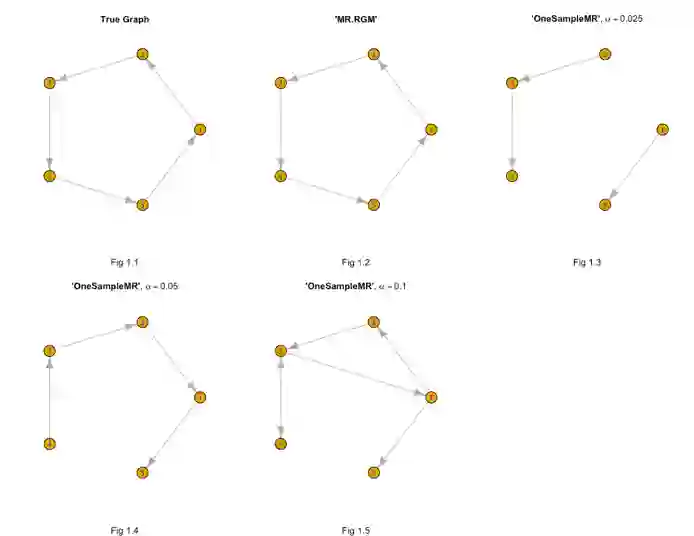
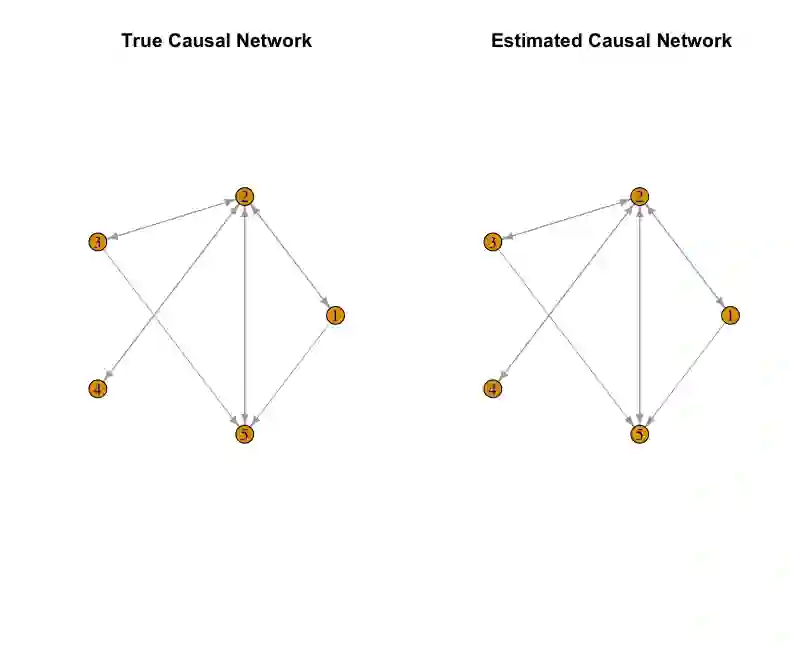
Motivation: Mendelian randomization (MR) infers causal relationships between exposures and outcomes using genetic variants as instrumental variables. Typically, MR considers only a pair of exposure and outcome at a time, limiting its capability of capturing the entire causal network. We overcome this limitation by developing 'MR.RGM' (Mendelian randomization via reciprocal graphical model), a fast R-package that implements the Bayesian reciprocal graphical model and enables practitioners to construct holistic causal networks with possibly cyclic/reciprocal causation and proper uncertainty quantifications, offering a comprehensive understanding of complex biological systems and their interconnections. Results: We developed 'MR.RGM', an open-source R package that applies bidirectional MR using a network-based strategy, enabling the exploration of causal relationships among multiple variables in complex biological systems. 'MR.RGM' holds the promise of unveiling intricate interactions and advancing our understanding of genetic networks, disease risks, and phenotypic complexities.
翻译:摘要:动机:孟德尔随机化(Mendelian randomization, MR)利用遗传变异作为工具变量推断暴露与结局之间的因果关系。传统MR方法每次仅考虑单一暴露与结局对,限制了其捕捉完整因果网络的能力。为克服这一局限,我们开发了'MR.RGM'(基于互惠图模型的孟德尔随机化),这是一个快速实现的R语言软件包,应用贝叶斯互惠图模型,使研究者能够构建包含可能循环/互惠因果关系的整体因果网络,并提供恰当的不确定性量化,从而全面理解复杂生物系统及其相互关联。结果:我们开发了开源R包'MR.RGM',该工具采用基于网络策略的双向MR方法,支持探索复杂生物系统中多个变量间的因果关系。'MR.RGM'有望揭示错综复杂的相互作用,推动我们对遗传网络、疾病风险及表型复杂性的理解。




相关内容




 微信扫码咨询专知VIP会员