

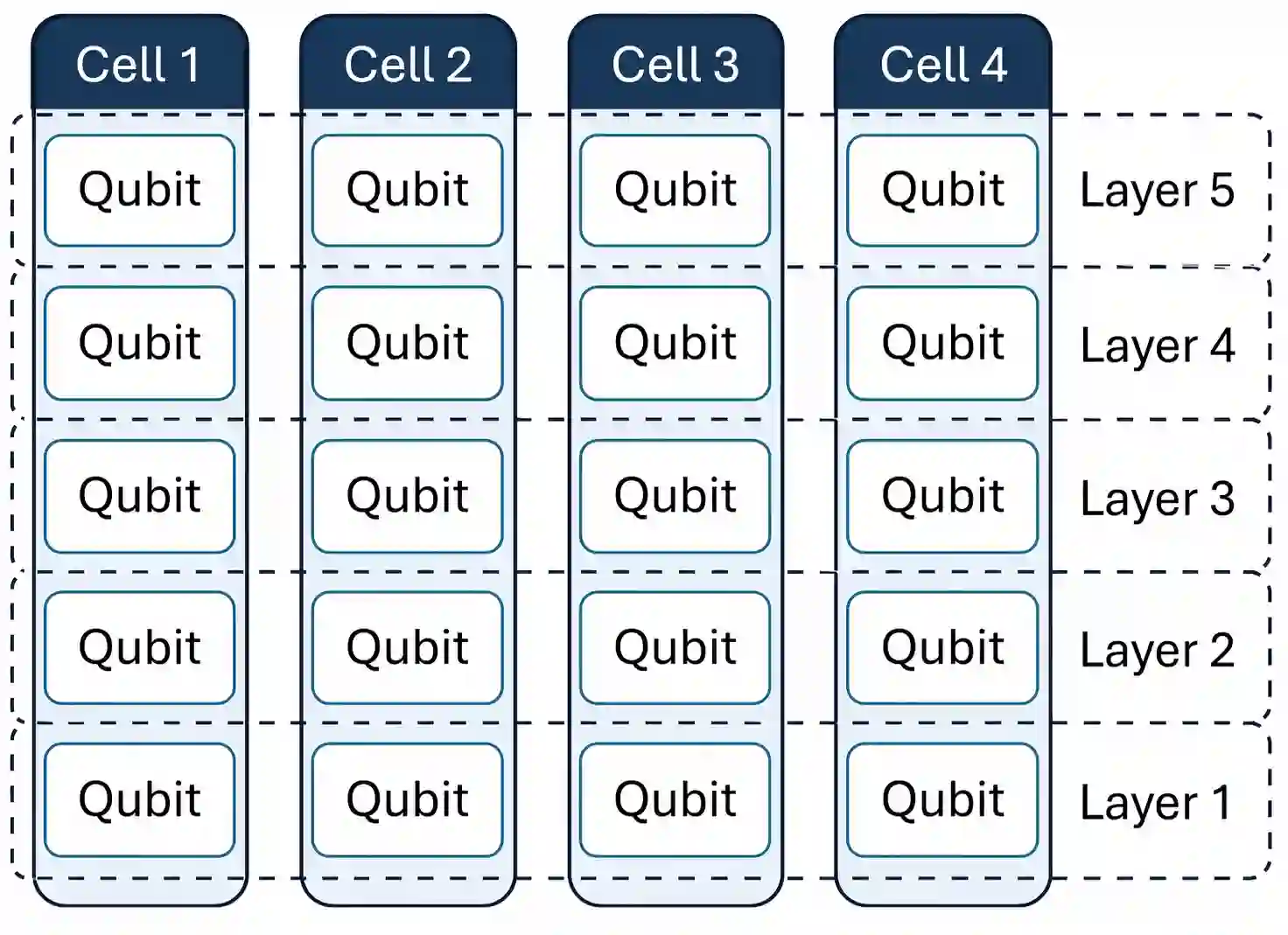
Stacked quantum memory is an architecture in which multiple layers of qubits are stacked. Quantum rank-metric codes are effective for error correction in stacked quantum memories. However, the previously proposed quantum Gabidulin codes based on the CSS construction had a problem: due to algebraic constraints, the applicable memory layouts were strictly limited to square shapes of odd length. In this paper, we first propose a framework for constructing quantum rank-metric codes from classical linear codes with symplectic self-orthogonality. Building upon this, we propose a new construction method for quantum Gabidulin codes by combining the Hermitian self-orthogonality of classical Gabidulin codes--utilizing the self-dual basis that exists when the extension degree of the finite field is even--with the quantum code construction method using Hermitian orthogonality by Matsumoto and Uyematsu. The proposed method succeeds in approximately doubling the ratio of the minimum rank distance to the number of physical qubits while maintaining the code rate. Furthermore, it eliminates the restriction of the conventional method that requires the number of cells and layers of the stacked memory to be odd, realizing the construction of quantum rank-metric codes applicable to memories with an even number of cells and layers. This construction improves the relative error correction capability of the stacked quantum memory architecture and increases the degree of freedom in design while preserving the code rate.
翻译:堆叠式量子存储器是一种将多个量子比特层堆叠起来的架构。量子秩度量码能有效纠正堆叠式量子存储器中的错误。然而,先前基于CSS构造提出的量子Gabidulin码存在一个问题:由于代数约束,适用的存储器布局严格限制为奇数长度的正方形。在本文中,我们首先提出一个基于具有辛自正交性的经典线性码来构造量子秩度量码的框架。在此基础上,我们提出一种构造量子Gabidulin码的新方法,该方法结合了经典Gabidulin码的厄米自正交性——利用有限域扩张度为偶数时存在的自对偶基——与Matsumoto和Uyematsu提出的利用厄米正交性的量子码构造方法。所提出的方法成功地将最小秩距离与物理量子比特数的比率大约提高了一倍,同时保持了码率。此外,它消除了传统方法要求堆叠存储器的单元数和层数均为奇数的限制,实现了适用于具有偶数单元数和层数存储器的量子秩度量码的构造。这种构造在保持码率的同时,提高了堆叠式量子存储器架构的相对纠错能力,并增加了设计自由度。




相关内容


 微信扫码咨询专知VIP会员