

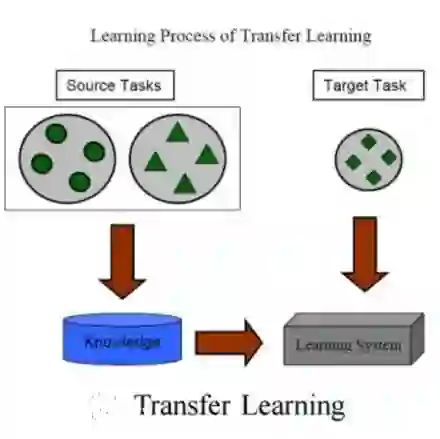
Automated bioacoustic analysis aids understanding and protection of both marine and terrestrial animals and their habitats across extensive spatiotemporal scales, and typically involves analyzing vast collections of acoustic data. With the advent of deep learning models, classification of important signals from these datasets has markedly improved. These models power critical data analyses for research and decision-making in biodiversity monitoring, animal behaviour studies, and natural resource management. However, deep learning models are often data-hungry and require a significant amount of labeled training data to perform well. While sufficient training data is available for certain taxonomic groups (e.g., common bird species), many classes (such as rare and endangered species, many non-bird taxa, and call-type), lack enough data to train a robust model from scratch. This study investigates the utility of feature embeddings extracted from large-scale audio classification models to identify bioacoustic classes other than the ones these models were originally trained on. We evaluate models on diverse datasets, including different bird calls and dialect types, bat calls, marine mammals calls, and amphibians calls. The embeddings extracted from the models trained on bird vocalization data consistently allowed higher quality classification than the embeddings trained on general audio datasets. The results of this study indicate that high-quality feature embeddings from large-scale acoustic bird classifiers can be harnessed for few-shot transfer learning, enabling the learning of new classes from a limited quantity of training data. Our findings reveal the potential for efficient analyses of novel bioacoustic tasks, even in scenarios where available training data is limited to a few samples.
翻译:自动化生物声学分析有助于在广泛时空尺度上理解并保护海洋与陆生动物及其栖息地,通常涉及对海量声学数据的解析。随着深度学习模型的出现,从这些数据集中分类重要信号的能力显著提升。这些模型为生物多样性监测、动物行为研究及自然资源管理等领域的核心数据分析与决策提供了支撑。然而,深度学习模型通常需要大量标注训练数据才能获得良好性能。尽管某些分类群(如常见鸟类物种)可获得充足训练数据,但许多类别(如珍稀濒危物种、非鸟类类群及叫声类型)缺乏足够数据以从头训练稳健模型。本研究探究了从大规模音频分类模型中提取的特征嵌入在识别非原始训练集生物声学类别中的效用。我们使用涵盖不同鸟类叫声及方言类型、蝙蝠叫声、海洋哺乳动物叫声与两栖动物叫声的多样化数据集评估模型。相较于基于通用音频数据集训练的嵌入特征,基于鸟类发声数据训练的模型所提取的嵌入特征始终能实现更高质量的分类。研究结果表明,大规模声学鸟类分类器产生的高质量特征嵌入可应用于少样本迁移学习,从而在有限训练数据条件下学习新类别。本发现揭示了在可用训练数据仅限少数样本的场景下,高效分析新型生物声学任务的潜力。




相关内容




 微信扫码咨询专知VIP会员