

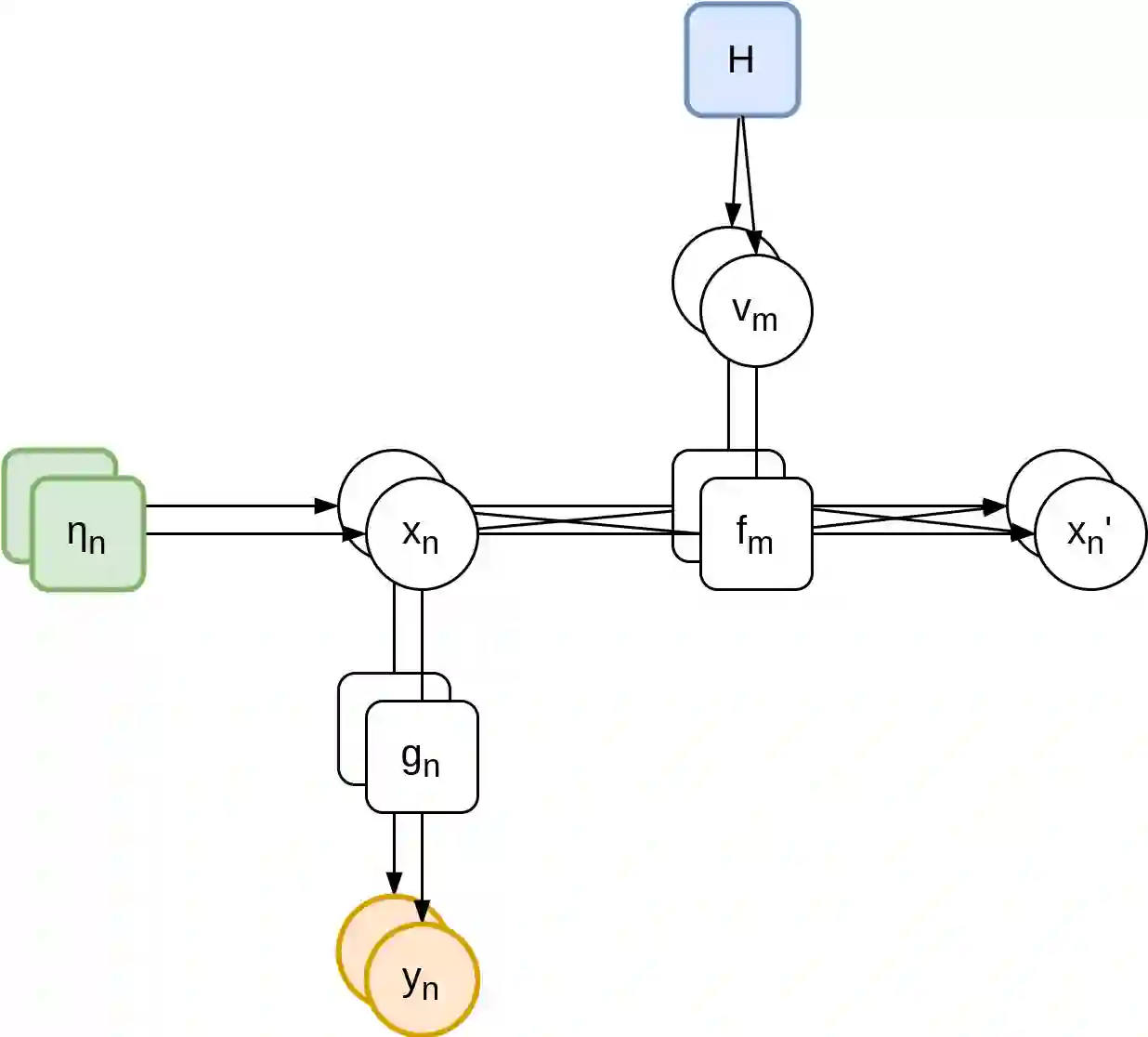
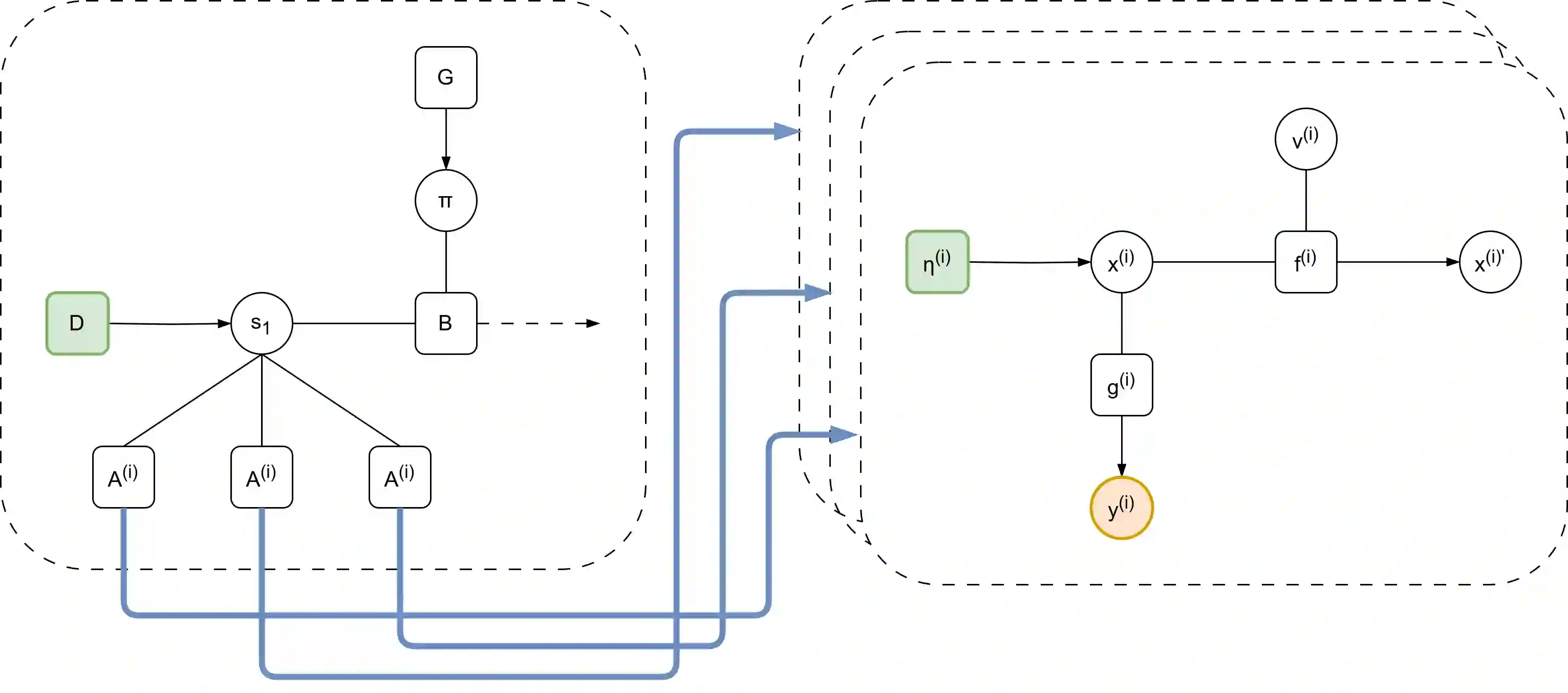
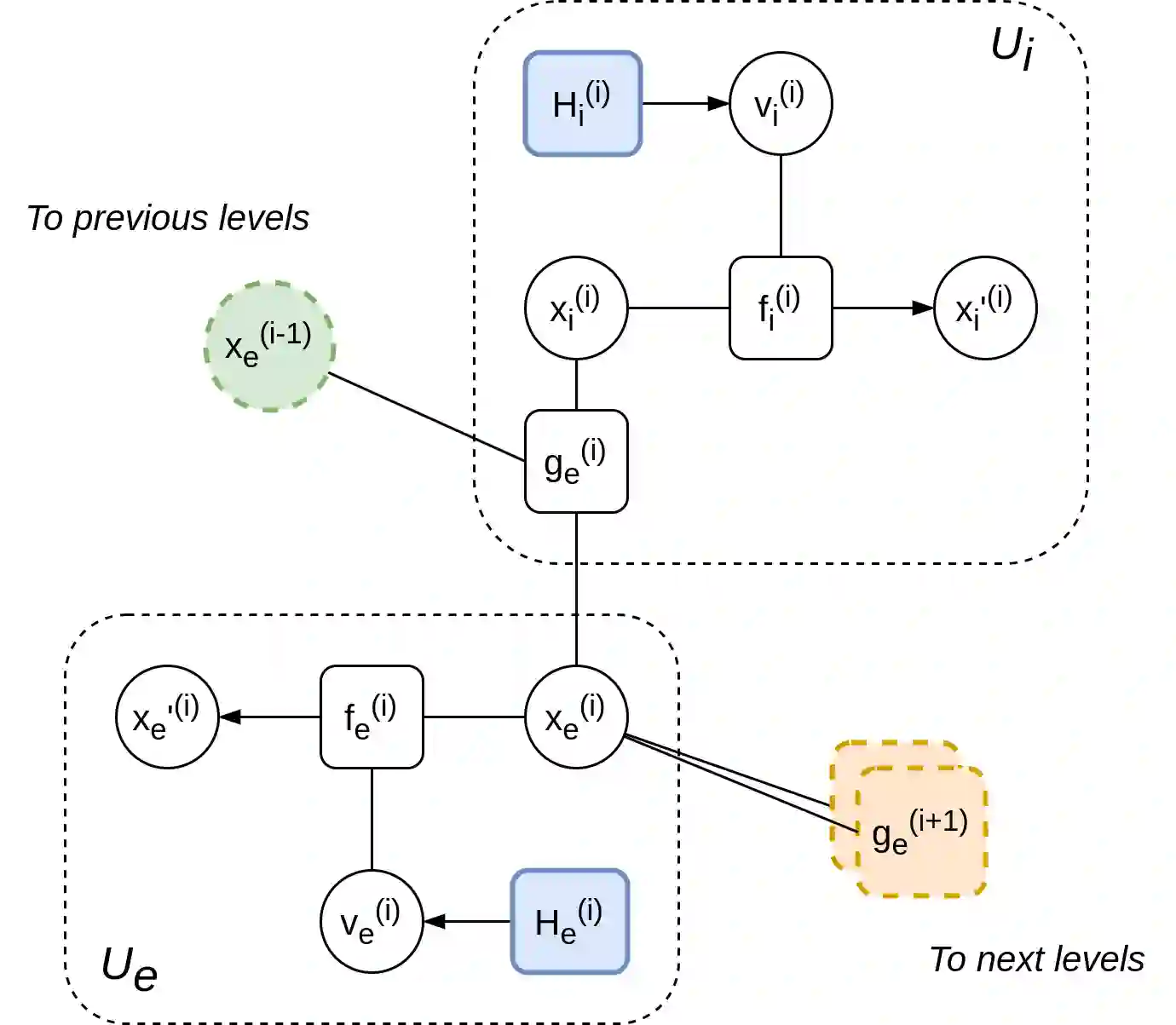
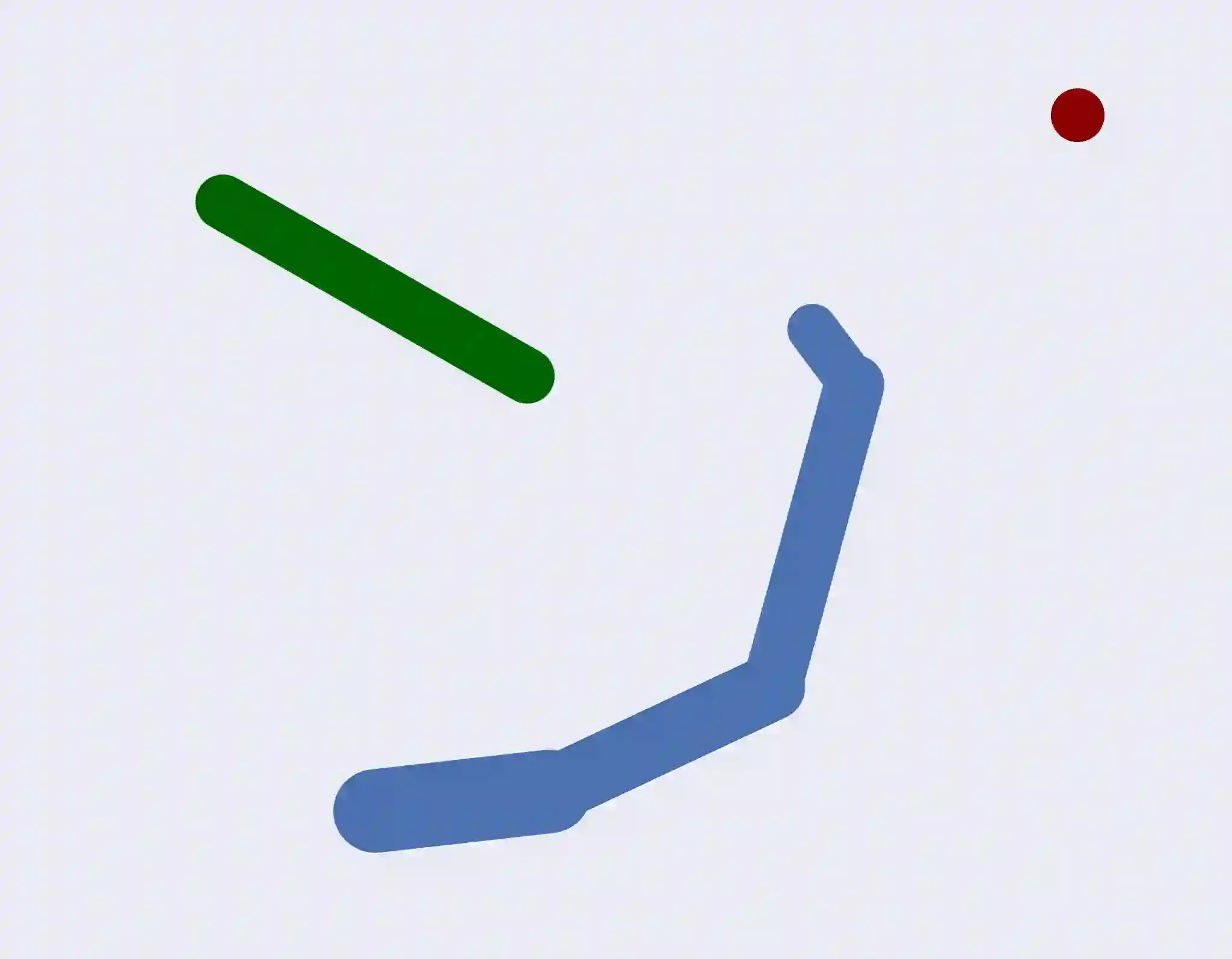
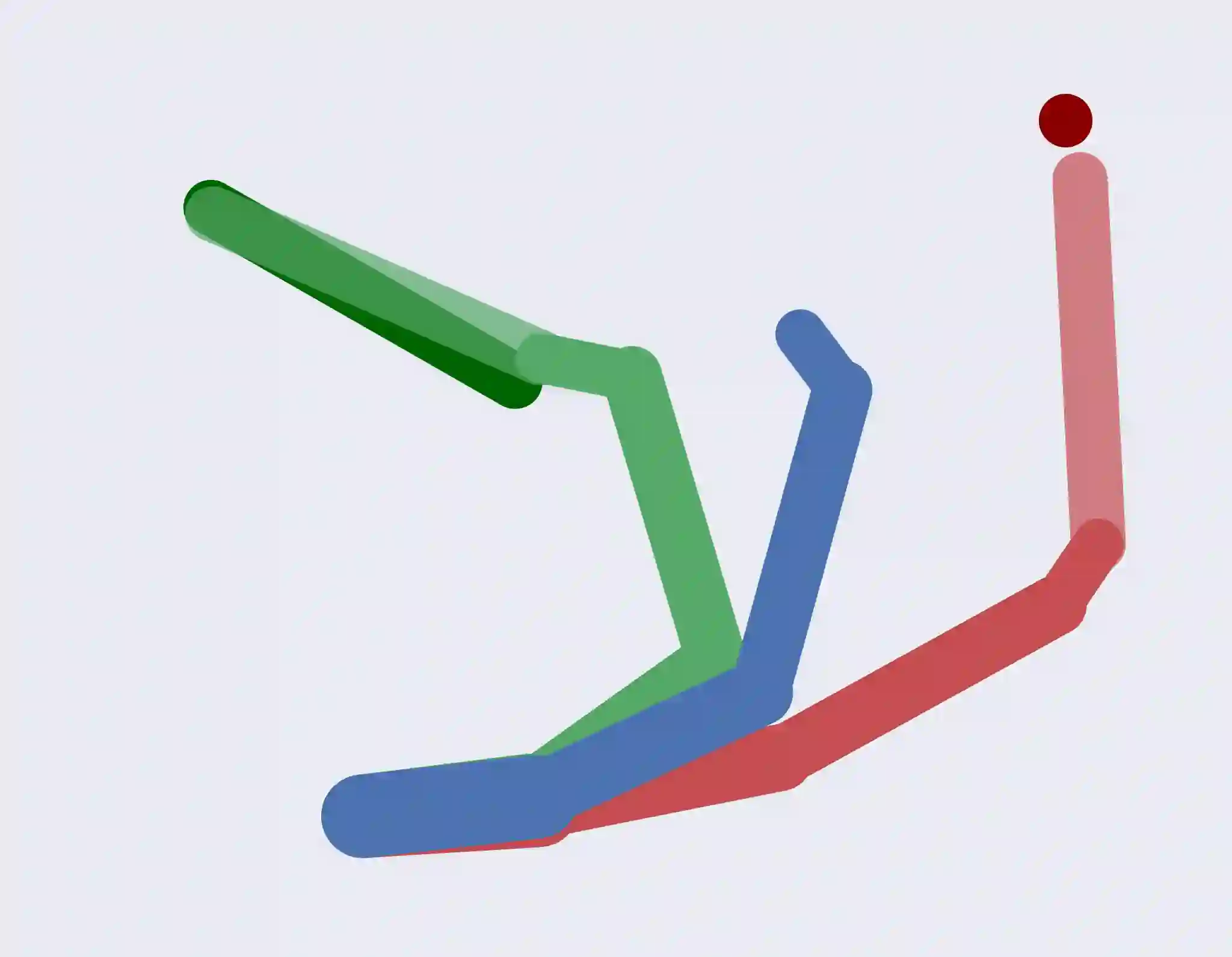
Determining an optimal plan to accomplish a goal is a hard problem in realistic scenarios, which often comprise dynamic and causal relationships between several entities. Although traditionally such problems have been tackled with optimal control and reinforcement learning, a recent biologically-motivated proposal casts planning and control as an inference process. Among these new approaches, one is particularly promising: active inference. This new paradigm assumes that action and perception are two complementary aspects of life whereby the role of the former is to fulfill the predictions inferred by the latter. In this study, we present an effective solution, based on active inference, to complex control tasks. The proposed architecture exploits hybrid (discrete and continuous) processing to construct a hierarchical and dynamic representation of the self and the environment, which is then used to produce a flexible plan consisting of subgoals at different temporal scales. We evaluate this deep hybrid model on a non-trivial task: reaching a moving object after having picked a moving tool. This study extends past work on planning as inference and advances an alternative direction to optimal control and reinforcement learning.
翻译:在现实场景中,确定实现目标的最优规划是一个难题,这些场景通常涉及多个实体之间的动态因果关系。尽管传统上此类问题通过最优控制和强化学习来解决,但近期一项受生物学启发的提案将规划与控制视为推理过程。在这些新方法中,主动推理尤为引人注目。这一新范式假设行动与感知是生命活动的两个互补方面,前者的作用是实现后者推断出的预测。本研究提出了一种基于主动推理的有效解决方案,用于处理复杂控制任务。所提出的架构利用混合(离散与连续)处理来构建自我与环境的分层动态表征,进而生成包含不同时间尺度子目标的灵活规划。我们在一个非平凡任务上评估了这一深度混合模型:在拾取移动工具后追踪移动目标。本研究扩展了以往将规划视为推理的工作,并为最优控制与强化学习提供了新的研究方向。




相关内容




 微信扫码咨询专知VIP会员