

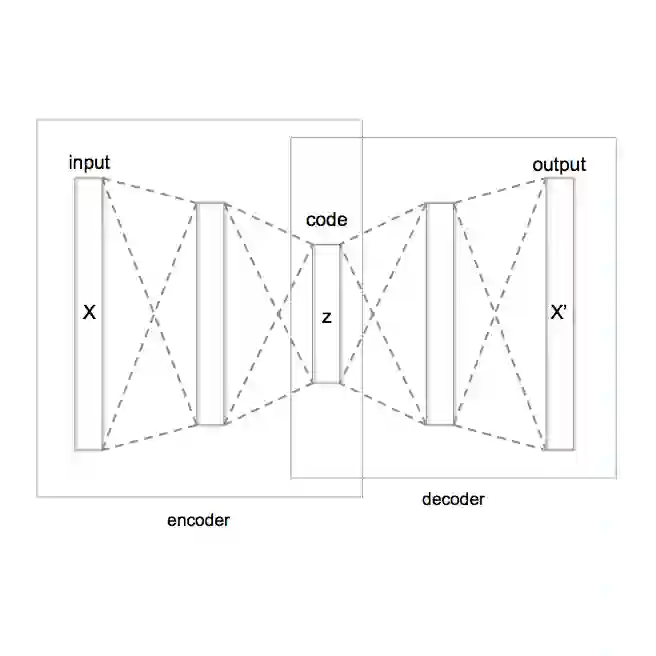
This paper presents a two-stage Hybrid Classical-Quantum (HCQ) pipeline for binary Alzheimer's disease (AD) classification from 3D T1-weighted structural MRI volumes, where the classical and quantum components are designed to complement each other rather than operate independently. A supervised 3D $β$-variational autoencoder (VAE) is trained end-to-end under voxel-wise reconstruction, KL-divergence, and focal classification losses that compress each 3D MRI volume (resized from 152 x 184 x 152 to 96 x 96 x 96) into a 64-dimensional latent code. Partial Least Squares (PLS) regression selects the six components in the latent code that best separate Alzheimer's Disease (AD) from cognitively normal (CN) subjects and rescales them into rotation angles, which are encoded onto a six-qubit register using the ZZ quantum feature map to give us the respective quantum states. The input to a precomputed-kernel Support Vector Machine (SVM) is an N x N Gram matrix (N = 308), created by calculating the overlap between every pair of quantum states. The novelty of this work lies in the fact that the quantum kernel operates directly on disease-aware features that are learned end-to-end by a supervised autoencoder, rather than on pre-extracted inputs. On 308 ADNI-1 subjects, consisting of 137 AD and 171 CN subjects, the baseline achieved 67.2% accuracy and 0.759 AUC, while the stability-enhanced variant reached 72.1% accuracy and 0.799 AUC with cross-fold variance halved. 3D Grad-CAM further helped validate our model's focus on brain regions linked to Alzheimer's. The HCQ pipeline could serve as a general-purpose framework for diagnostic classification across biomedical imaging domains that present similar challenges for classical approaches.
翻译:本文提出一种两阶段混合经典-量子(HCQ)流程,用于从三维T1加权的结构性MRI体数据中进行二值阿尔茨海默病(AD)分类,其中经典与量子组件相互补充而非独立运作。一个受监督的三维$β$-变分自编码器(VAE)在体素级重建损失、KL散度损失和焦点分类损失下进行端到端训练,将每个三维MRI体(尺寸从152×184×152重采样至96×96×96)压缩为64维潜在编码。偏最小二乘(PLS)回归从潜在编码中选取最能区分阿尔茨海默病(AD)与认知正常(CN)受试者的六个分量,并将其缩放为旋转角度,随后利用ZZ量子特征编码映射到六量子比特寄存器,从而获得相应量子态。预计算核支持向量机(SVM)的输入为N×N Gram矩阵(N=308),该矩阵通过计算每对量子态之间的重叠得到。本工作的创新之处在于:量子核直接作用于由监督自编码器端到端学习的疾病感知特征,而非预先提取的输入。在包含137例AD和171例CN共308个ADNI-1受试者中,基线方法实现了67.2%的准确率和0.759的AUC,而稳定性增强变体在交叉验证方差减半的条件下达到72.1%的准确率和0.799的AUC。三维Grad-CAM进一步验证了模型对阿尔茨海默病相关脑区的关注。该HCQ流程可作为通用框架,适用于面临类似经典方法挑战的生物医学影像诊断分类任务。




相关内容


 微信扫码咨询专知VIP会员