

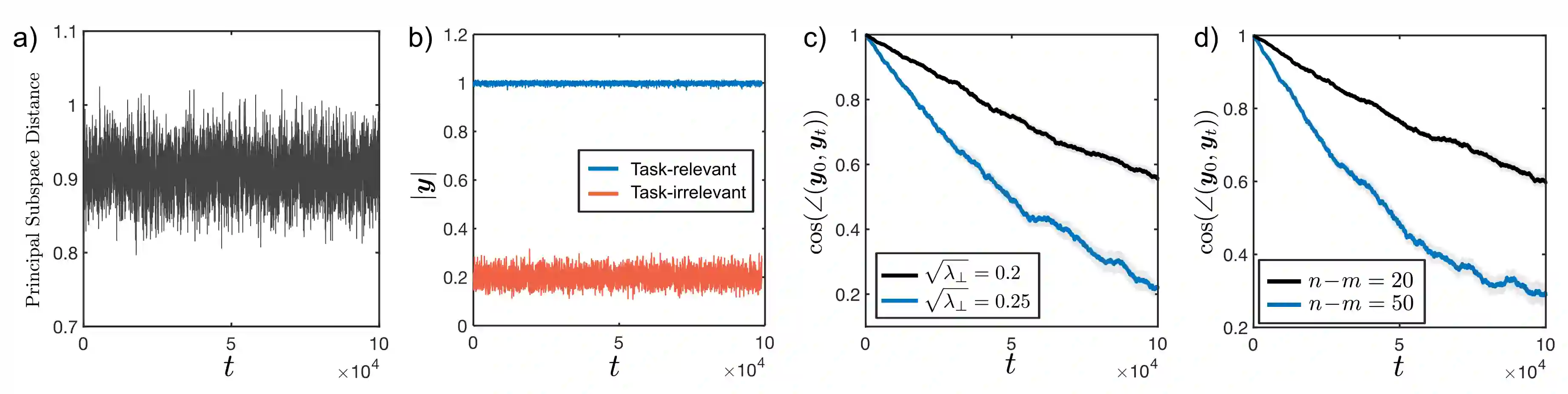
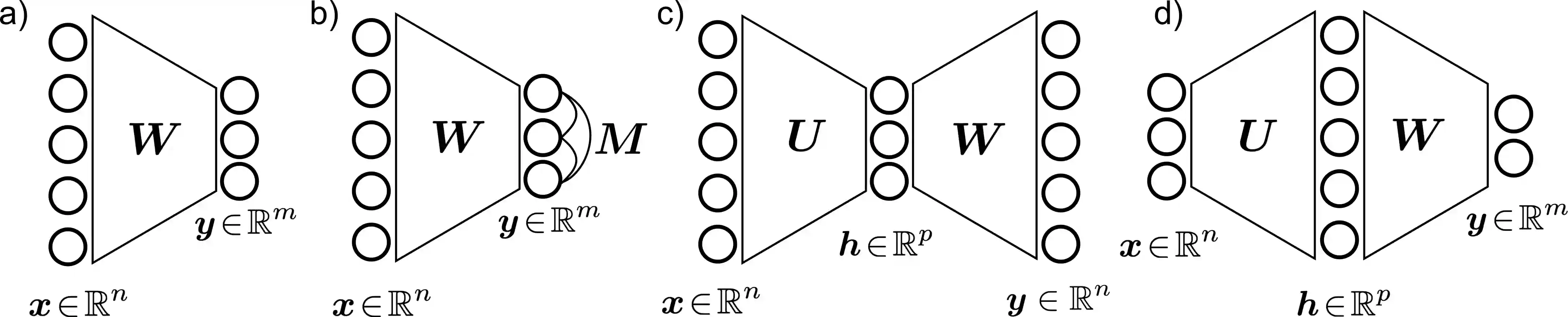
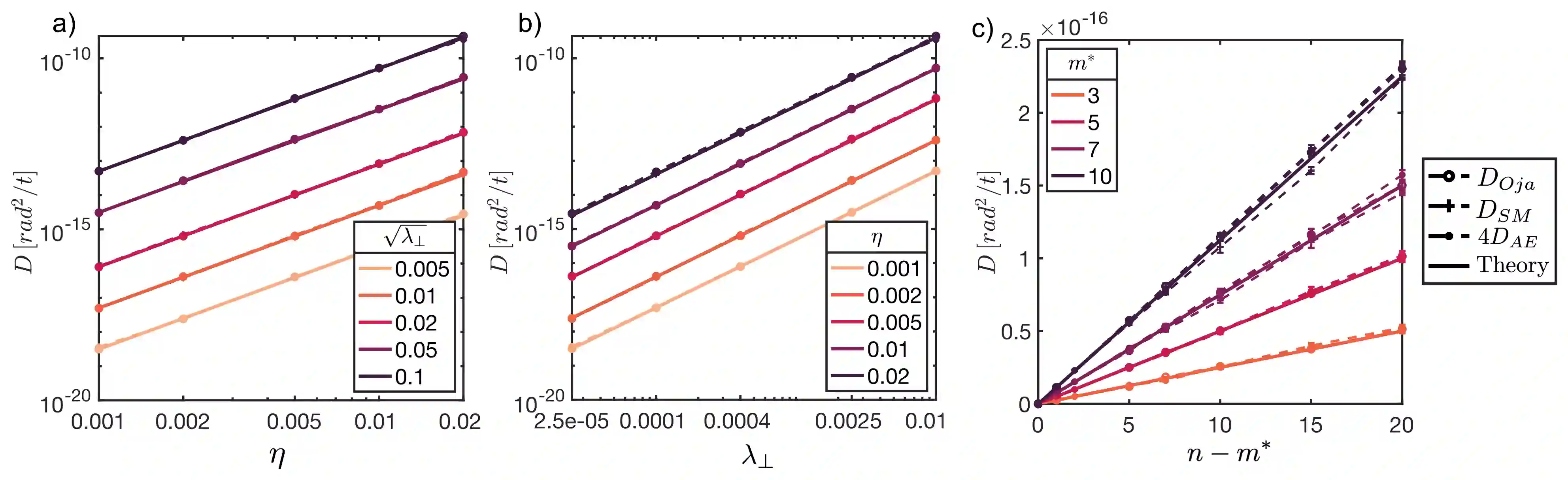
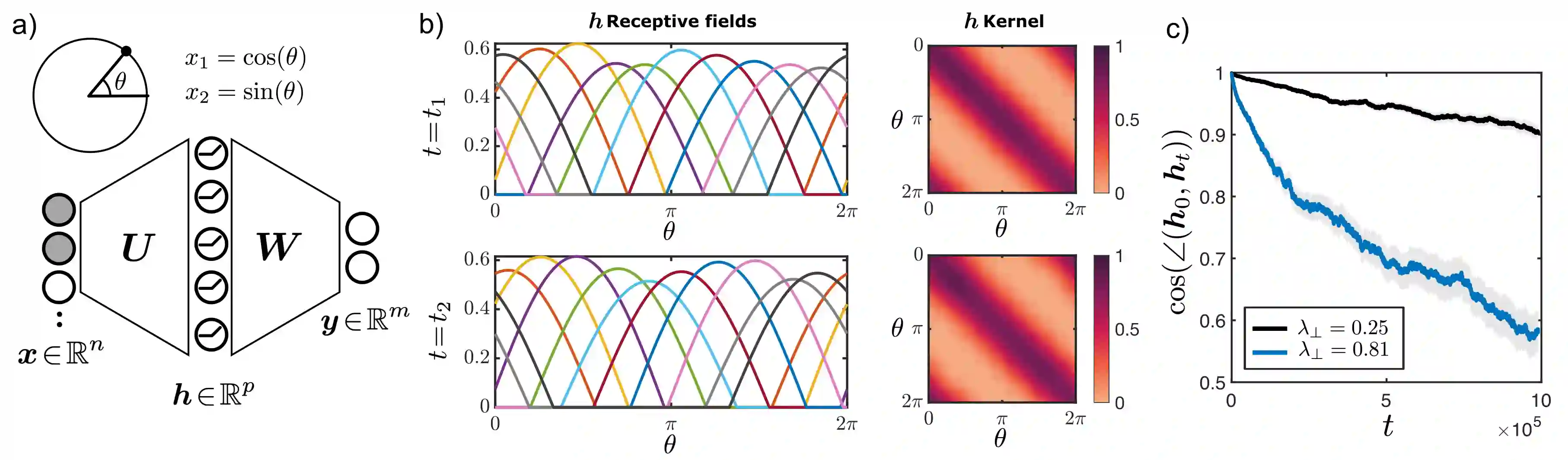
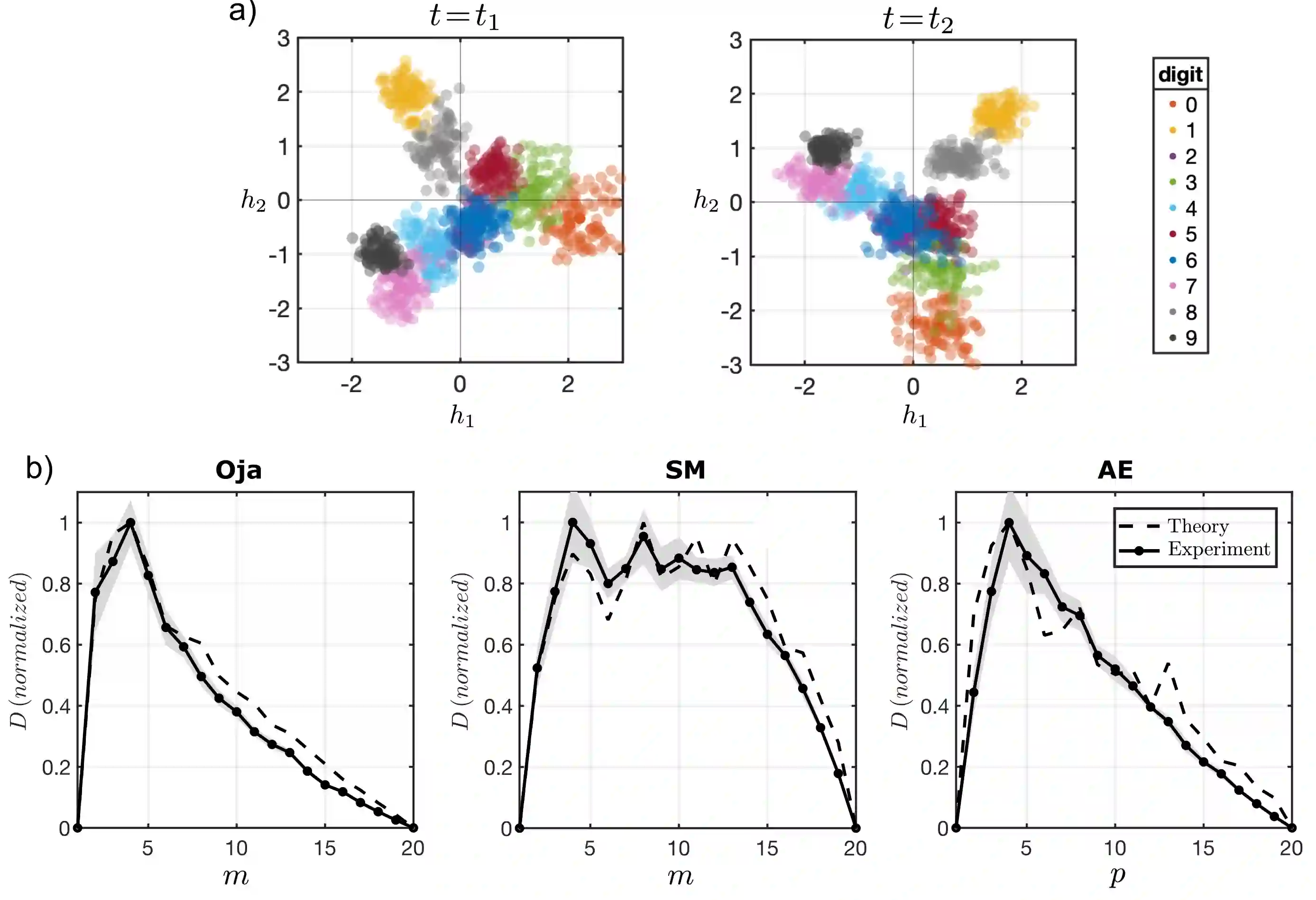
Biological and artificial learners are inherently exposed to a stream of data and experience throughout their lifetimes and must constantly adapt to, learn from, or selectively ignore the ongoing input. Recent findings reveal that, even when the performance remains stable, the underlying neural representations can change gradually over time, a phenomenon known as representational drift. Studying the different sources of data and noise that may contribute to drift is essential for understanding lifelong learning in neural systems. However, a systematic study of drift across architectures and learning rules, and the connection to task, are missing. Here, in an online learning setup, we characterize drift as a function of data distribution, and specifically show that the learning noise induced by task-irrelevant stimuli, which the agent learns to ignore in a given context, can create long-term drift in the representation of task-relevant stimuli. Using theory and simulations, we demonstrate this phenomenon both in Hebbian-based learning -- Oja's rule and Similarity Matching -- and in stochastic gradient descent applied to autoencoders and a supervised two-layer network. We consistently observe that the drift rate increases with the variance and the dimension of the data in the task-irrelevant subspace. We further show that this yields different qualitative predictions for the geometry and dimension-dependency of drift than those arising from Gaussian synaptic noise. Overall, our study links the structure of stimuli, task, and learning rule to representational drift and could pave the way for using drift as a signal for uncovering underlying computation in the brain.
翻译:生物与人工学习者在生命周期中持续暴露于数据流与经验之中,必须不断适应、学习或选择性地忽略持续输入。近期研究发现,即使行为表现保持稳定,底层神经表征仍可能随时间逐渐变化,这一现象被称为表征漂移。研究可能导致漂移的不同数据源与噪声来源,对于理解神经系统的终身学习至关重要。然而,目前仍缺乏跨架构与学习规则的漂移系统性研究,及其与任务关联性的探讨。本文在在线学习框架下,将漂移表征为数据分布的函数,并特别证明:智能体在特定情境中学会忽略的任务无关刺激所诱导的学习噪声,能够在任务相关刺激的表征中产生长期漂移。通过理论与仿真,我们在基于赫布学习的Oja规则与相似性匹配、以及应用于自编码器和监督式双层网络的随机梯度下降中均验证了这一现象。我们一致观察到,漂移速率随任务无关子空间中数据的方差与维度增加而上升。进一步研究表明,与高斯突触噪声产生的漂移相比,此机制在漂移的几何特性与维度依赖性上会产生不同的定性预测。总体而言,本研究将刺激结构、任务与学习规则与表征漂移相关联,可能为利用漂移作为揭示大脑底层计算过程的信号开辟新途径。




相关内容



 微信扫码咨询专知VIP会员