

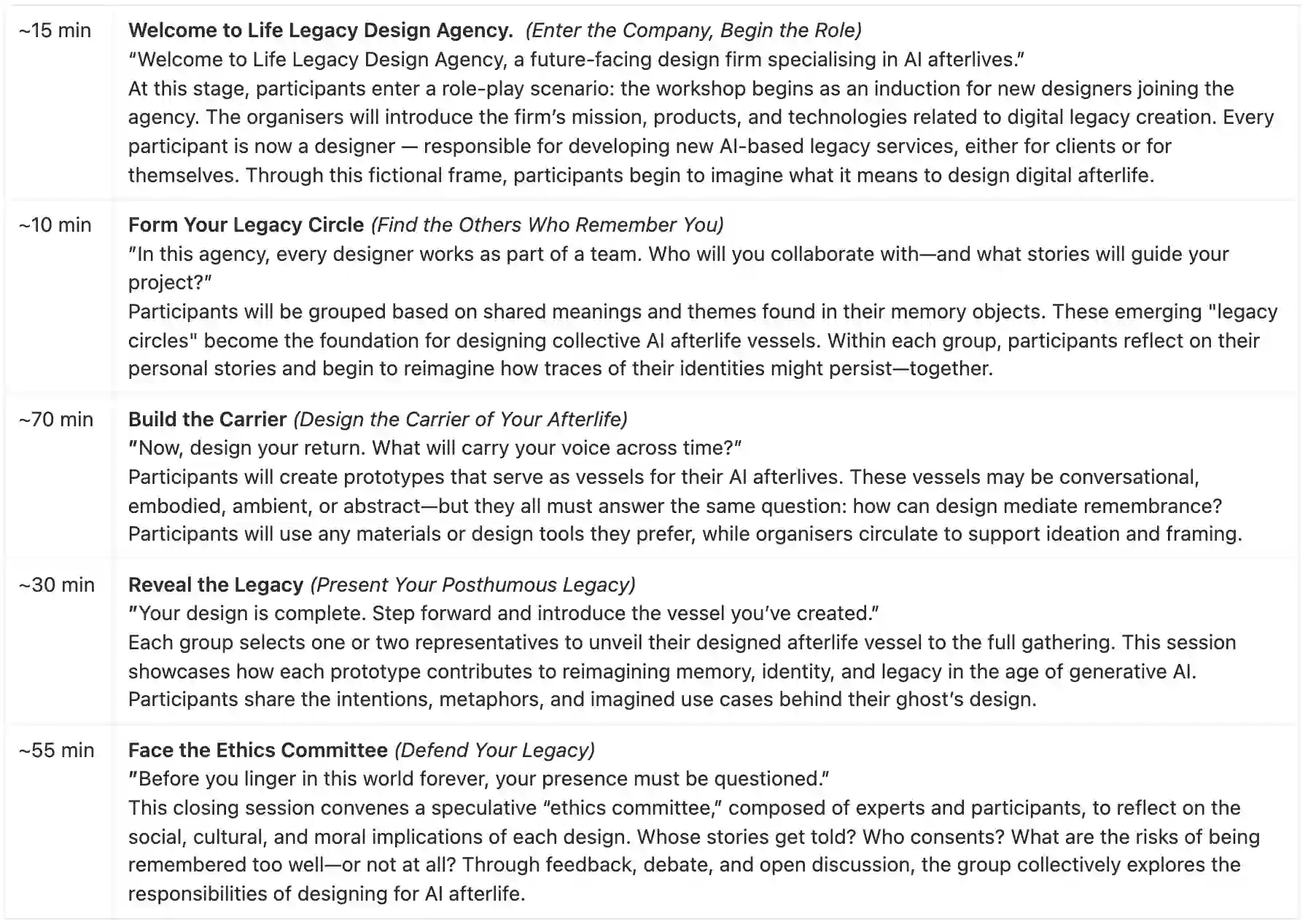
As generative AI technologies rapidly advance, AI agents are gaining the ability not only to collect data and perform tasks but also to respond to environments and evolve over time. This shift opens new possibilities for reimagining digital legacy - raising critical questions about how we remember, commemorate, and interact with the traces of the deceased. The forms of these AI agents are particularly important, as they act as vessels for digital legacies - much like urns for ashes. We will ask: What kinds of devices or representations would we want to store our digital selves or legacies in? How do we envision future generations interacting with these forms? The question is not only about the function of these agents or the object's role as a storage vessel but also the meaning it carries, the memories it preserves, and its connection to the extended notion of our "Generative Horcrux." This three-hour in-person workshop invites design practitioners and researchers from diverse backgrounds to explore the emerging landscape of generative AI agent-based digital legacy. This workshop uses fiction and hands on prototyping to explore how AI agents might reconfigure memory, identity, and posthumous presence in future sociotechnical worlds. We anticipate that this session will foster interdisciplinary dialogue and contribute conceptually and methodologically to HCI, design research, and AI ethics.
翻译:随着生成式人工智能技术的飞速发展,人工智能体不仅获得了收集数据和执行任务的能力,还具备了响应环境并随时间演进的能力。这一转变为重新构想数字遗产开辟了新的可能性,并引发了关于我们如何记忆、纪念并与逝者留下的痕迹进行互动的关键问题。这些人工智能体的形态尤为重要,因为它们充当着数字遗产的载体——类似于盛放骨灰的骨灰盒。我们将探讨:我们希望将我们的数字自我或遗产存储在何种设备或表现形式中?我们如何设想后代与这些形态进行互动?这个问题不仅关乎这些智能体的功能或物体作为存储容器的角色,还关乎其承载的意义、保存的记忆,以及它与我们"生成式魂器"这一扩展概念的关联。本次为期三小时的线下工作坊邀请来自不同背景的设计实践者和研究者,共同探索基于生成式人工智能体的数字遗产这一新兴领域。工作坊将通过虚构叙事和动手原型制作,探讨人工智能体如何在未来的社会技术世界中重构记忆、身份与身后的存在。我们预期本次会议将促进跨学科对话,并在概念和方法论上为人机交互、设计研究和人工智能伦理领域做出贡献。







相关内容



 微信扫码咨询专知VIP会员