

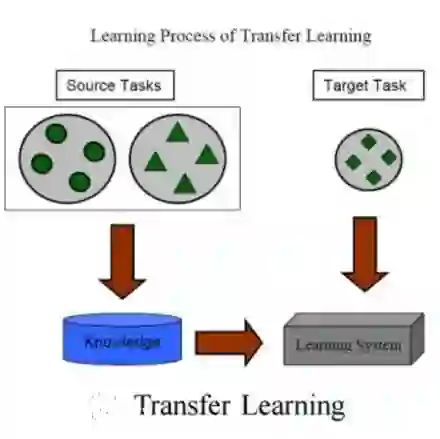
Foundation Models (FMs) such as GPT-4 encoded with vast knowledge and powerful emergent abilities have achieved remarkable success in various natural language processing and computer vision tasks. Grounding FMs by adapting them to domain-specific tasks or augmenting them with domain-specific knowledge enables us to exploit the full potential of FMs. However, grounding FMs faces several challenges, stemming primarily from constrained computing resources, data privacy, model heterogeneity, and model ownership. Federated Transfer Learning (FTL), the combination of federated learning and transfer learning, provides promising solutions to address these challenges. In recent years, the need for grounding FMs leveraging FTL, coined FTL-FM, has arisen strongly in both academia and industry. Motivated by the strong growth in FTL-FM research and the potential impact of FTL-FM on industrial applications, we propose an FTL-FM framework that formulates problems of grounding FMs in the federated learning setting, construct a detailed taxonomy based on the FTL-FM framework to categorize state-of-the-art FTL-FM works, and comprehensively overview FTL-FM works based on the proposed taxonomy. We also establish correspondences between FTL-FM and conventional phases of adapting FM so that FM practitioners can align their research works with FTL-FM. In addition, we overview advanced efficiency-improving and privacy-preserving techniques because efficiency and privacy are critical concerns in FTL-FM. Last, we discuss opportunities and future research directions of FTL-FM.
翻译:基础模型(如GPT-4)凭借其蕴含的海量知识与强大的涌现能力,已在各类自然语言处理和计算机视觉任务中取得显著成功。通过将基础模型适配至特定领域任务或融入领域知识实现"接地",能够充分发挥其潜力。然而,受限于计算资源约束、数据隐私保护、模型异构性及模型所有权等问题,基础模型接地面临诸多挑战。联邦迁移学习——联邦学习与迁移学习的融合——为解决这些挑战提供了可行方案。近年来,学术界与工业界对利用联邦迁移学习实现基础模型接地(称为FTL-FM)的需求日益迫切。基于FTL-FM研究的蓬勃发展及其对工业应用的潜在影响,我们提出了一个FTL-FM框架:将基础模型接地问题形式化为联邦学习场景,构建基于FTL-FM框架的细粒度分类体系以归纳入前沿研究,并基于该分类体系全面综述现有FTL-FM工作。同时,我们建立FTL-FM与传统基础模型适配阶段的对应关系,使基础模型从业者能够将自身研究与FTL-FM对齐。此外,考虑到效率与隐私是FTL-FM的关键关注点,我们还综述了先进的效率优化与隐私保护技术。最后,探讨了FTL-FM的发展机遇与未来研究方向。




相关内容



 微信扫码咨询专知VIP会员