

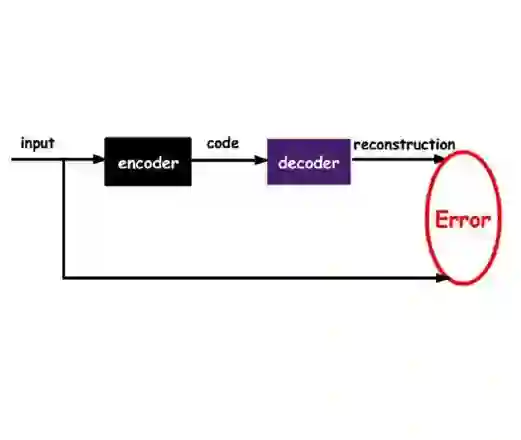
One of the critical factors that drive the economic development of a country and guarantee the sustainability of its industries is the constant availability of electricity. This is usually provided by the national electric grid. However, in developing countries where companies are emerging on a constant basis including telecommunication industries, those are still experiencing a non-stable electricity supply. Therefore, they have to rely on generators to guarantee their full functionality. Those generators depend on fuel to function and the rate of consumption gets usually high, if not monitored properly. Monitoring operation is usually carried out by a (non-expert) human. In some cases, this could be a tedious process, as some companies have reported an exaggerated high consumption rate. This work proposes a label assisted autoencoder for anomaly detection in the fuel consumed by power generating plants. In addition to the autoencoder model, we added a labelling assistance module that checks if an observation is labelled, the label is used to check the veracity of the corresponding anomaly classification given a threshold. A consensus is then reached on whether training should stop or whether the threshold should be updated or the training should continue with the search for hyper-parameters. Results show that the proposed model is highly efficient for reading anomalies with a detection accuracy of $97.20\%$ which outperforms the existing model of $96.1\%$ accuracy trained on the same dataset. In addition, the proposed model is able to classify the anomalies according to their degree of severity.
翻译:驱动国家经济发展并保障产业可持续性的关键因素之一是电力的持续可用性,而这通常由全国电网提供。然而,在包括电信行业在内的新兴企业不断涌现的发展中国家,这些行业仍面临不稳定的电力供应。因此,它们不得不依赖发电机来确保正常运行。这些发电机依赖燃料运行,若监控不当,燃料消耗率通常会过高。运行监控通常由非专业人员执行,在某些情况下,这可能是一个繁琐的过程,因为一些公司报告了异常高的消耗率。本文提出了一种标签辅助自编码器,用于检测发电厂燃料消耗的异常。除自编码器模型外,我们还添加了一个标签辅助模块,该模块检查观测值是否带有标签,并利用标签验证给定阈值下对应异常分类的准确性。随后达成共识:是停止训练、更新阈值,还是继续搜索超参数进行训练。结果表明,所提模型在读取异常方面具有高效性,检测准确率达到$97.20\%$,优于在相同数据集上训练的现有模型(准确率为$96.1\%$)。此外,该模型能够根据异常严重程度对其进行分类。




相关内容



 微信扫码咨询专知VIP会员