

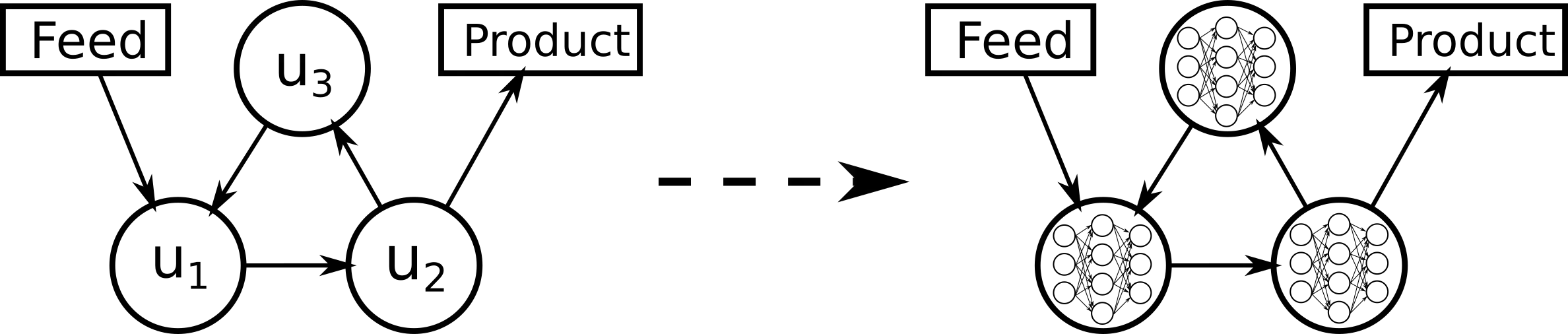
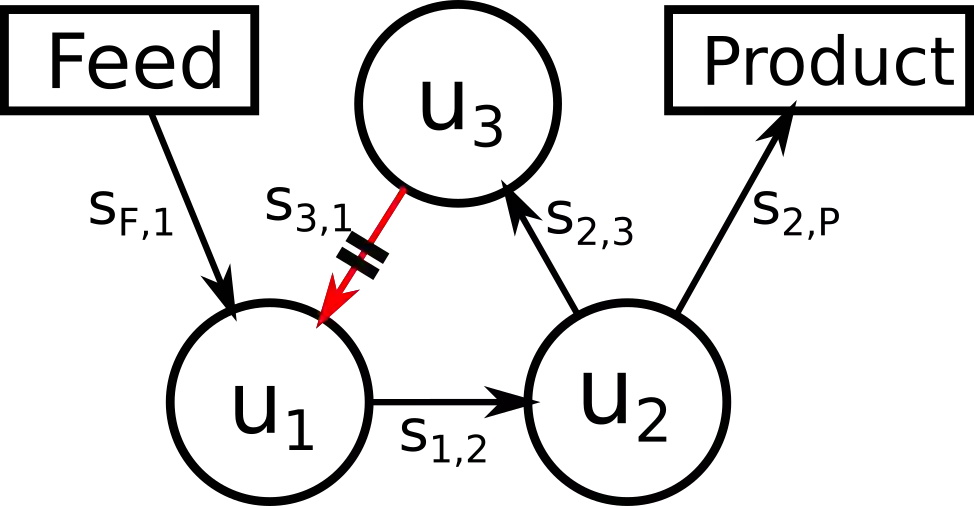
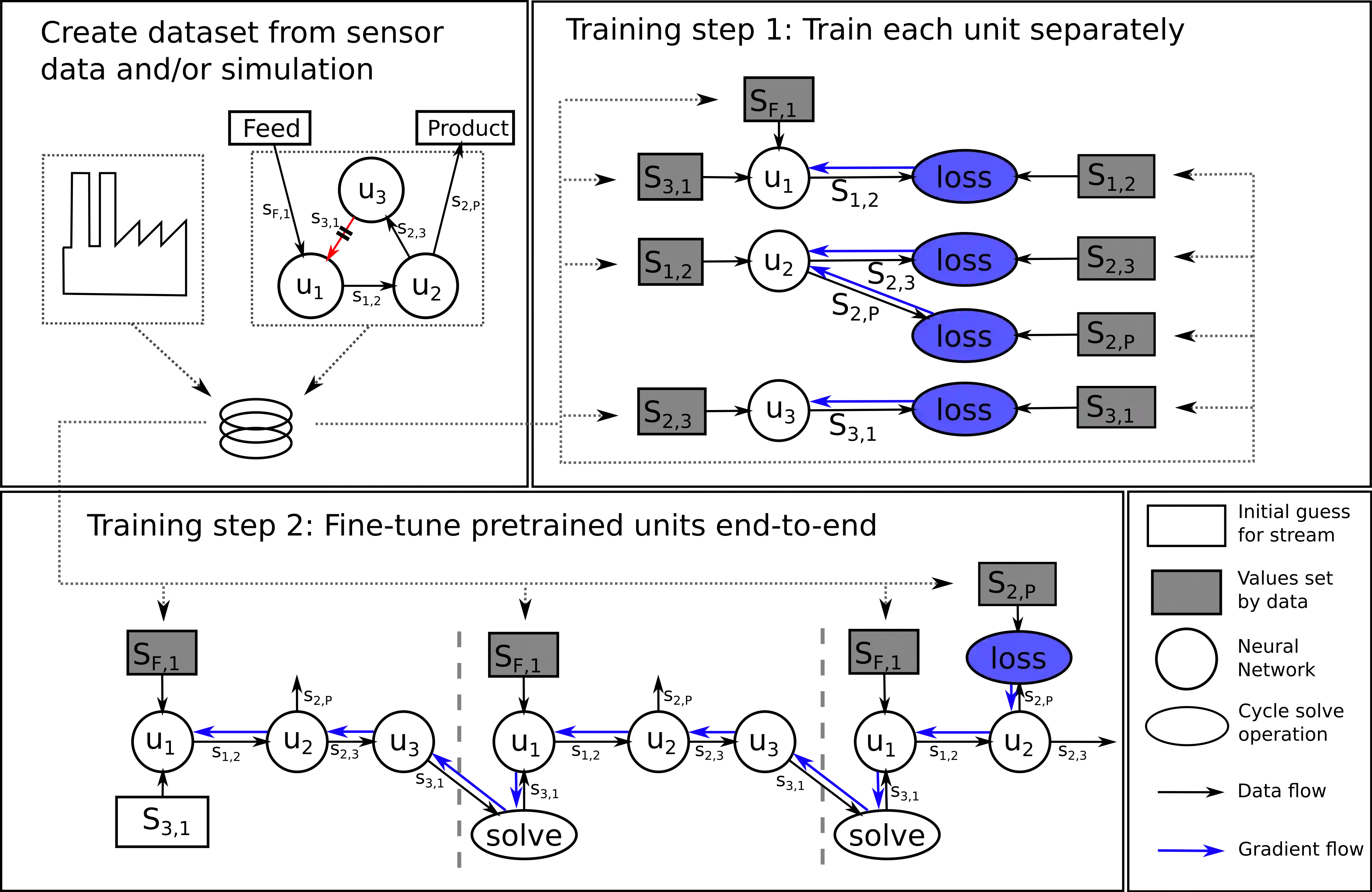
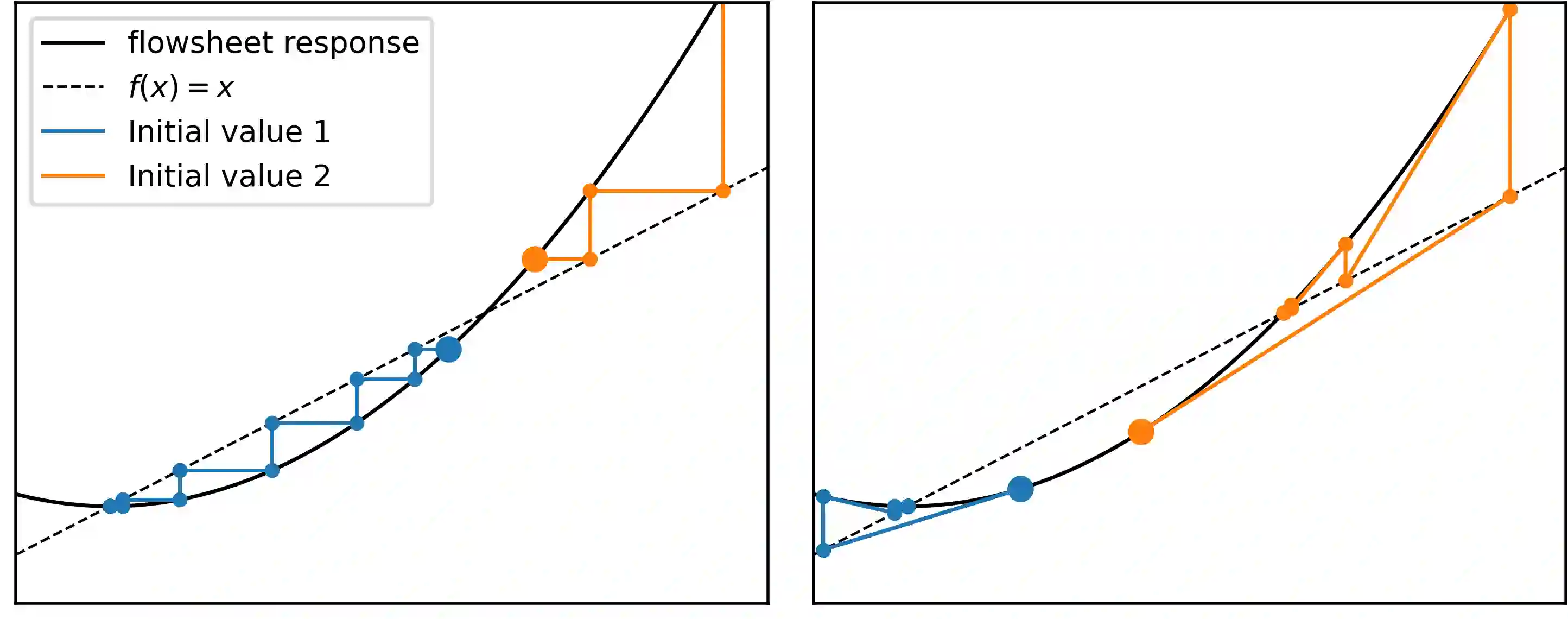
Idealized first-principles models of chemical plants can be inaccurate. An alternative is to fit a Machine Learning (ML) model directly to plant sensor data. We use a structured approach: Each unit within the plant gets represented by one ML model. After fitting the models to the data, the models are connected into a flowsheet-like directed graph. We find that for smaller plants, this approach works well, but for larger plants, the complex dynamics arising from large and nested cycles in the flowsheet lead to instabilities in the cycle solver. We analyze this problem in depth and show that it is not merely a specialized concern but rather a more pervasive challenge that will likely occur whenever ML is applied to larger plants. To address this problem, we present a way to fine-tune ML models such that solving cycles with the usual methods becomes robust again.
翻译:理想化的化工厂第一性原理模型可能存在不精确性。替代方案是直接将机器学习模型拟合至工厂传感器数据。我们采用结构化方法:工厂内每个单元由独立机器学习模型表示。将模型拟合数据后,将这些模型连接成类似流程图的定向图。我们发现,对于小型工厂此方法效果良好,但在大型工厂中,流程图内庞大嵌套循环产生的复杂动力学会导致循环求解器不稳定。我们深入分析该问题,并表明这不仅是一个特例问题,而是应用机器学习于更大工厂时普遍存在的挑战。为解决此问题,我们提出一种微调机器学习模型的方法,使得常规方法求解循环时重新具备鲁棒性。




相关内容




 微信扫码咨询专知VIP会员