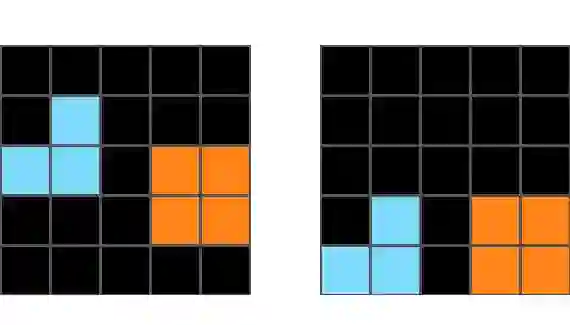
The ability to derive underlying principles from a handful of observations and then generalize to novel situations -- known as inductive reasoning -- is central to human intelligence. Prior work suggests that language models (LMs) often fall short on inductive reasoning, despite achieving impressive success on research benchmarks. In this work, we conduct a systematic study of the inductive reasoning capabilities of LMs through iterative hypothesis refinement, a technique that more closely mirrors the human inductive process than standard input-output prompting. Iterative hypothesis refinement employs a three-step process: proposing, selecting, and refining hypotheses in the form of textual rules. By examining the intermediate rules, we observe that LMs are phenomenal hypothesis proposers (i.e., generating candidate rules), and when coupled with a (task-specific) symbolic interpreter that is able to systematically filter the proposed set of rules, this hybrid approach achieves strong results across inductive reasoning benchmarks that require inducing causal relations, language-like instructions, and symbolic concepts. However, they also behave as puzzling inductive reasoners, showing notable performance gaps in rule induction (i.e., identifying plausible rules) and rule application (i.e., applying proposed rules to instances), suggesting that LMs are proposing hypotheses without being able to actually apply the rules. Through empirical and human analyses, we further reveal several discrepancies between the inductive reasoning processes of LMs and humans, shedding light on both the potentials and limitations of using LMs in inductive reasoning tasks.


翻译:从少量观察中推导出潜在原理并泛化至新情境的能力——即归纳推理——是人类智能的核心。先前研究表明,尽管语言模型在研究基准测试中取得显著成功,但其在归纳推理方面往往表现不足。本研究通过迭代假设精炼——一种比标准输入-输出提示更贴近人类归纳过程的技术——系统探究了语言模型的归纳推理能力。迭代假设精炼采用三步流程:以文本规则形式提出、选择与精炼假设。通过分析中间规则,我们发现语言模型是卓越的假设提出者(即生成候选规则的能力出众),当结合能系统性过滤所提出规则集的(任务特定)符号解释器时,这种混合方法在需要归纳因果关系、类语言指令及符号概念的推理基准测试中取得强劲表现。然而,它们同时也展现出令人困惑的归纳推理行为,在规则归纳(即识别合理规则)与规则应用(即将提出规则应用于实例)之间存在显著性能差距,这表明语言模型虽能提出假设,却无法实际应用这些规则。通过实证分析与人类评估,我们进一步揭示了语言模型与人类归纳推理过程的多重差异,阐明了语言模型在归纳推理任务中的潜力与局限性。


0
下载
关闭预览

相关内容

FlowQA: Grasping Flow in History for Conversational Machine Comprehension
专知会员服务
34+阅读 · 2019年10月18日
Stabilizing Transformers for Reinforcement Learning
专知会员服务
60+阅读 · 2019年10月17日
《DeepGCNs: Making GCNs Go as Deep as CNNs》
专知会员服务
32+阅读 · 2019年10月17日
Keras François Chollet 《Deep Learning with Python 》, 386页pdf
专知会员服务
164+阅读 · 2019年10月12日
【SIGGRAPH2019】TensorFlow 2.0深度学习计算机图形学应用
专知会员服务
41+阅读 · 2019年10月9日
Hierarchically Structured Meta-learning
CreateAMind
27+阅读 · 2019年5月22日
Transferring Knowledge across Learning Processes
CreateAMind
29+阅读 · 2019年5月18日
强化学习的Unsupervised Meta-Learning
CreateAMind
18+阅读 · 2019年1月7日
Unsupervised Learning via Meta-Learning
CreateAMind
44+阅读 · 2019年1月3日
A Technical Overview of AI & ML in 2018 & Trends for 2019
待字闺中
18+阅读 · 2018年12月24日
disentangled-representation-papers
CreateAMind
26+阅读 · 2018年9月12日
STRCF for Visual Object Tracking
统计学习与视觉计算组
15+阅读 · 2018年5月29日
Focal Loss for Dense Object Detection
统计学习与视觉计算组
12+阅读 · 2018年3月15日
IJCAI | Cascade Dynamics Modeling with Attention-based RNN
KingsGarden
13+阅读 · 2017年7月16日
From Softmax to Sparsemax-ICML16(1)
KingsGarden
74+阅读 · 2016年11月26日
国家自然科学基金
2+阅读 · 2017年12月31日
国家自然科学基金
13+阅读 · 2017年12月31日
国家自然科学基金
2+阅读 · 2015年12月31日
国家自然科学基金
0+阅读 · 2015年12月31日
国家自然科学基金
47+阅读 · 2015年12月31日
国家自然科学基金
2+阅读 · 2015年12月31日
国家自然科学基金
2+阅读 · 2015年12月31日
国家自然科学基金
1+阅读 · 2014年12月31日
国家自然科学基金
0+阅读 · 2014年12月31日
Arxiv
0+阅读 · 2023年11月27日
VIP会员
最新内容
ICML 2026 | CFPO:用反事实策略优化提升多模态推理
专知会员服务
0+阅读 · 18分钟前
综述 | 世界动作模型:少做梦,多行动
专知会员服务
0+阅读 · 20分钟前
美以伊冲突:无人机与人工智能的运用
专知会员服务
1+阅读 · 32分钟前
《特种部队在透明战场中的生存力》最新报告
专知会员服务
1+阅读 · 52分钟前
综述 | 3D场景图:开放挑战与未来方向
专知会员服务
8+阅读 · 6月22日
21世纪的无人机战争
专知会员服务
4+阅读 · 6月22日
《量子技术的军事任务技术适配与利用》
专知会员服务
5+阅读 · 6月22日
相关VIP内容
FlowQA: Grasping Flow in History for Conversational Machine Comprehension
专知会员服务
34+阅读 · 2019年10月18日
Stabilizing Transformers for Reinforcement Learning
专知会员服务
60+阅读 · 2019年10月17日
《DeepGCNs: Making GCNs Go as Deep as CNNs》
专知会员服务
32+阅读 · 2019年10月17日
Keras François Chollet 《Deep Learning with Python 》, 386页pdf
专知会员服务
164+阅读 · 2019年10月12日
【SIGGRAPH2019】TensorFlow 2.0深度学习计算机图形学应用
专知会员服务
41+阅读 · 2019年10月9日
相关资讯
Hierarchically Structured Meta-learning
CreateAMind
27+阅读 · 2019年5月22日
Transferring Knowledge across Learning Processes
CreateAMind
29+阅读 · 2019年5月18日
强化学习的Unsupervised Meta-Learning
CreateAMind
18+阅读 · 2019年1月7日
Unsupervised Learning via Meta-Learning
CreateAMind
44+阅读 · 2019年1月3日
A Technical Overview of AI & ML in 2018 & Trends for 2019
待字闺中
18+阅读 · 2018年12月24日
disentangled-representation-papers
CreateAMind
26+阅读 · 2018年9月12日
STRCF for Visual Object Tracking
统计学习与视觉计算组
15+阅读 · 2018年5月29日
Focal Loss for Dense Object Detection
统计学习与视觉计算组
12+阅读 · 2018年3月15日
IJCAI | Cascade Dynamics Modeling with Attention-based RNN
KingsGarden
13+阅读 · 2017年7月16日
From Softmax to Sparsemax-ICML16(1)
KingsGarden
74+阅读 · 2016年11月26日
相关基金
国家自然科学基金
2+阅读 · 2017年12月31日
国家自然科学基金
13+阅读 · 2017年12月31日
国家自然科学基金
2+阅读 · 2015年12月31日
国家自然科学基金
0+阅读 · 2015年12月31日
国家自然科学基金
47+阅读 · 2015年12月31日
国家自然科学基金
2+阅读 · 2015年12月31日
国家自然科学基金
2+阅读 · 2015年12月31日
国家自然科学基金
1+阅读 · 2014年12月31日
国家自然科学基金
0+阅读 · 2014年12月31日
Top
微信扫码咨询专知VIP会员