

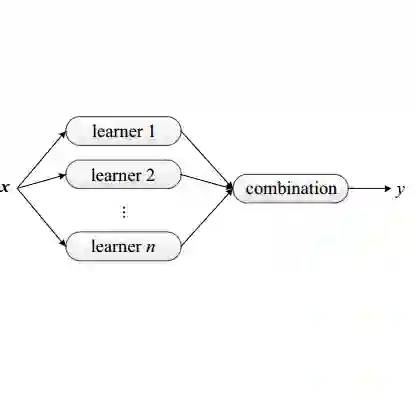
Construction waste hauling trucks (or `slag trucks') are among the most commonly seen heavy-duty diesel vehicles in urban streets, which not only produce significant carbon, NO$_{\textbf{x}}$ and PM$_{\textbf{2.5}}$ emissions but are also a major source of on-road and on-site fugitive dust. Slag trucks are subject to a series of spatial and temporal access restrictions by local traffic and environmental policies. This paper addresses the practical problem of predicting levels of slag truck activity at a city scale during heavy pollution episodes, such that environmental law enforcement units can take timely and proactive measures against localized truck aggregation. A deep ensemble learning framework (coined AI-Truck) is designed, which employs a soft vote integrator that utilizes Bi-LSTM, TCN, STGCN, and PDFormer as base classifiers. AI-Truck employs a combination of downsampling and weighted loss is employed to address sample imbalance, and utilizes truck trajectories to extract more accurate and effective geographic features. The framework was deployed for truck activity prediction at a resolution of 1km$\times$1km$\times$0.5h, in a 255 km$^{\textbf{2}}$ area in Chengdu, China. As a classifier, AI-Truck achieves a macro F1 of 0.747 in predicting levels of slag truck activity for 0.5-h prediction time length, and enables personnel to spot high-activity locations 1.5 hrs ahead with over 80\% accuracy.
翻译:建筑废弃物运输车辆(或称“渣土车”)是城市街道上最常见的中重型柴油车辆之一,不仅产生大量碳、NOₓ和PM₂.₅排放,也是道路和工地扬尘的主要来源。渣土车受到地方交通和环保政策的一系列时空通行限制。本文针对重污染时段城市尺度下渣土车活动水平的预测这一实际问题展开研究,以便环境执法单位能够针对车辆局部聚集现象及时采取主动措施。设计了一种深度集成学习框架(命名为AI-Truck),该框架采用软投票集成器,以Bi-LSTM、TCN、STGCN和PDFormer作为基分类器。AI-Truck采用下采样与加权损失相结合的方法处理样本不平衡问题,并利用车辆轨迹提取更准确有效的地理特征。该框架部署于中国成都面积255 km²的区域,以1km×1km×0.5h的分辨率进行车辆活动预测。作为分类器,AI-Truck在0.5小时预测时间长度内预测渣土车活动水平时,宏F1值达0.747,且能使人员提前1.5小时识别高活动地点,准确率超过80%。




相关内容




 微信扫码咨询专知VIP会员