

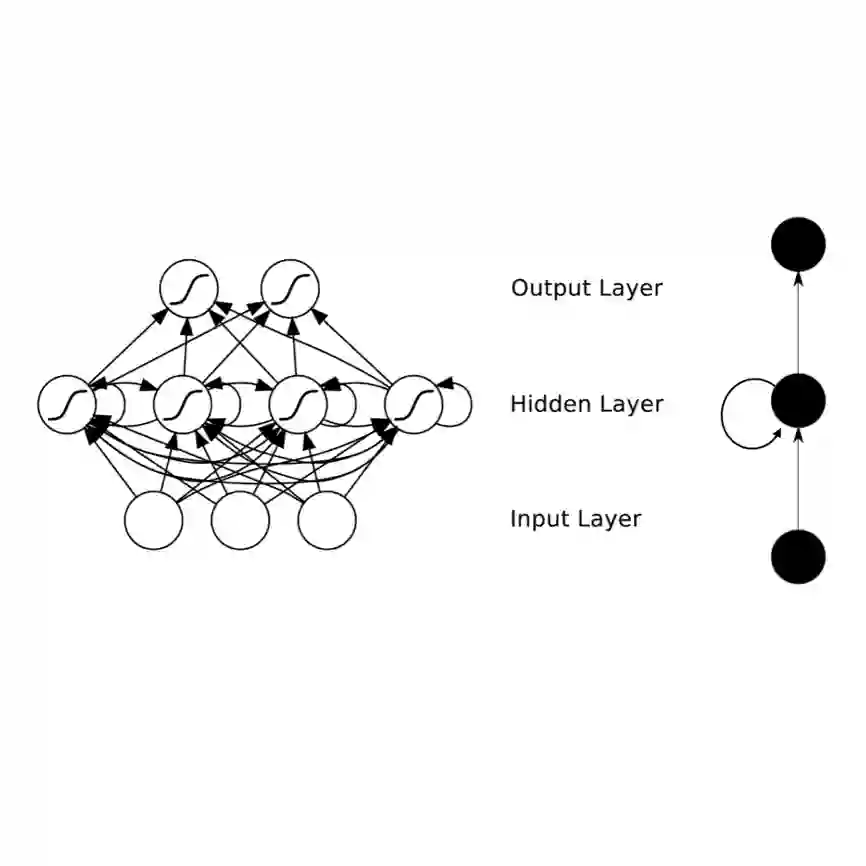
Accurate short-term energy consumption forecasting is essential for efficient power grid management, resource allocation, and market stability. Traditional time-series models often fail to capture the complex, non-linear dependencies and external factors affecting energy demand. In this study, we propose a forecasting approach based on Recurrent Neural Networks (RNNs) and their advanced variant, Long Short-Term Memory (LSTM) networks. Our methodology integrates historical energy consumption data with external variables, including temperature, humidity, and time-based features. The LSTM model is trained and evaluated on a publicly available dataset, and its performance is compared against a conventional feed-forward neural network baseline. Experimental results show that the LSTM model substantially outperforms the baseline, achieving lower Mean Absolute Error (MAE) and Root Mean Squared Error (RMSE). These findings demonstrate the effectiveness of deep learning models in providing reliable and precise short-term energy forecasts for real-world applications.
翻译:准确的短期能耗预测对于高效电网管理、资源分配和市场稳定至关重要。传统时间序列模型往往难以捕捉影响能源需求的复杂非线性依赖关系和外部因素。本研究提出一种基于循环神经网络(RNNs)及其高级变体——长短期记忆(LSTM)网络的预测方法。我们的方法将历史能耗数据与温度、湿度和时间特征等外部变量相结合。LSTM模型在公开数据集上进行训练和评估,并将其性能与传统前馈神经网络基线进行比较。实验结果表明,LSTM模型显著优于基线模型,实现了更低的平均绝对误差(MAE)和均方根误差(RMSE)。这些发现证明了深度学习模型在为实际应用提供可靠、精确的短期能源预测方面的有效性。




相关内容



 微信扫码咨询专知VIP会员