

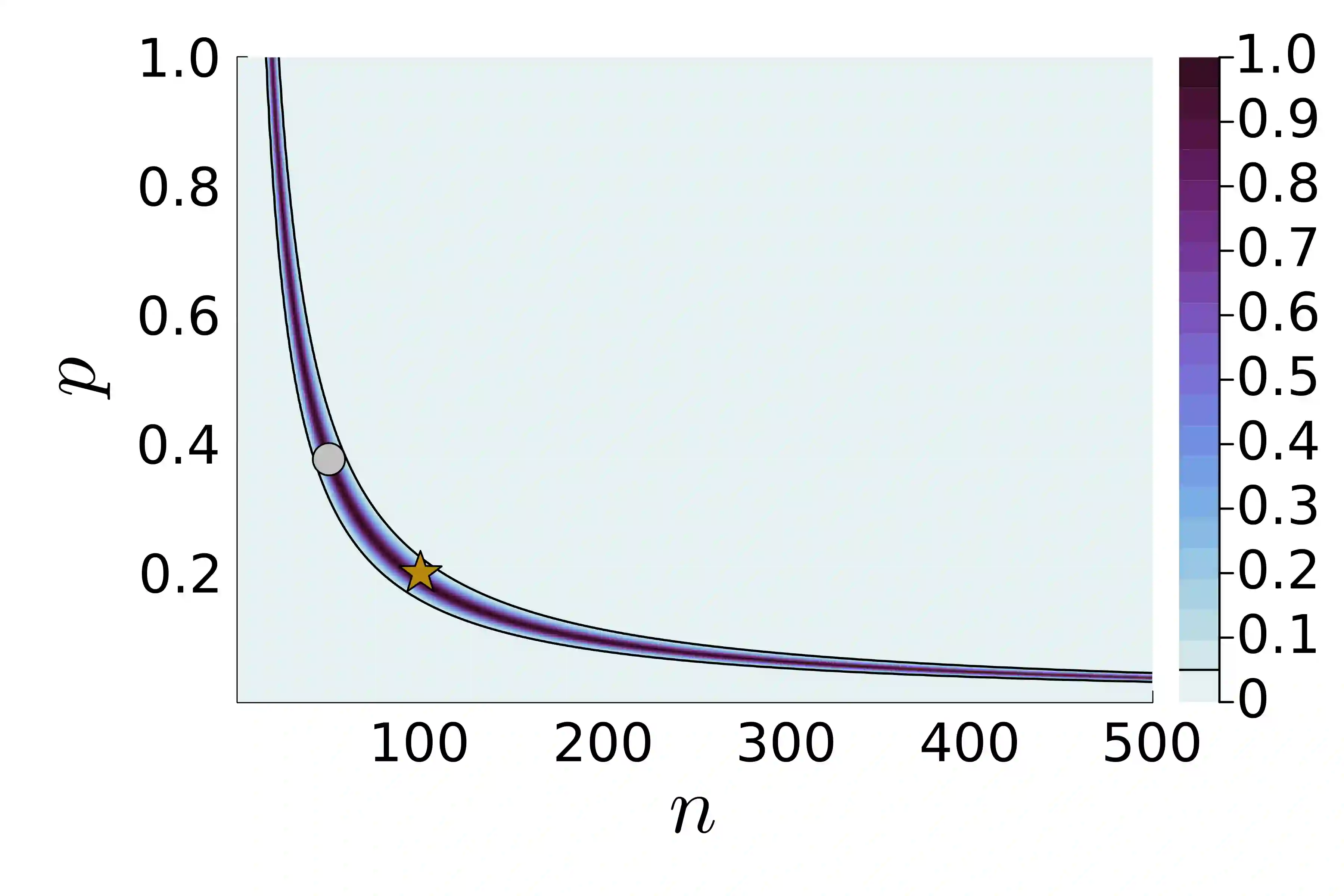
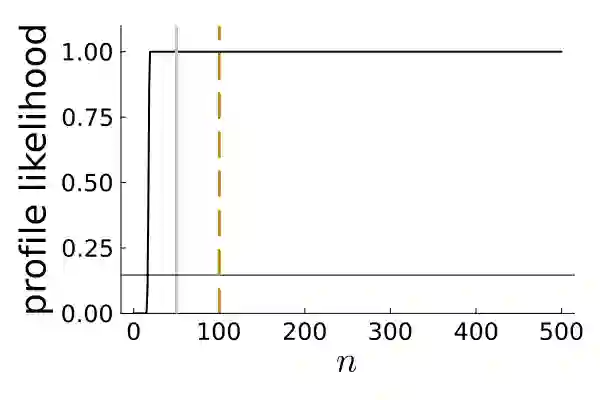
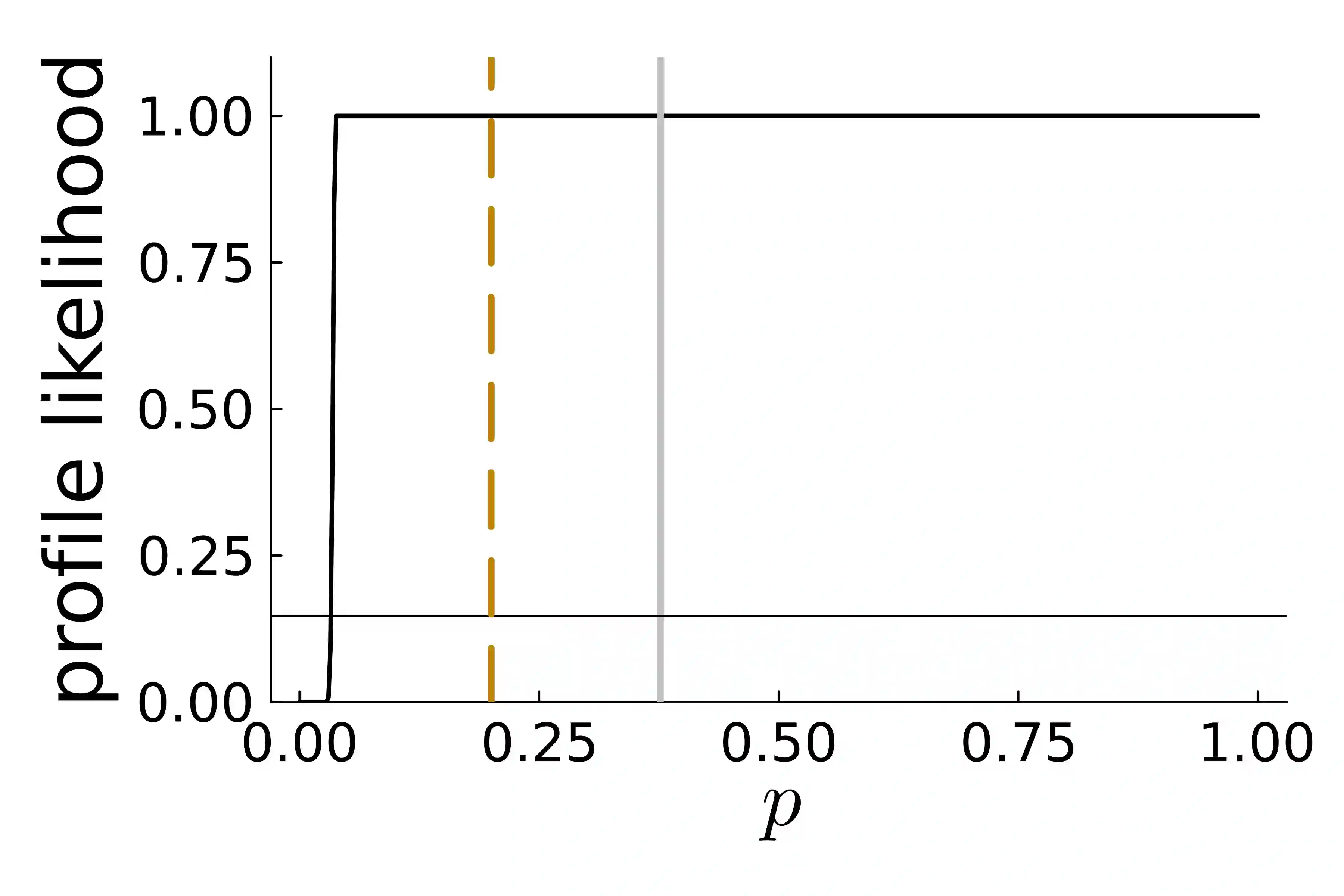
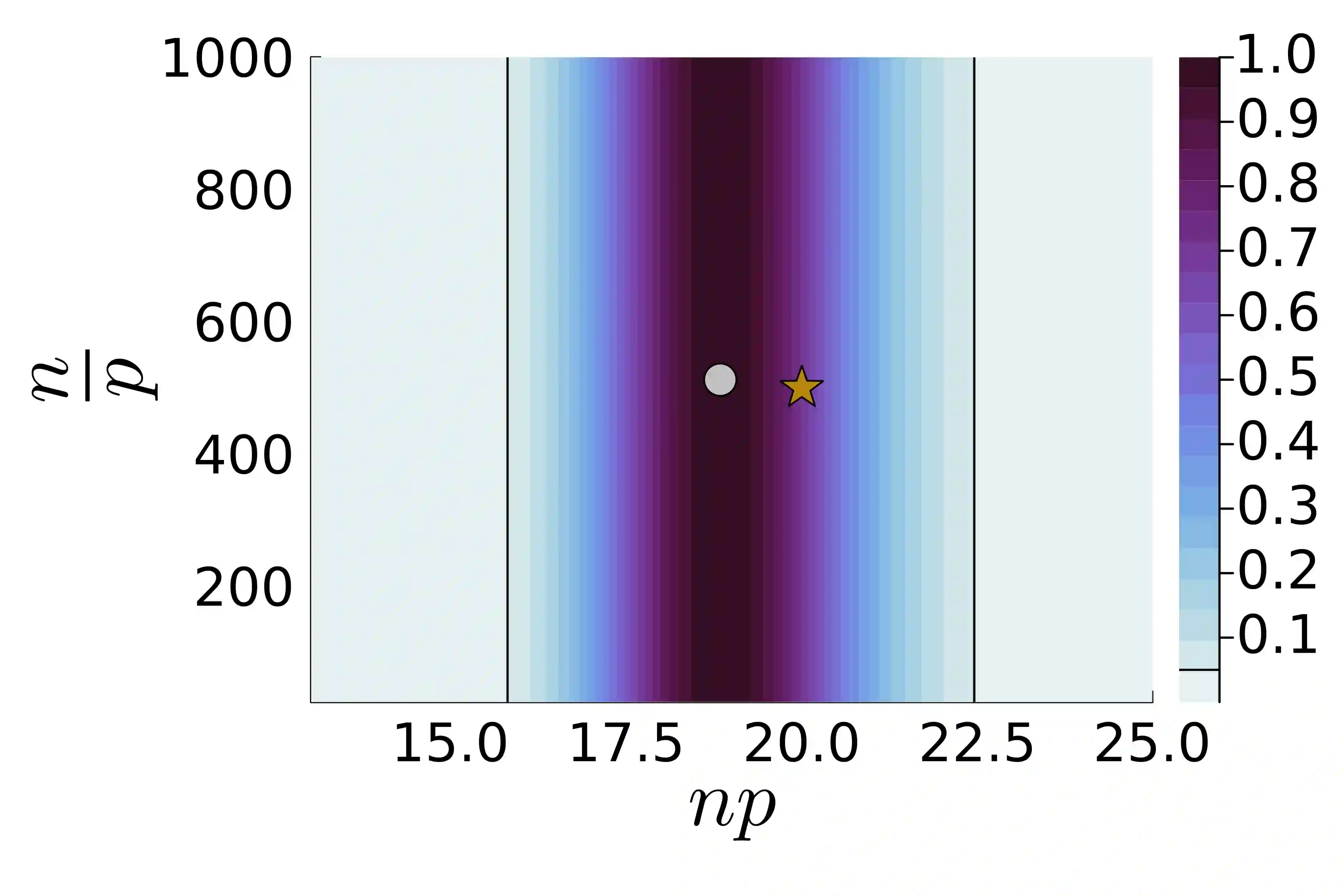
Structural and practical parameter non-identifiability are common when mathematical models are used to interpret data. Here, we consider Invariant Image Reparameterisation (IIR), a method linking symbolic reparameterisation conditions with numerical derivative calculations. IIR asks when the reparameterisation information that would otherwise require symbolic calculation can be obtained from numerical derivatives at a single reference point. The central object is the invariant image: a reduced, basis-independent representation of the parameter combinations controlling observable model behaviour. We show that, when a one-to-one componentwise transformation of the parameters makes observable behaviour depend only on fixed lower-dimensional linear combinations of the transformed parameters, a single numerical Jacobian calculation determines the reduced parameter space. This includes models depending on monomial combinations of the original parameters. We also give a first-order invariance condition that distinguishes minimal reductions from exact but non-minimal partial reductions by finding the invariant part of the local null space. In structurally identifiable but practically weakly informed settings, the same calculations separate strongly and weakly informed parameter combinations. The invariant image admits multiple coordinate representations: the SVD gives a canonical orthonormal basis ordered by local identifiability, while sparse monomial bases are often more interpretable. Treating these coordinates as interest parameters in Profile-Wise Analysis gives likelihood-based uncertainty quantification. We demonstrate the method on parameterised normal models with Poisson-limit, extended Poisson-limit, and non-limit regimes, and on the repressilator. A Julia implementation is available at https://github.com/omaclaren/reparam.
翻译:当数学模型用于解释数据时,结构性与实践性参数不可辨识问题普遍存在。本文考虑不变图像重新参数化(Invariant Image Reparameterisation, IIR)方法,该方法将符号重新参数化条件与数值导数计算相联接。IIR探究原本需要符号计算才能获得的重新参数化信息,是否可在单一参考点通过数值导数获取。其核心对象是不变图像:一种约简的、与基无关的参数组合表征形式,用于控制可观测模型行为。我们证明:当参数存在一一对应的分量变换,使可观测行为仅依赖于变换后参数的固定低维线性组合时,单次数值雅可比矩阵计算即可确定降维参数空间。这涵盖原始参数满足单项式组合的模型。此外,我们提出一阶不变性条件,通过寻找局部零空间的不变部分,区分极小约简与精确但非极小的偏约简。在结构可辨识但实践弱信息场景中,相同计算可分离强信息与弱信息参数组合。不变图像允许多种坐标表征:奇异值分解给出按局部可辨识性排序的标准正交基,而稀疏单项式基通常更具可解释性。将这些坐标作为剖面分析的关注参数,可进行基于似然的不确定性量化。我们在参数化正态模型(含泊松极限、扩展泊松极限及非极限情形)及抑制子模型上验证了该方法。Julia实现代码见 https://github.com/omaclaren/reparam。




相关内容


 微信扫码咨询专知VIP会员