

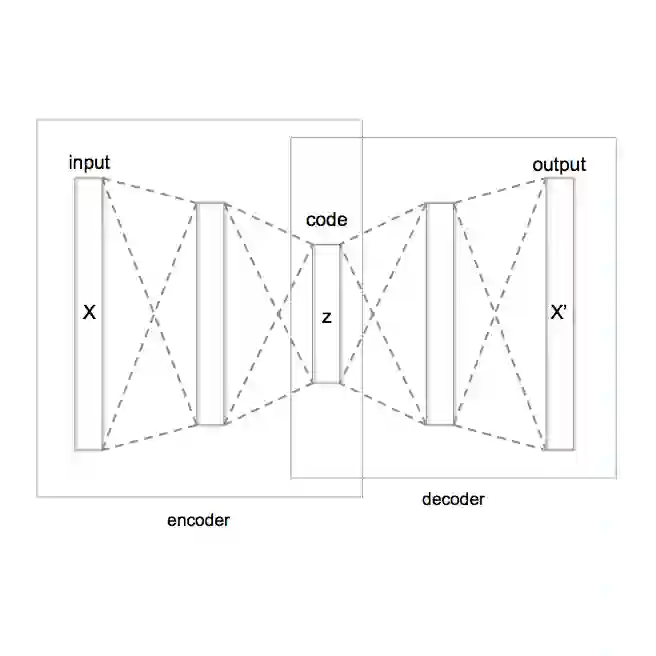
Structural Health Monitoring of Floating Offshore Wind Turbines (FOWTs) is critical for ensuring operational safety and efficiency. However, identifying damage in components like mooring systems from limited sensor data poses a challenging inverse problem, often characterized by multimodal solutions where various damage states could explain the observed response. To overcome it, we propose a Variational Autoencoder (VAE) architecture, where the encoder approximates the inverse operator, while the decoder approximates the forward. The posterior distribution of the latent space variables is probabilistically modeled, describing the uncertainties in the estimates. This work tackles the limitations of conventional Gaussian Mixtures used within VAEs, which can be either too restrictive or computationally prohibitive for high-dimensional spaces. We propose a novel Copula-based VAE architecture that decouples the marginal distribution of the variables from their dependence structure, offering a flexible method for representing complex, correlated posterior distributions. We provide a comprehensive comparison of three different approaches for approximating the posterior: a Gaussian Mixture with a diagonal covariance matrix, a Gaussian Mixture with a full covariance matrix, and a Gaussian Copula. Our analysis, conducted on a high-fidelity synthetic dataset, demonstrates that the Copula VAE offers a promising and tractable solution in high-dimensional spaces. Although the present work remains in the two-dimensional space, the results suggest efficient scalability to higher dimensions. It achieves superior performance with significantly fewer parameters than the Gaussian Mixture alternatives, whose parametrization grows prohibitively with the dimensionality. The results underscore the potential of Copula-based VAEs as a tool for uncertainty-aware damage identification in FOWT mooring systems.
翻译:浮式海上风力发电机(FOWT)的结构健康监测对于确保运行安全与效率至关重要。然而,如何从有限的传感器数据中识别系泊系统等部件的损伤,构成了一个具有挑战性的反问题,其特点通常是多模态解,即多种损伤状态都可能解释观测到的响应。为克服这一难题,我们提出了一种变分自编码器(VAE)架构,其中编码器近似反算子,解码器近似正算子。我们对潜在空间变量的后验分布进行概率建模,以描述估计中的不确定性。本研究针对传统VAE中采用的高斯混合模型在高维空间中可能过于受限或计算成本过高的问题,提出了一种新颖的基于Copula的VAE架构。该架构将变量的边缘分布与其依赖结构解耦,为表示复杂、相关的后验分布提供了一种灵活的方法。我们对三种近似后验分布的方法进行了全面比较:采用对角协方差矩阵的高斯混合模型、采用全协方差矩阵的高斯混合模型以及高斯Copula模型。基于高保真合成数据集的分析表明,Copula VAE在高维空间中提供了一种前景广阔且易于处理的解决方案。尽管当前工作仍局限于二维空间,但结果表明该方法能高效地扩展至更高维度。与高斯混合模型替代方案相比,Copula VAE以显著更少的参数实现了更优的性能,而高斯混合模型的参数量会随维度的增加而急剧增长。这些结果凸显了基于Copula的VAE作为一种不确定性感知工具在FOWT系泊系统损伤识别中的潜力。




相关内容


 微信扫码咨询专知VIP会员