

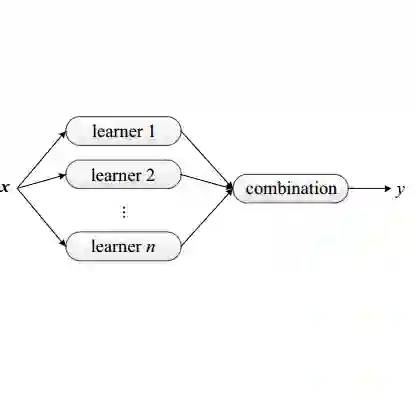
Oral Food Challenges (OFCs) are essential to accurately diagnosing food allergy due to the limitations of existing clinical testing. However, some patients are hesitant to undergo OFCs, while those willing suffer from limited access to allergists in rural/community healthcare settings. Despite its success in predicting patient outcomes in other clinical settings, few applications of machine learning to food allergy have been developed. Thus, in this study, we seek to leverage machine learning methodologies for OFC outcome prediction. Retrospective data was gathered from 1,112 patients who collectively underwent a total of 1,284 OFCs, and consisted of clinical factors including serum-specific Immunoglobulin E (IgE), total IgE, skin prick tests (SPTs), comorbidities, sex, and age. Using these features, multiple machine learning models were constructed to predict OFC outcomes for three common allergens: peanut, egg, and milk. The best performing model for each allergen was an ensemble of random forest (egg) or Learning Using Concave and Convex Kernels (LUCCK) (peanut, milk) models, which achieved an Area under the Curve (AUC) of 0.91, 0.96, and 0.94, in predicting OFC outcomes for peanut, egg, and milk, respectively. Moreover, all such models had sensitivity and specificity values 89%. Model interpretation via SHapley Additive exPlanations (SHAP) indicates that specific IgE, along with wheal and flare values from SPTs, are highly predictive of OFC outcomes. The results of this analysis suggest that ensemble learning has the potential to predict OFC outcomes and reveal relevant clinical factors for further study.
翻译:口腔食品挑战(OFCs)对于准确诊断食用肝脏过敏症至关重要,因为现有的临床测试有限,因此准确诊断食用肝脏过敏症(OFCs)至关重要。然而,一些病人对于接受食用肝脏过敏症(OFCs)犹豫不决,而那些愿意接受这种过敏症的人则因在农村/社区保健环境中接触过敏者的机会有限而受到影响。尽管它在其他临床环境中成功地预测了病人的结果,但在食品过敏症(OFCs)方面却很少应用机器学习机能学习的方法。因此,我们在本研究中,我们试图利用机器学习方法来预测食用肝脏过敏症(OFCs)的结果。从1,1,1,1,1,1,2,2,2,2,2,2,2,2,2,2,2,2,2,2,2,2,2,2,2,2,2,2,2,2,2,2,2,2,2,2,2,2,2,2,2,2,2,2,2,2,2,2,2,2,2,2,2,2,2,2,2,2,2,2,2,2,2,2,2,2,2,2,2,2,2,2,2,2,2,2,2,2,2,2,2,2,2,2,2,2,2,2,2,2,2,2,2,2,2,2,2,2,2,2,2,2,2,2,2,2,2,2,2,2,2,2,2,2,2,2,2,2,2,2,2,2,2,2,2,2,2,2,2,2,2,2,2,2,2,2,2,2,2,2,2,2,2,2,2,2,2,2,2,2,2,2,2,2,2,2,2,2,2,2,2,2,2,2,2,2,2,2,2,2,2,2,2,2,2,




相关内容




 微信扫码咨询专知VIP会员