

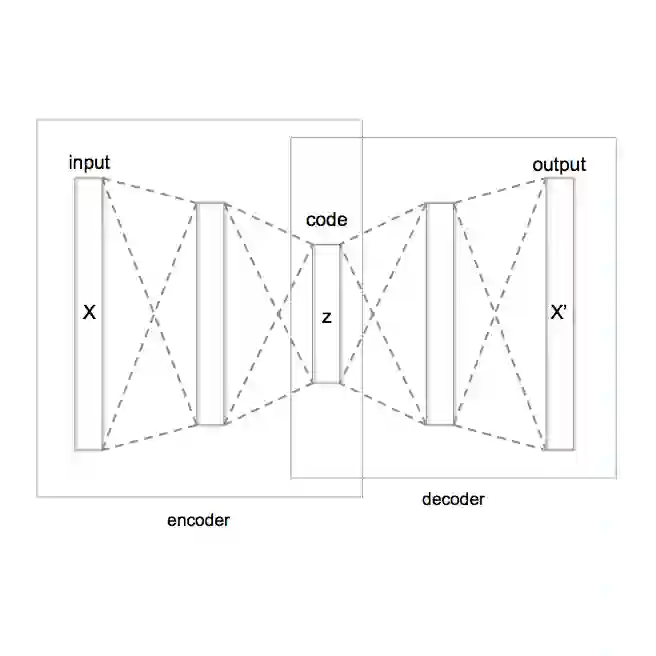
Ongoing armed conflict in Sudan highlights the need for rapid monitoring of conflict-related fire-affected areas. Recent advances in deep learning and high-frequency satellite imagery enable near--real-time assessment of active fires and burn scars in war zones. This study presents a near--real-time monitoring approach using a lightweight Variational Auto-Encoder (VAE)--based model integrated with 4-band Planet Labs imagery at 3 m spatial resolution. We demonstrate that these impacted regions can be detected within approximately 24 to 30 hours under favorable observational conditions using accessible, commercially available satellite data. To achieve this, we adapt a VAE--based model, originally designed for 10-band imagery, to operate effectively on high-resolution 4-band inputs. The model is trained in an unsupervised manner to learn compact latent representations of nominal land-surface conditions and identify burn signatures by quantifying changes between temporally paired latent embeddings. Performance is evaluated across five case studies in Sudan and compared against cosine distance, CVA, and IR-MAD using precision, recall, F1-score, and the area under the precision-recall curve (AUPRC) computed between temporally paired image tiles. Results show that the proposed approach consistently outperforms the other methods, achieving higher recall and F1-scores while maintaining operationally viable precision in highly imbalanced fire-detection scenarios. Experiments with 8-band imagery and temporal image sequences yield only marginal performance gains over single 4-band inputs, underscoring the effectiveness of the proposed lightweight approach for scalable, near--real-time conflict monitoring.
翻译:苏丹持续的武装冲突凸显了对冲突相关火灾影响区域进行快速监测的迫切需求。深度学习与高频卫星影像的最新进展使得对战争区域活跃火点和火烧迹地进行近实时评估成为可能。本研究提出了一种近实时监测方法,该方法采用基于轻量级变分自编码器(VAE)的模型,并结合空间分辨率为3米的4波段Planet Labs影像。我们证明,在有利的观测条件下,利用可获取的商业卫星数据,可在约24至30小时内检测到这些受影响区域。为实现此目标,我们调整了一种基于VAE的模型(该模型最初为10波段影像设计),使其能有效处理高分辨率的4波段输入。该模型以无监督方式进行训练,学习正常地表条件的紧凑潜在表示,并通过量化时间配对潜在嵌入之间的变化来识别火烧特征。在苏丹的五个案例研究中评估了模型性能,并与余弦距离、CVA和IR-MAD方法进行了比较,评估指标包括精确率、召回率、F1分数以及基于时间配对影像块计算出的精确率-召回率曲线下面积(AUPRC)。结果表明,所提出的方法在高度不平衡的火灾检测场景中,始终优于其他方法,实现了更高的召回率和F1分数,同时保持了操作上可行的精确率。使用8波段影像和时间序列影像进行的实验仅比单一4波段输入带来边际性能提升,这进一步证实了所提出的轻量级方法在可扩展的近实时冲突监测中的有效性。




相关内容



 微信扫码咨询专知VIP会员