

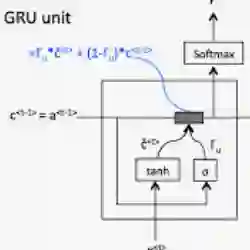
Named entity recognition (NER) is a natural language processing task (NLP), which aims to identify named entities and classify them like person, location, organization, etc. In the Arabic language, we can find a considerable size of unstructured data, and it needs to different preprocessing tool than languages like (English, Russian, German...). From this point, we can note the importance of building a new structured dataset to solve the lack of structured data. In this work, we use the BIOES format to tag the word, which allows us to handle the nested name entity that consists of more than one sentence and define the start and the end of the name. The dataset consists of more than thirty-six thousand records. In addition, this work proposes long short term memory (LSTM) units and Gated Recurrent Units (GRU) for building the named entity recognition model in the Arabic language. The models give an approximately good result (80%) because LSTM and GRU models can find the relationships between the words of the sentence. Also, use a new library from Google, which is Trax and platform Colab
翻译:命名实体识别(NER)是自然语言处理(NLP)中的一项任务,旨在识别命名实体并将其分类,例如人名、地点、组织等。在阿拉伯语中,存在大量非结构化数据,且其预处理工具与英语、俄语、德语等语言不同。由此可知,构建新的结构化数据集以解决结构化数据匮乏问题具有重要意义。本研究采用BIOES格式对词语进行标注,从而能处理由多个句子构成的嵌套命名实体,并明确实体的起始位置。该数据集包含超过三万六千条记录。此外,本研究提出使用长短期记忆(LSTM)单元和门控循环单元(GRU)构建阿拉伯语命名实体识别模型。由于LSTM和GRU模型能够捕捉句子中词语之间的关系,模型取得了约80%的良好效果。同时,本研究采用了谷歌的新工具Trax及Colab平台。




相关内容




 微信扫码咨询专知VIP会员