

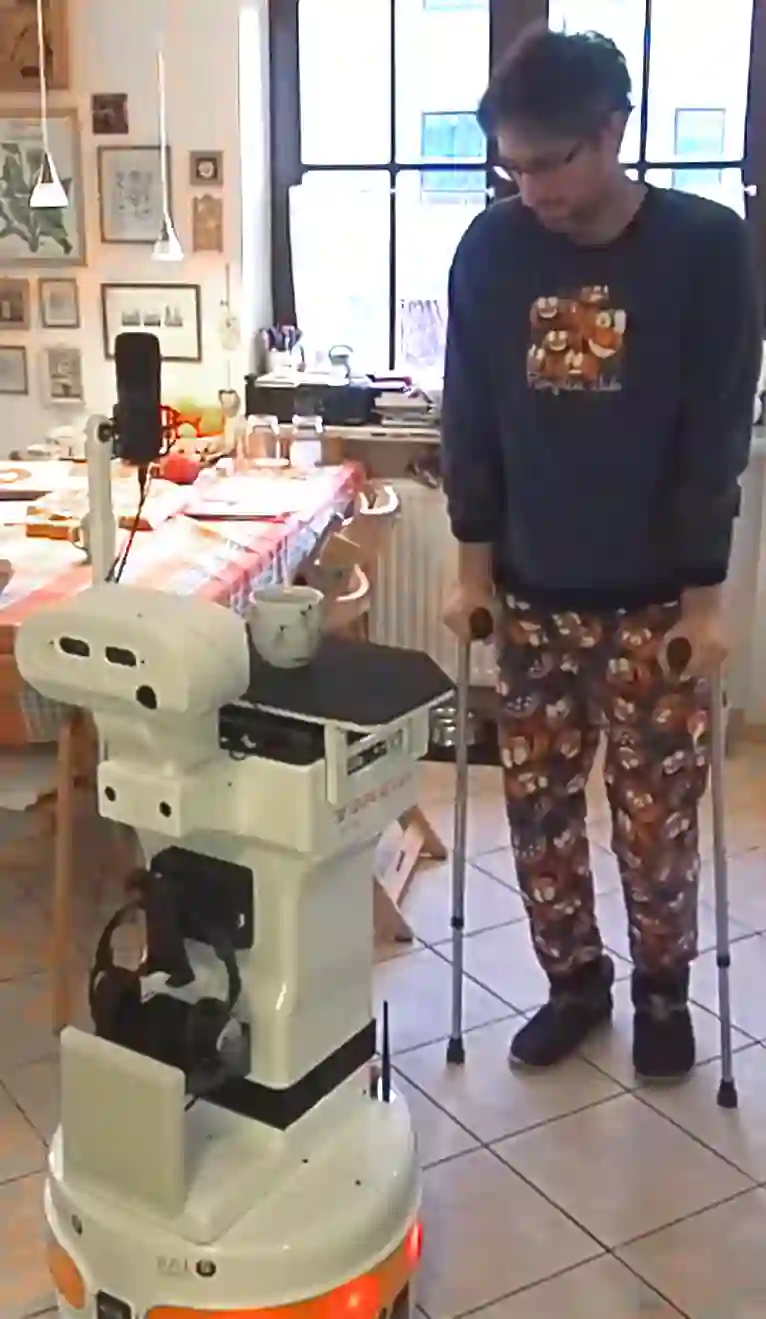
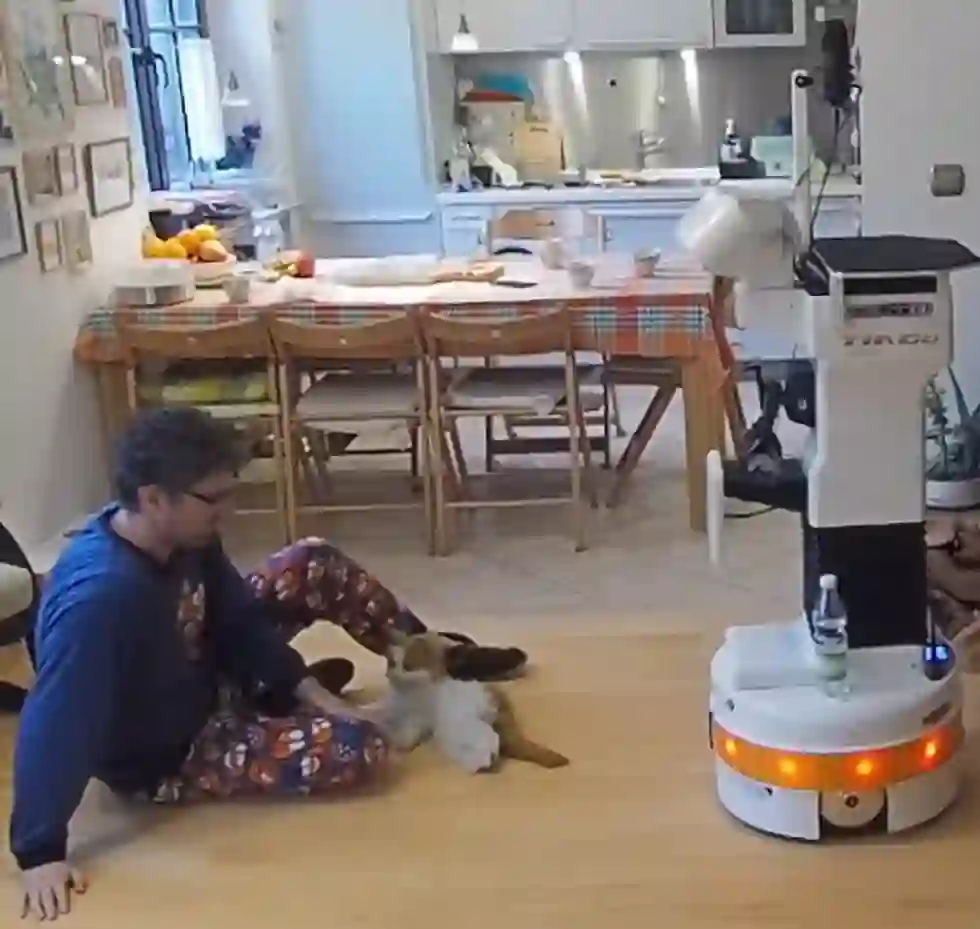
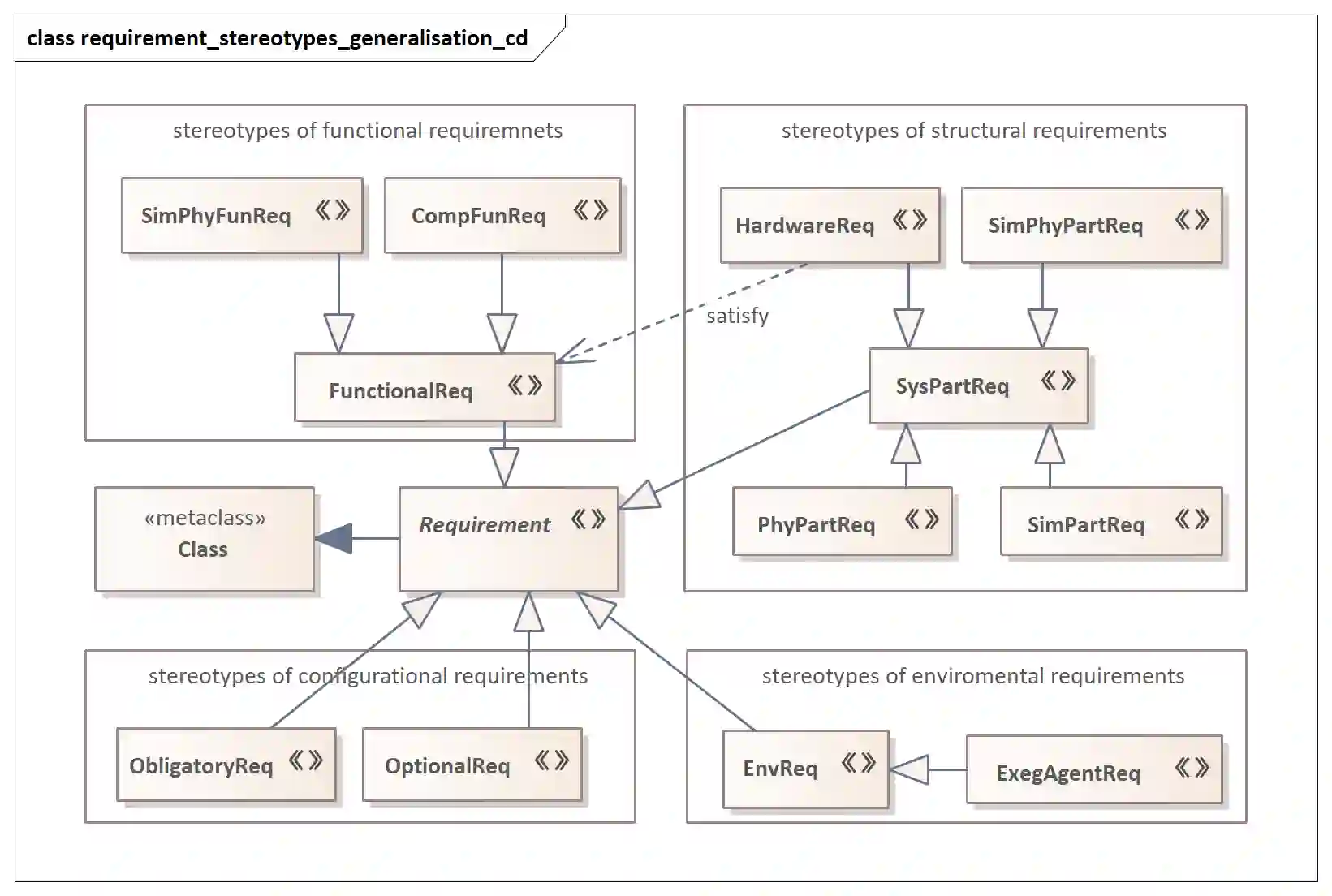
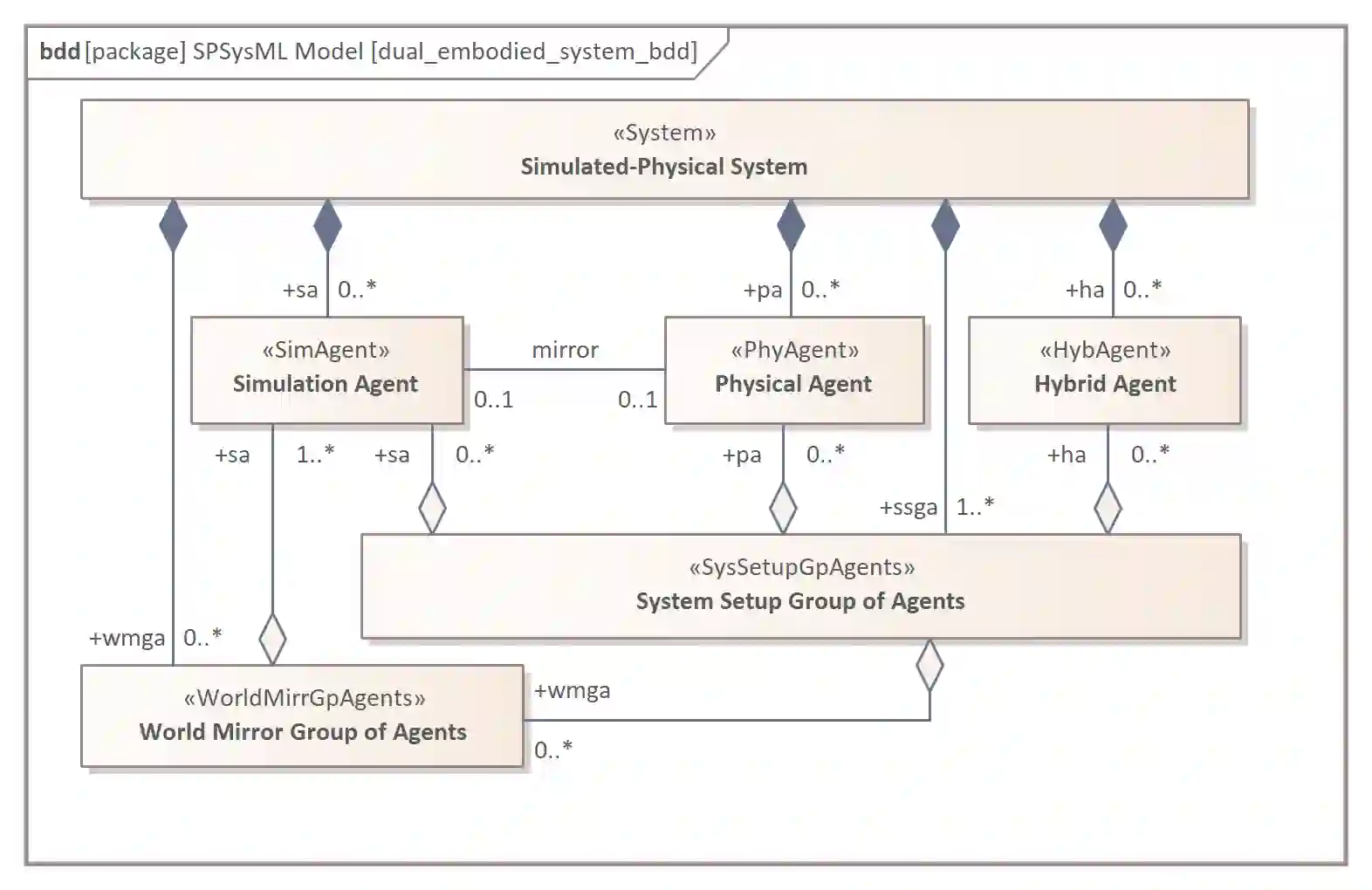
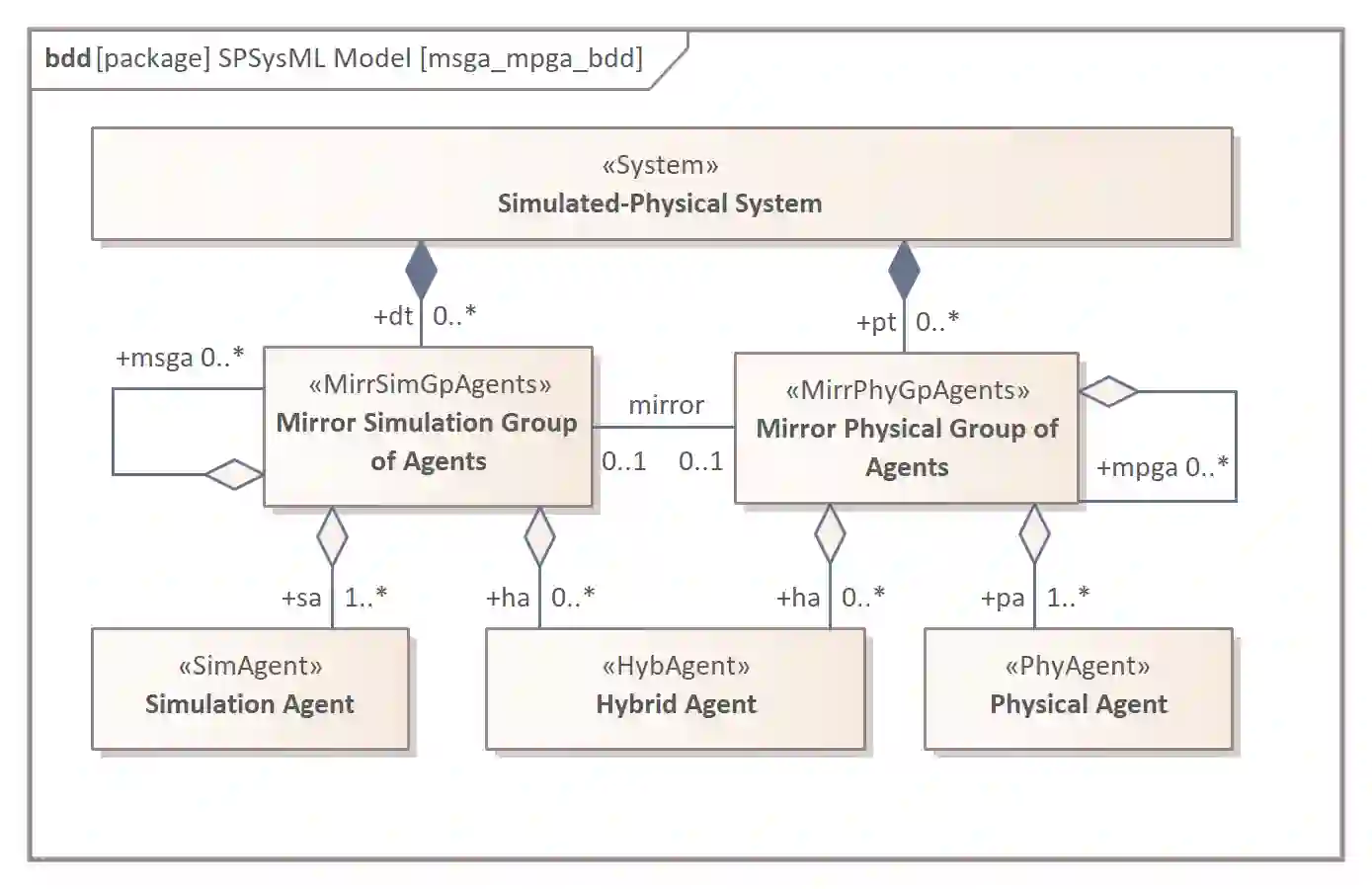
Robotic systems are complex cyber-physical systems (CPS) commonly equipped with multiple sensors and effectors. Recent simulation methods enable the Digital Twin (DT) concept realisation. However, DT employment in robotic system development, e.g. in-development testing, is unclear. During the system development, its parts evolve from simulated mockups to physical parts which run software deployed on the actual hardware. Therefore, a design tool and a flexible development procedure ensuring the integrity of the simulated and physical parts are required. We aim to maximise the integration between a CPS's simulated and physical parts in various setups. The better integration, the better simulation-based testing coverage of the physical part (hardware and software). We propose a Domain Specification Language (DSL) based on Systems Modeling Language (SysML) that we refer to as SPSysML (Simulation-Physical System Modeling Language). SPSysML defines the taxonomy of a Simulation-Physical System (SPSys), being a CPS consisting of at least a physical or simulated part. In particular, the simulated ones can be DTs. We propose a SPSys Development Procedure (SPSysDP) that enables the maximisation of the simulation-physical integrity of SPSys by evaluating the proposed factors. SPSysDP is used to develop a complex robotic system for the INCARE project. In subsequent iterations of SPSysDP, the simulation-physical integrity of the system is maximised. As a result, the system model consists of fewer components, and a greater fraction of the system components are shared between various system setups. We implement and test the system with popular frameworks, Robot Operating System (ROS) and Gazebo simulator. SPSysML with SPSysDP enables the design of SPSys (including DT and CPS), multi-setup system development featuring maximised integrity between simulation and physical parts in its setups.
翻译:机器人系统是通常配备多种传感器和执行器的复杂信息物理系统(CPS)。最新仿真方法使数字孪生(DT)概念得以实现。然而,DT在机器人系统开发(例如开发中测试)中的应用尚不明确。在系统开发过程中,其组件从仿真模型逐步演变为运行实际硬件部署软件的物理部件。因此,需要一种设计工具和灵活的开发流程来确保仿真与物理部件的完整性。我们旨在最大化CPS在不同配置下仿真与物理部件的集成度。集成度越高,基于仿真的物理部件(硬件和软件)测试覆盖率就越好。我们提出一种基于系统建模语言(SysML)的领域特定语言(DSL),称为SPSysML(仿真-物理系统建模语言)。SPSysML定义了仿真-物理系统(SPSys)的分类体系——SPSys是由至少一个物理或仿真部件构成的CPS,其中仿真部件可以是DT。我们提出SPSys开发流程(SPSysDP),通过评估所提出的因素实现SPSys仿真-物理完整性的最大化。SPSysDP被用于INCARE项目中复杂机器人系统的开发。在SPSysDP的后续迭代中,系统的仿真-物理完整性逐步提升。最终,系统模型包含更少的组件,且更大比例的组件在不同系统配置之间共享。我们使用主流框架机器人操作系统(ROS)和Gazebo仿真器对该系统进行实现与测试。SPSysML结合SPSysDP能够实现SPSys(包括DT和CPS)的设计,并支持多配置系统开发,使其各配置下的仿真与物理部件之间具备最大化的完整性。




相关内容


 微信扫码咨询专知VIP会员