

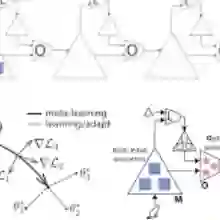
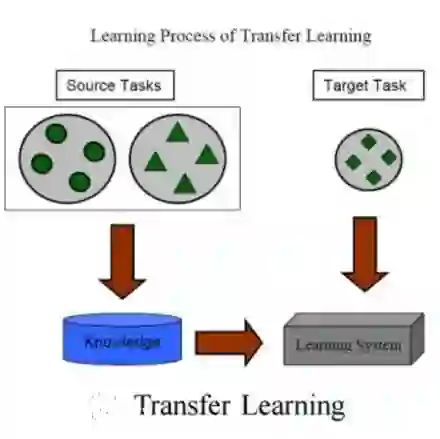
Integrating knowledge across different domains is an essential feature of human learning. Learning paradigms such as transfer learning, meta learning, and multi-task learning reflect the human learning process by exploiting the prior knowledge for new tasks, encouraging faster learning and good generalization for new tasks. This article gives a detailed view of these learning paradigms and their comparative analysis. The weakness of one learning algorithm turns out to be a strength of another, and thus merging them is a prevalent trait in the literature. There are numerous research papers that focus on each of these learning paradigms separately and provide a comprehensive overview of them. However, this article provides a review of research studies that combine (two of) these learning algorithms. This survey describes how these techniques are combined to solve problems in many different fields of study, including computer vision, natural language processing, hyperspectral imaging, and many more, in supervised setting only. As a result, the global generic learning network an amalgamation of meta learning, transfer learning, and multi-task learning is introduced here, along with some open research questions and future research directions in the multi-task setting.
翻译:跨领域知识整合是人类学习的基本特征。诸如迁移学习、元学习和多任务学习等学习范式,通过利用先验知识处理新任务,反映人类学习过程,促进新任务的快速学习与良好泛化。本文详细阐述了这些学习范式及其比较分析。一种学习算法的弱点恰成为另一种算法的优势,因此融合这些算法是文献中的常见特征。尽管大量研究分别聚焦于每种学习范式并提供全面概述,本文则对结合(其中两种)学习算法的研究进行评述。本综述描述了这些技术如何在计算机视觉、自然语言处理、高光谱成像等多个研究领域中,以监督学习方式结合解决实际问题。由此,本文引入融合元学习、迁移学习与多任务学习的全局通用学习网络,并探讨多任务场景下的开放性问题与未来研究方向。




相关内容



 微信扫码咨询专知VIP会员