

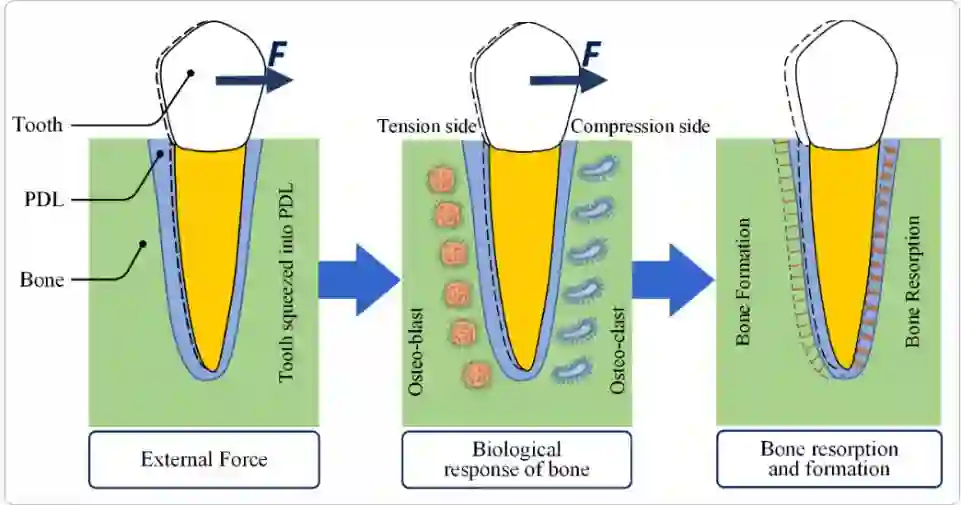
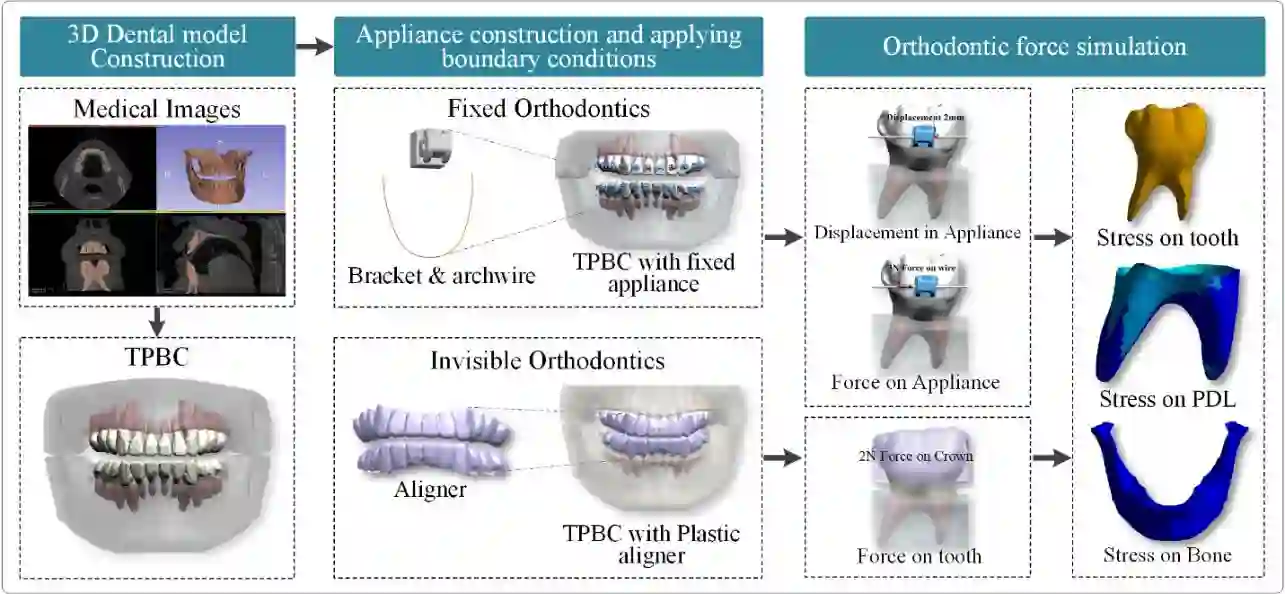
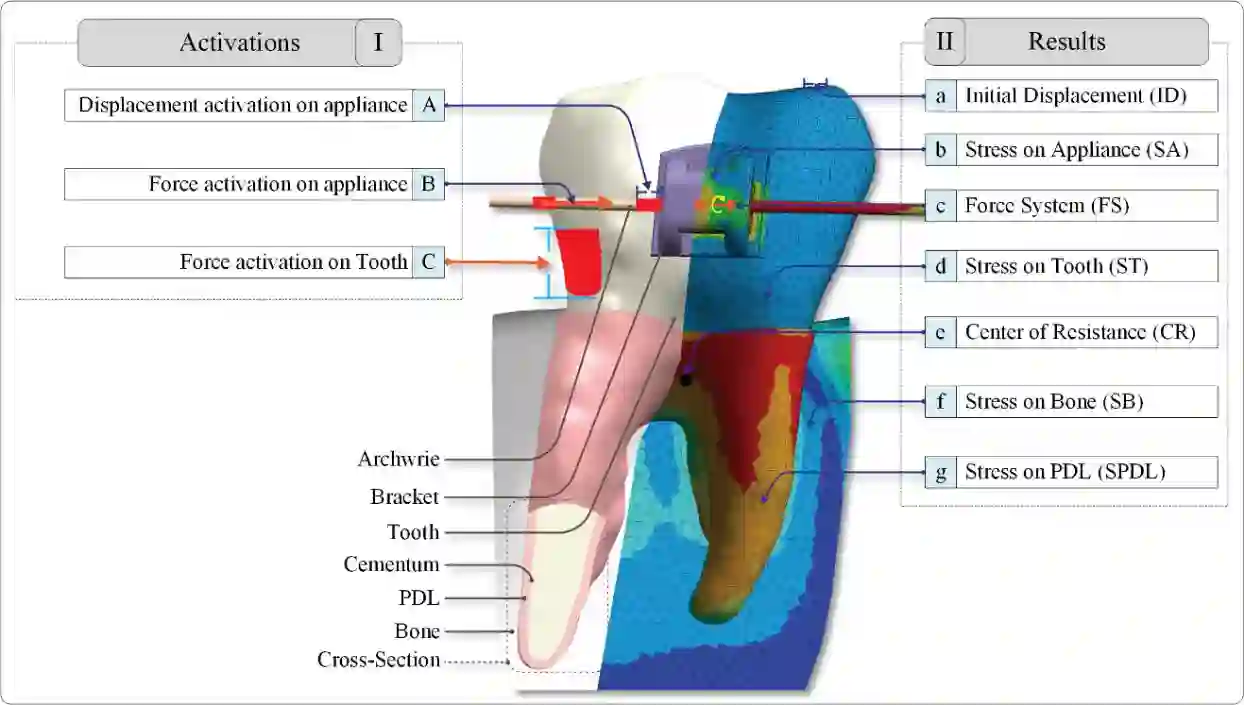
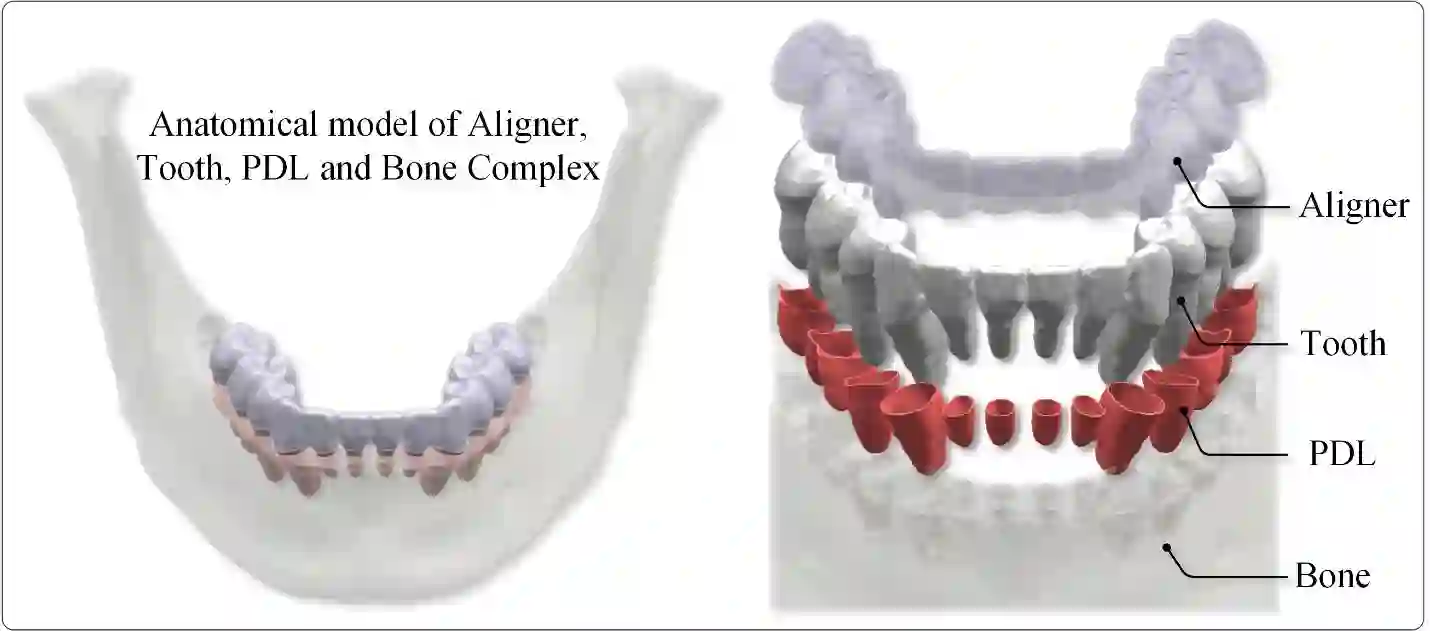
In orthodontic treatment, the biological response of the tooth, periodontal ligament, and bone complex to orthodontic force is crucial in influencing treatment outcomes. The challenge lies in accurately measuring, estimating, and predicting these forces during clinical procedures. This review aims to fill the gap in the literature by systematically summarizing existing research on orthodontic force simulation, examining common loading techniques and technologies, and discussing the potential for refining the orthodontic force simulation process. The literature was comprehensively reviewed, with an emphasis on the exploration of the biological mechanism of tooth movement. Studies were categorized based on force-loading techniques for both fixed and invisible orthodontic appliances. Finite element (FE) analysis stands out as the predominant technique for orthodontic force simulation, with a significant focus on fixed orthodontics but limited emphasis on invisible orthodontics. Current orthodontic force simulations tend to be fragmented, often considering only the instantaneous response to applied forces. There exists an urgent demand for a sophisticated analytical simulation model. Such a model, possibly leveraging advanced technologies like deep learning, holds the promise of forecasting orthodontic treatment outcomes with heightened precision and efficiency.
翻译:在正畸治疗中,牙齿、牙周膜及骨复合体对正畸力的生物学反应对治疗结果至关重要。临床操作中的挑战在于如何准确测量、估计和预测这些力。本综述旨在通过系统总结现有正畸力模拟研究、检视常见加载技术与方法,并讨论优化正畸力模拟过程的潜力,以填补文献空白。本文对文献进行了全面回顾,重点关注牙齿移动生物学机制的探索。研究根据固定正畸矫治器与隐形矫治器的施力技术进行分类。有限元分析作为正畸力模拟的主流技术尤为突出,其研究重点显著集中于固定正畸领域,而对隐形正畸的关注有限。当前的正畸力模拟往往呈现碎片化特点,通常仅考虑施加力后的瞬时响应。业界迫切需要一种精密的分析模拟模型。此类模型若能结合深度学习等先进技术,有望以更高的精度和效率预测正畸治疗效果。




相关内容



 微信扫码咨询专知VIP会员