

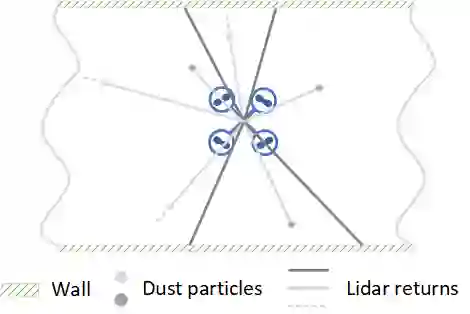
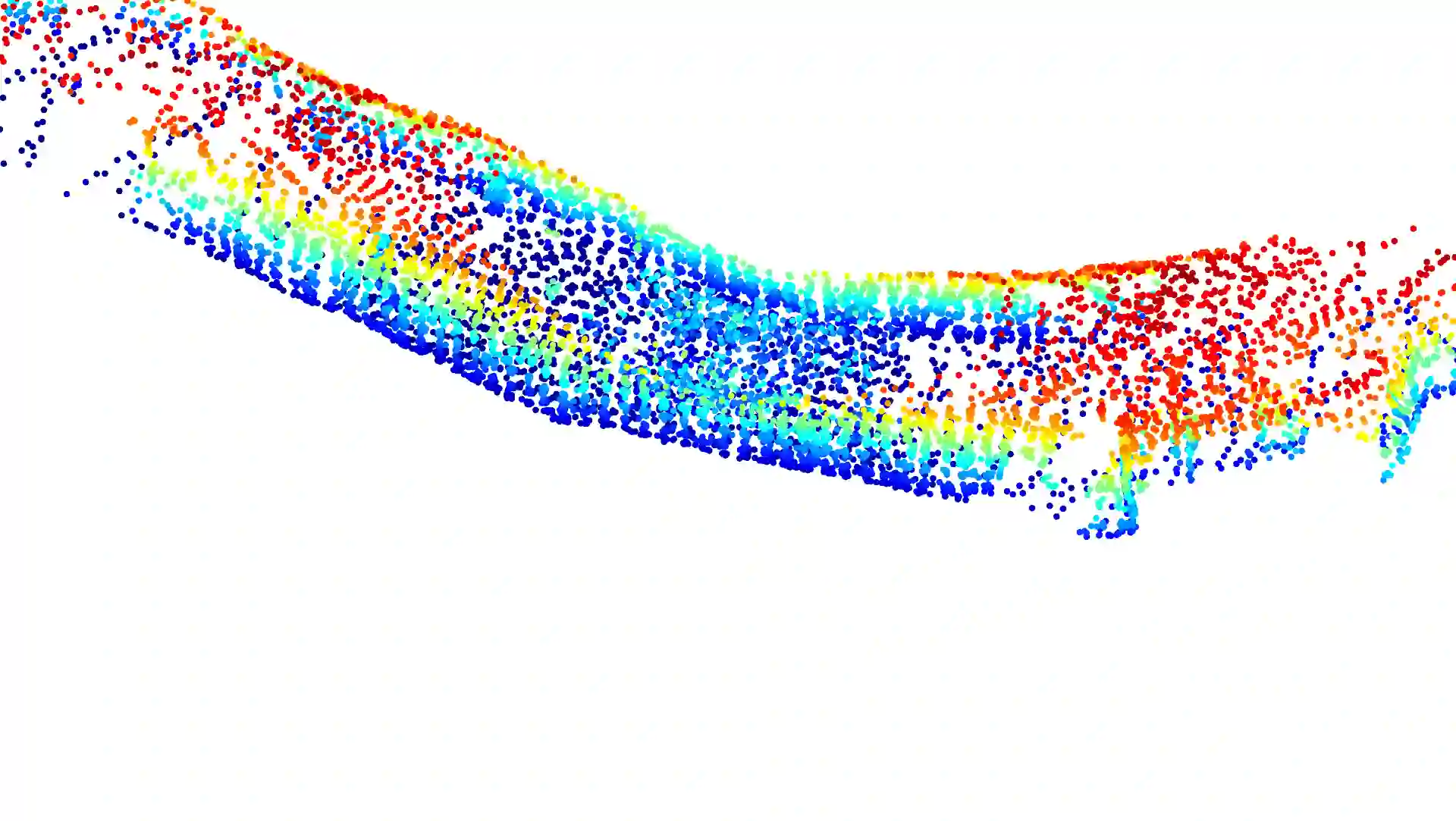
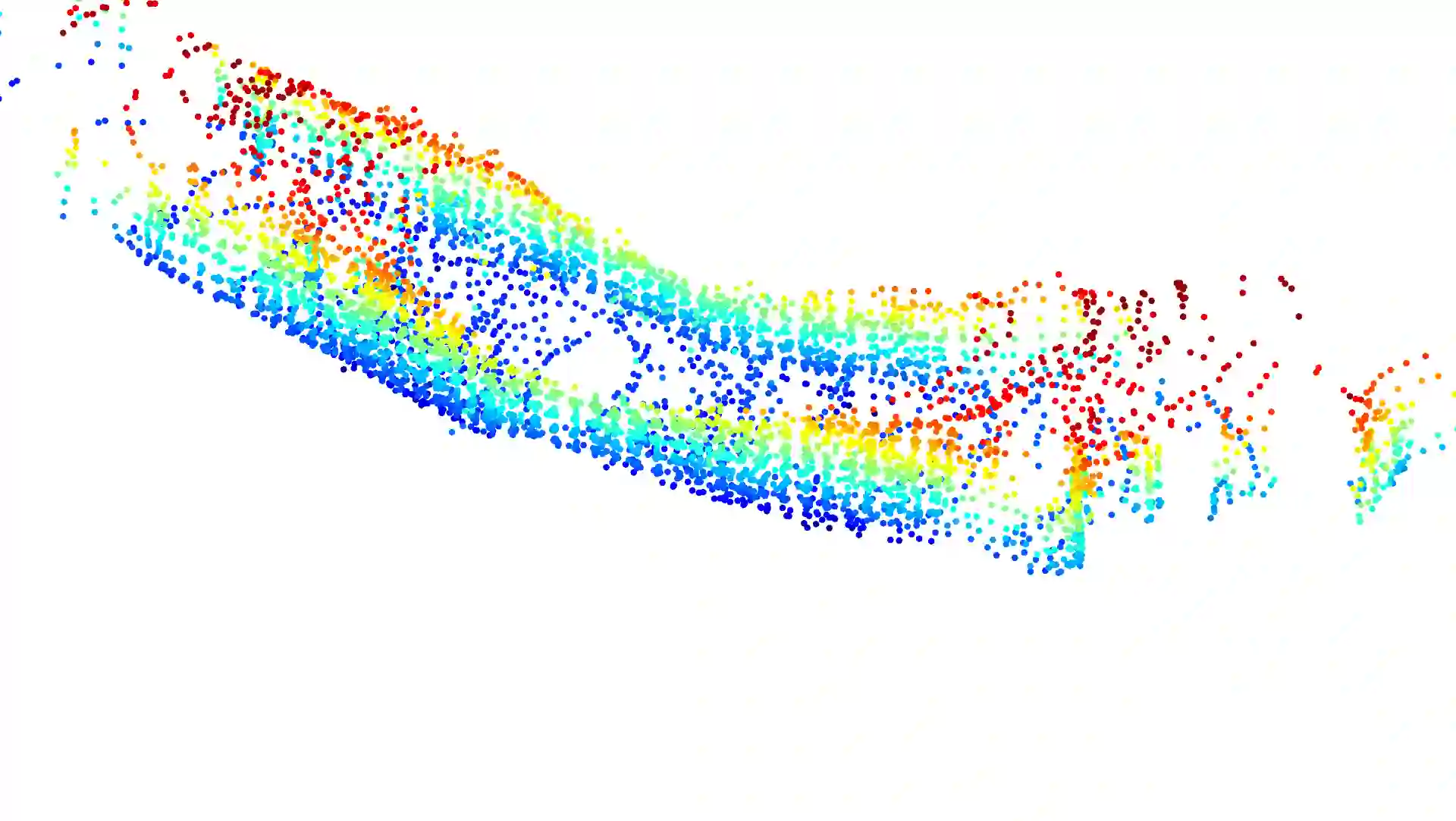
Search and Rescue (SAR) missions in harsh and unstructured Sub-Terranean (Sub-T) environments in the presence of aerosol particles have recently become the main focus in the field of robotics. Aerosol particles such as smoke and dust directly affect the performance of any mobile robotic platform due to their reliance on their onboard perception systems for autonomous navigation and localization in Global Navigation Satellite System (GNSS)-denied environments. Although obstacle avoidance and object detection algorithms are robust to the presence of noise to some degree, their performance directly relies on the quality of captured data by onboard sensors such as Light Detection And Ranging (LiDAR) and camera. Thus, this paper proposes a novel modular agnostic filtration pipeline based on intensity and spatial information such as local point density for removal of detected smoke particles from Point Cloud (PCL) prior to its utilization for collision detection. Furthermore, the efficacy of the proposed framework in the presence of smoke during multiple frontier exploration missions is investigated while the experimental results are presented to facilitate comparison with other methodologies and their computational impact. This provides valuable insight to the research community for better utilization of filtration schemes based on available computation resources while considering the safe autonomous navigation of mobile robots.
翻译:摘要:在恶劣且非结构化地下环境中存在气溶胶颗粒的情况下执行搜索与救援任务,近期已成为机器人领域的主要研究焦点。烟雾和灰尘等气溶胶颗粒会直接影响任何移动机器人平台的性能,因为此类平台在无法使用全球导航卫星系统(GNSS)的环境中依赖机载感知系统实现自主导航与定位。尽管障碍物规避和目标检测算法对噪声具有一定鲁棒性,但其性能直接取决于机载传感器(如激光雷达LiDAR和摄像头)采集的数据质量。为此,本文提出一种基于强度与空间信息(如局部点密度)的新型模块化不可知过滤流水线,用于在将点云PCL用于碰撞检测之前移除已检测的烟雾粒子。此外,本文研究了所提出框架在多次前沿探索任务中烟雾环境下的有效性,并通过实验结果的呈现便于与其他方法学及其计算影响进行对比。这为研究界基于可用计算资源更好地利用过滤方案、同时兼顾移动机器人安全自主导航提供了宝贵见解。




相关内容



 微信扫码咨询专知VIP会员