

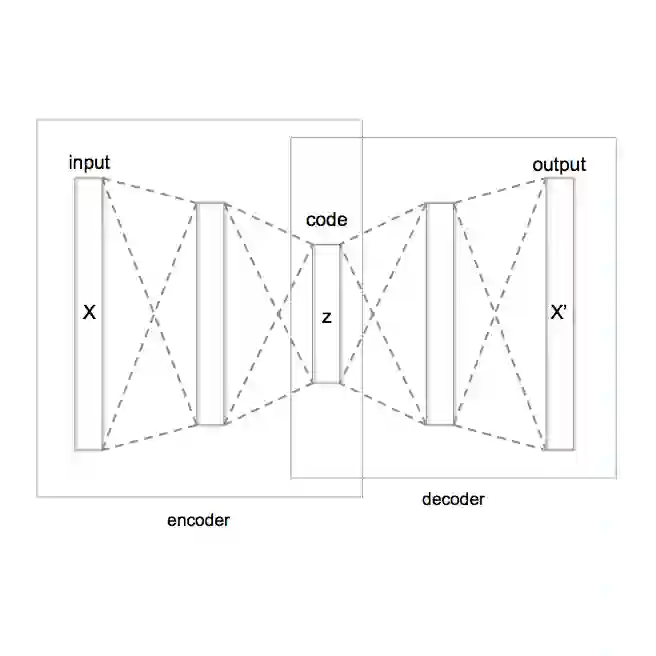
Computation in biological systems is fundamentally energy-constrained, yet standard theories of computation treat energy as freely available. Here, we argue that variational free energy minimization under a Poisson assumption offers a principled path toward an energy-aware theory of computation. Our key observation is that the Kullback-Leibler (KL) divergence term in the Poisson free energy objective becomes proportional to the prior firing rates of model neurons, yielding an emergent metabolic cost term that penalizes high baseline activity. This structure couples an abstract information-theoretic quantity -- the *coding rate* -- to a concrete biophysical variable -- the *firing rate* -- which enables a trade-off between coding fidelity and energy expenditure. Such a coupling arises naturally in the Poisson variational autoencoder (P-VAE) -- a brain-inspired generative model that encodes inputs as discrete spike counts and recovers a spiking form of *sparse coding* as a special case -- but is absent from standard Gaussian VAEs. To demonstrate that this metabolic cost structure is unique to the Poisson formulation, we compare the P-VAE against Grelu-VAE, a Gaussian VAE with ReLU rectification applied to latent samples, which controls for the non-negativity constraint. Across a systematic sweep of the KL term weighting coefficient $β$ and latent dimensionality, we find that increasing $β$ monotonically increases sparsity and reduces average spiking activity in the P-VAE. In contrast, Grelu-VAE representations remain unchanged, confirming that the effect is specific to Poisson statistics rather than a byproduct of non-negative representations. These results establish Poisson variational inference as a promising foundation for a resource-constrained theory of computation.
翻译:生物系统中的计算从根本上受到能量约束,然而标准的计算理论却将能量视为可自由获取的资源。在此,我们论证在泊松假设下进行变分自由能最小化为发展一种具有能量意识的计算理论提供了原则性路径。我们的关键观察在于,泊松自由能目标中的Kullback-Leibler(KL)散度项与模型神经元的先验发放率成正比,从而催生出一个惩罚高基线活动的涌现性代谢成本项。这一结构将一个抽象的香农信息论量——*编码率*——与一个具体的生物物理变量——*发放率*——耦合起来,从而能够实现编码保真度与能量消耗之间的权衡。这种耦合自然地出现在泊松变分自编码器(P-VAE)中——这是一种受大脑启发的生成模型,它将输入编码为离散的脉冲计数,并作为特例恢复出一种脉冲形式的*稀疏编码*——但在标准高斯变分自编码器中却不复存在。为了证明这种代谢成本结构是泊松公式所独有的,我们将P-VAE与Grelu-VAE进行了对比,后者是对潜在样本应用ReLU整流操作的高斯变分自编码器,以此控制了非负性约束。通过对KL项权重系数$β$和潜在维度进行系统性的扫描,我们发现,在P-VAE中,增大$β$会单调地提高稀疏性并降低平均脉冲活动。相比之下,Grelu-VAE的表示保持不变,这证实了该效应是泊松统计特性所特有的,而非非负性表示的副产品。这些结果确立了泊松变分推断作为资源受限计算理论的一个有前景的基础。




相关内容


 微信扫码咨询专知VIP会员