

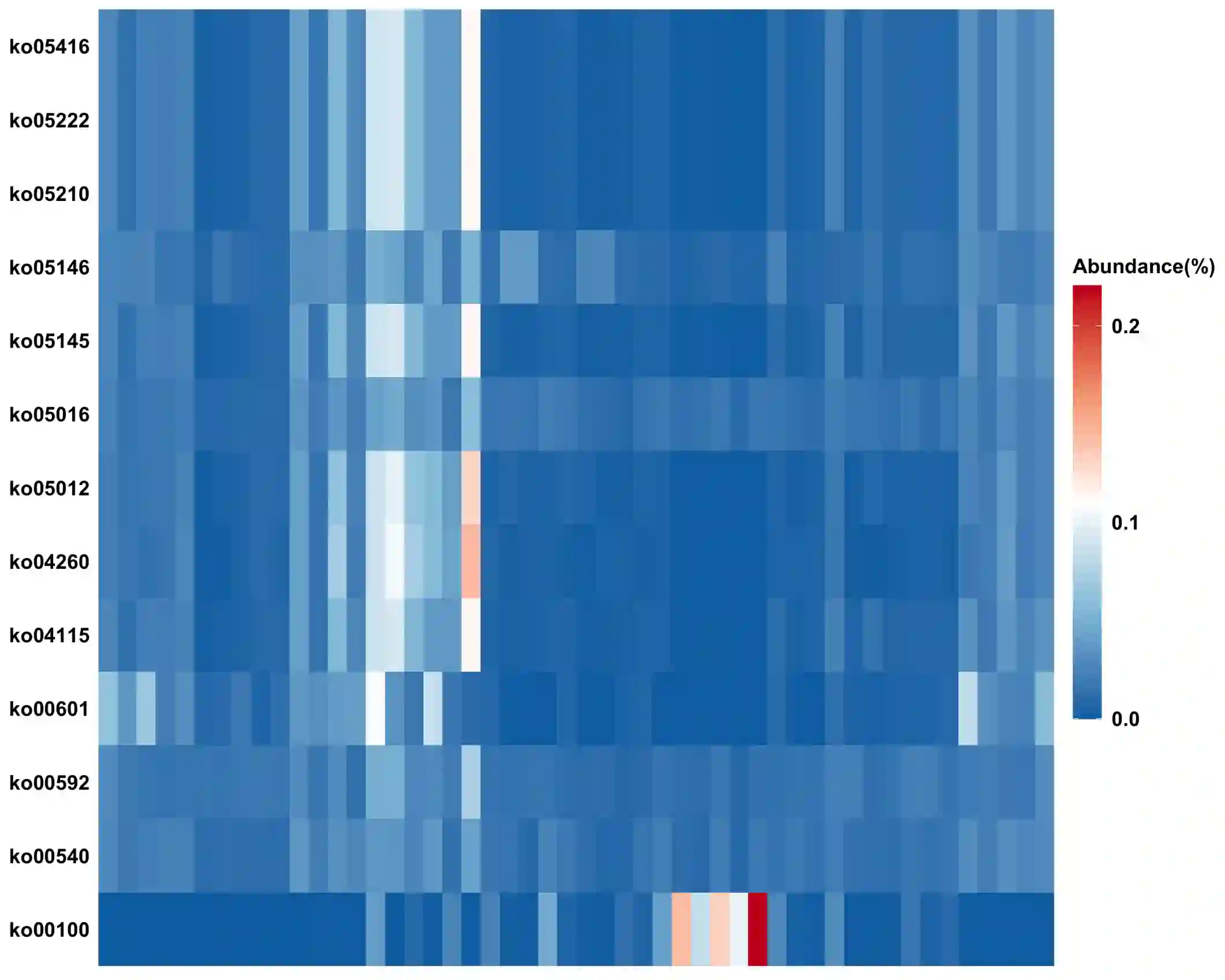
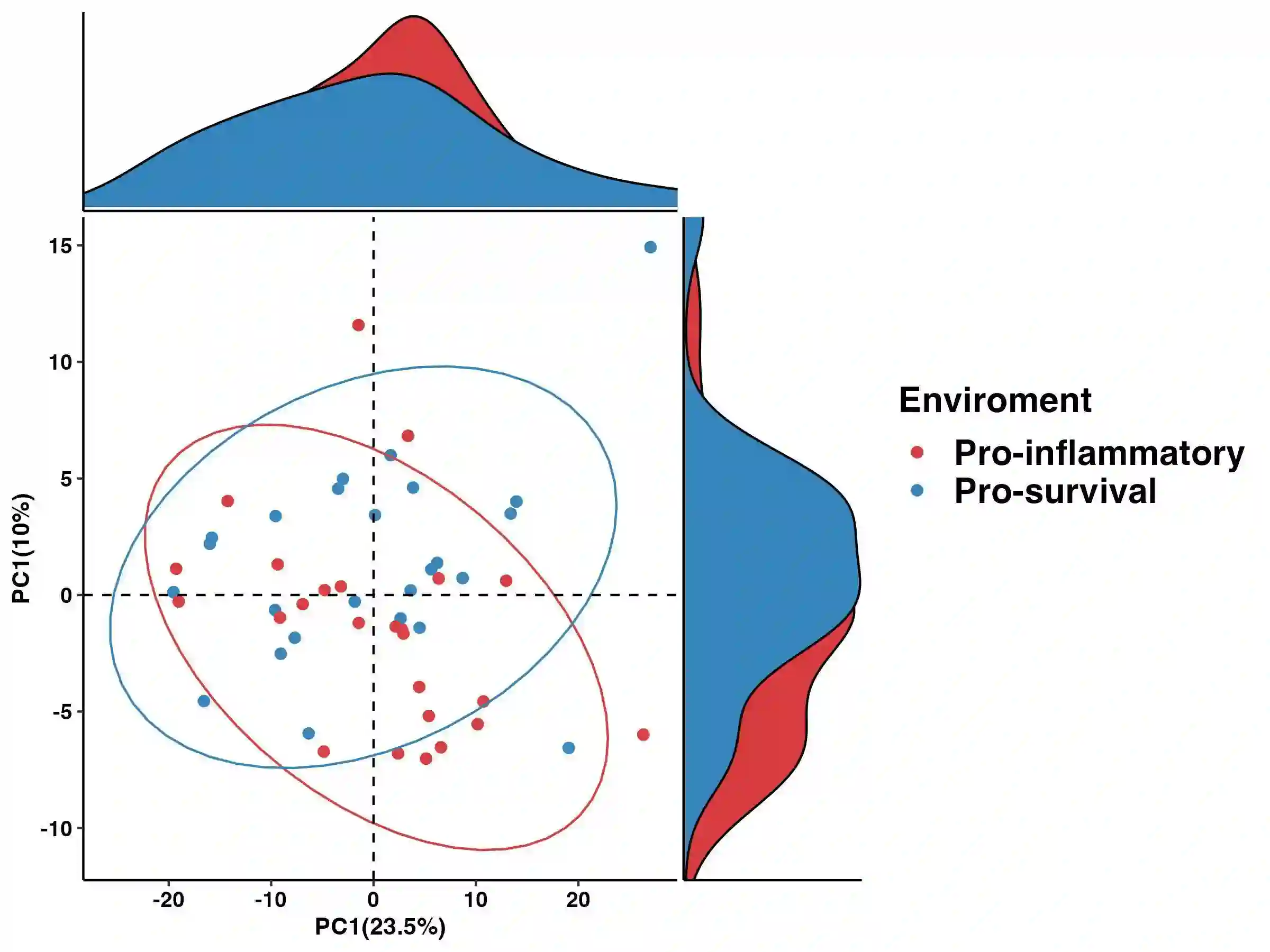
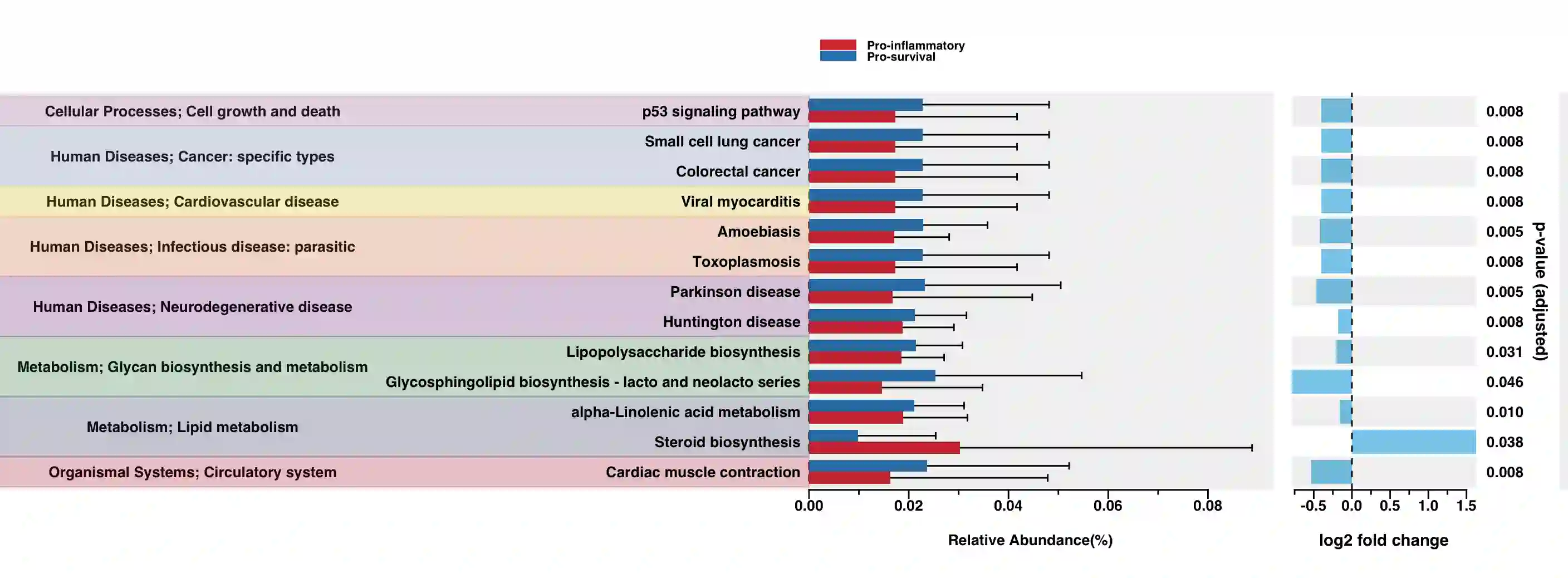
Microbiome research is now moving beyond the compositional analysis of microbial taxa in a sample. Increasing evidence from large human microbiome studies suggests that functional consequences of changes in the intestinal microbiome may provide more power for studying their impact on inflammation and immune responses. Although 16S rRNA analysis is one of the most popular and a cost-effective method to profile the microbial compositions, marker-gene sequencing cannot provide direct information about the functional genes that are present in the genomes of community members. Bioinformatic tools have been developed to predict microbiome function with 16S rRNA gene data. Among them, PICRUSt2 has become one of the most popular functional profile prediction tools, which generates community-wide pathway abundances. However, no state-of-art inference tools are available to test the differences in pathway abundances between comparison groups. We have developed ggpicrust2, an R package, to do extensive differential abundance(DA) analyses and provide publishable visualization to highlight the signals.
翻译:微生物组研究现已超越样本中微生物类群组成分析的范畴。来自大型人类微生物组研究的证据日益增多,表明肠道微生物组变化的功能后果可能为研究其对炎症和免疫反应的影响提供更强有力的依据。尽管16S rRNA分析是剖析微生物组成最流行且经济高效的方法之一,但标记基因测序无法提供关于群落成员基因组中存在功能基因的直接信息。目前已开发出利用16S rRNA基因数据预测微生物组功能的生物信息学工具。其中,PICRUSt2已成为最受欢迎的功能谱预测工具之一,可生成群落层面的通路丰度。然而,目前尚无先进的推断工具可用于检验比较组间通路丰度的差异。我们开发了ggpicrust2 R包,用于开展广泛的差异丰度分析并提供可发表的图表以突出显示信号。




相关内容



 微信扫码咨询专知VIP会员