

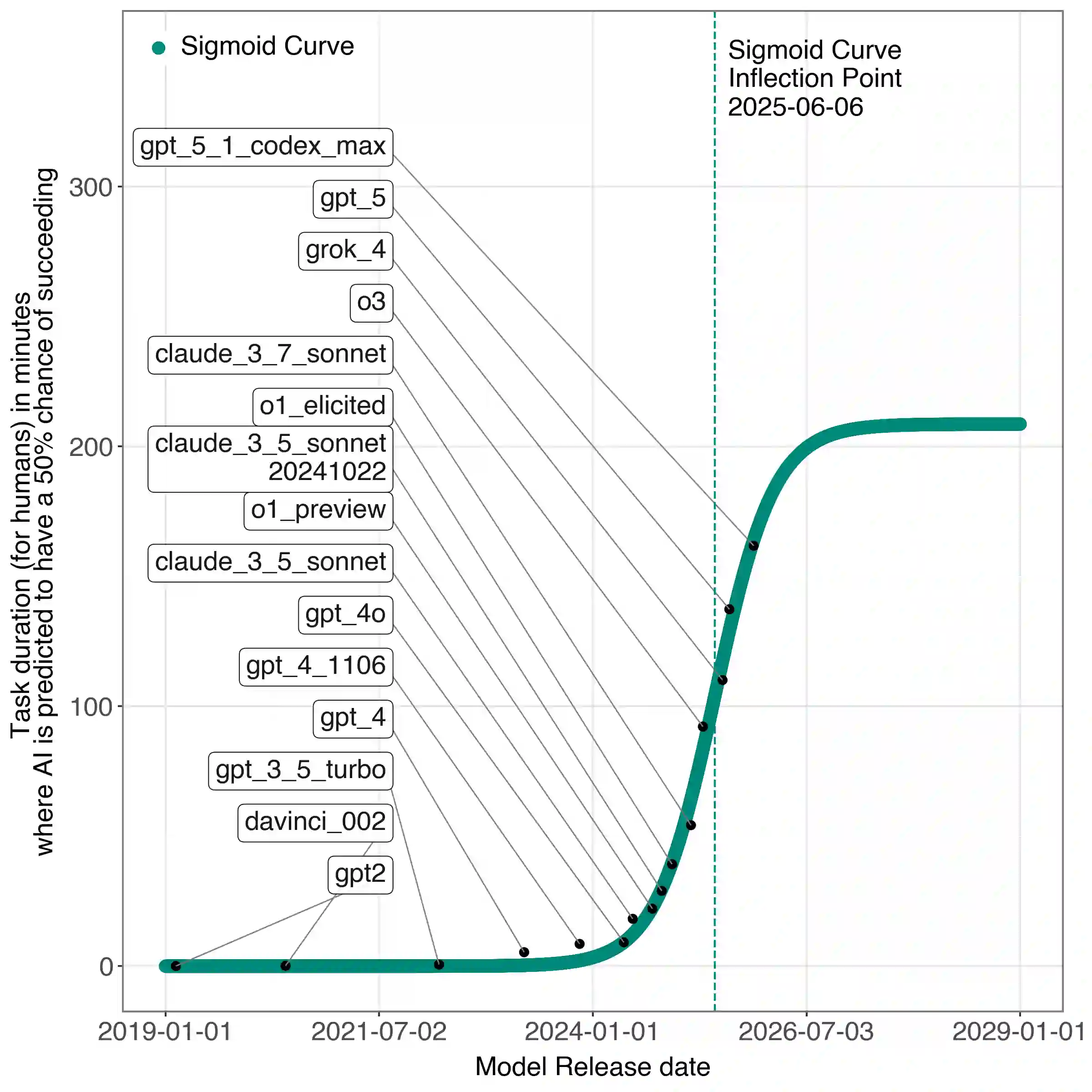
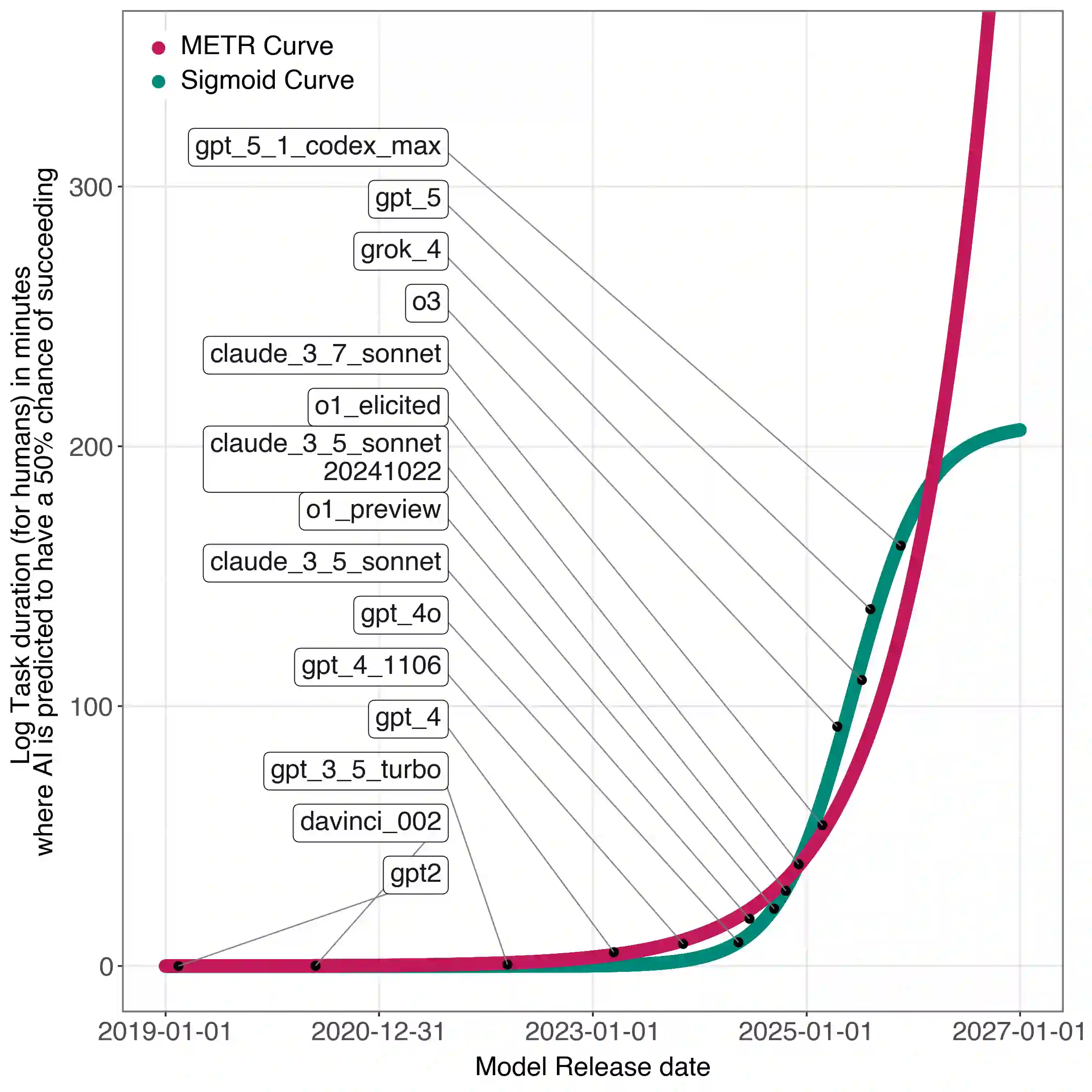
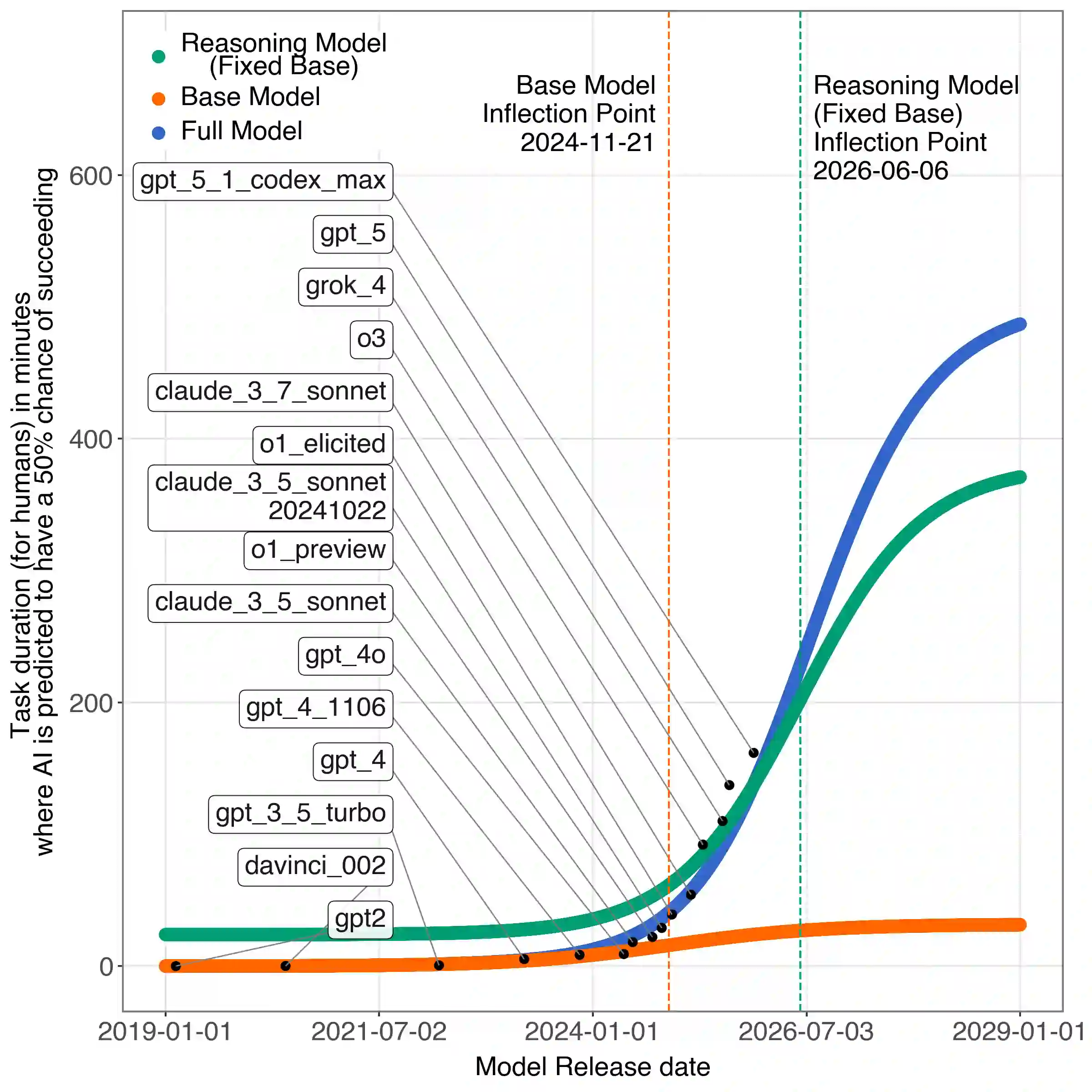
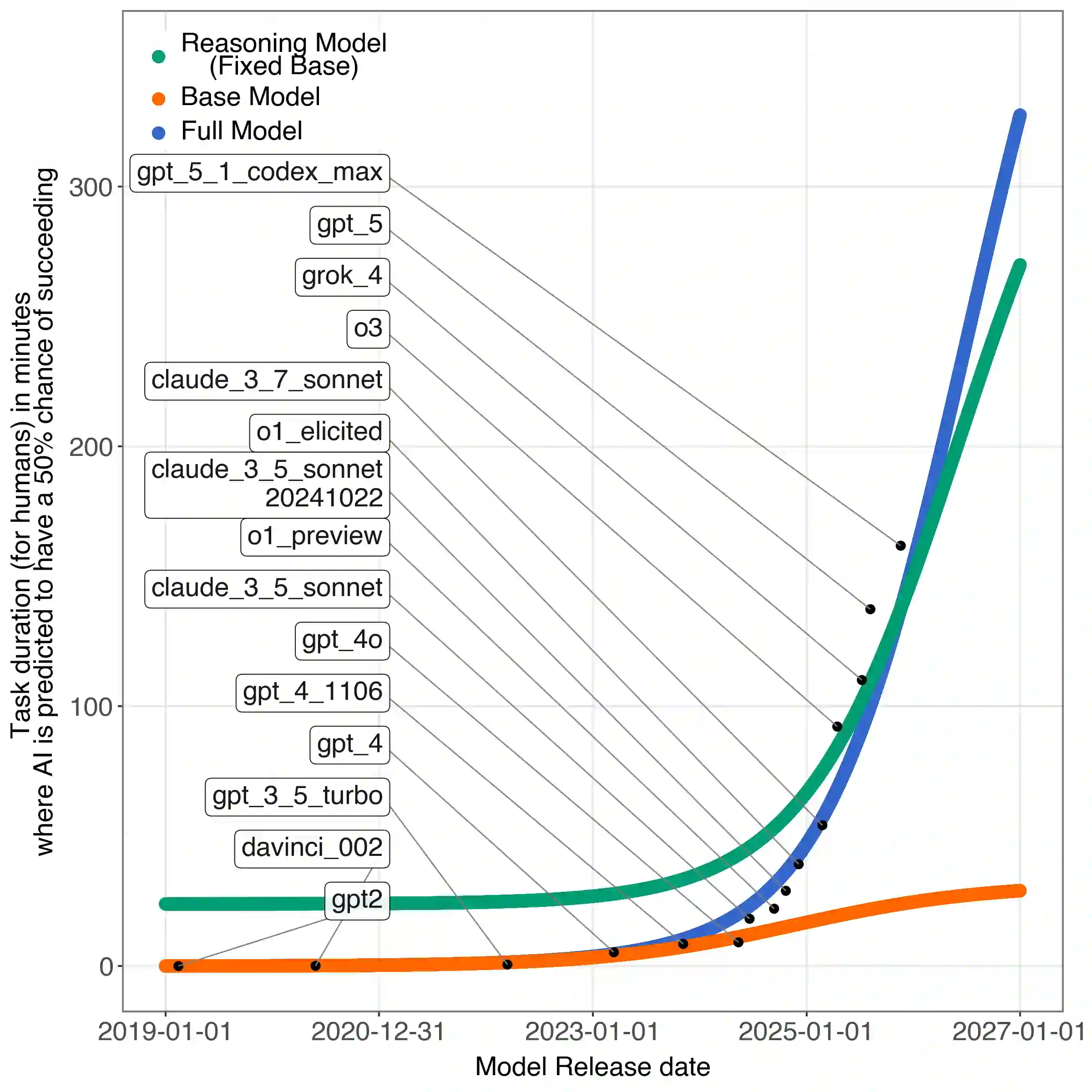
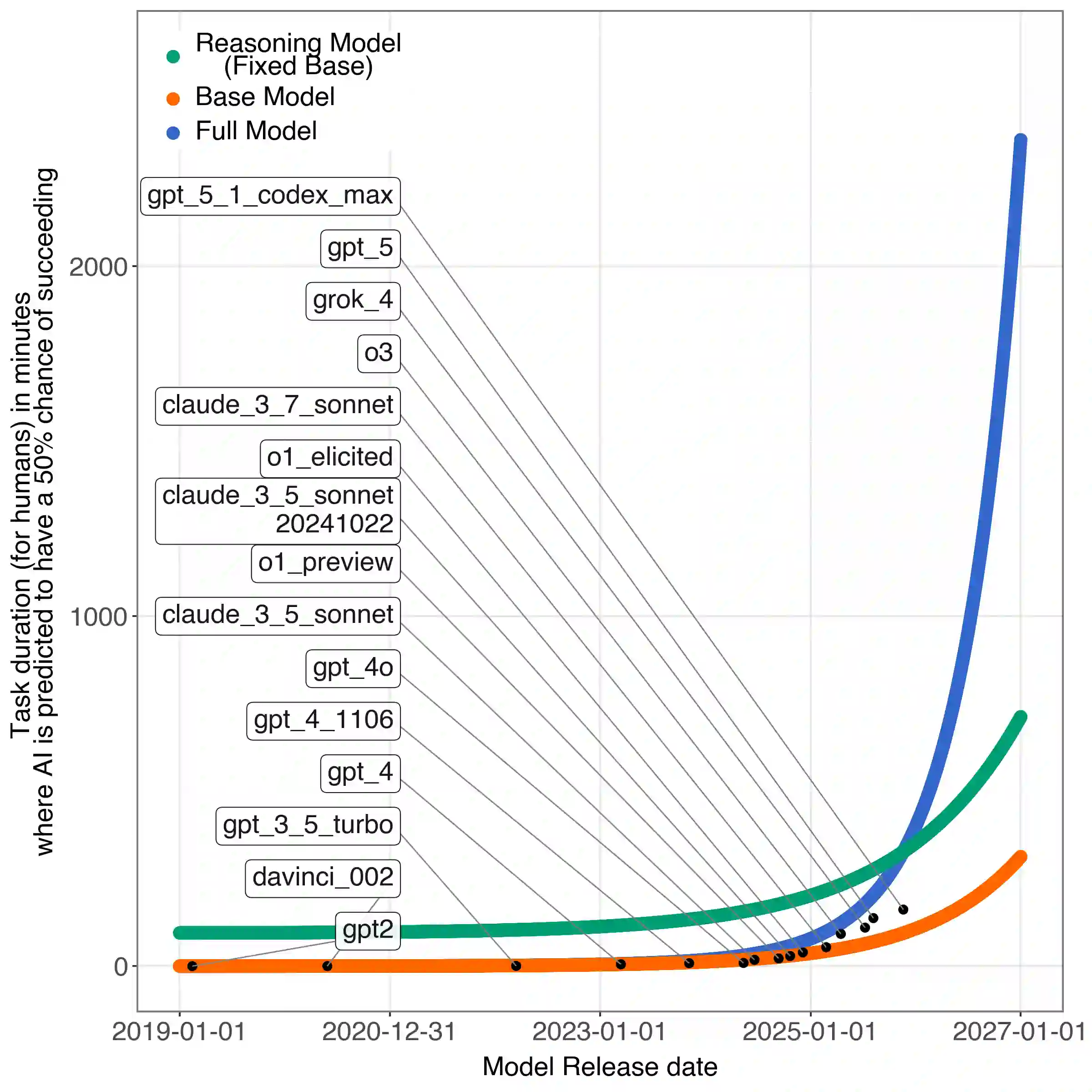
Rapidly increasing AI capabilities have substantial real-world consequences, ranging from AI safety concerns to labor market consequences. The Model Evaluation & Threat Research (METR) report argues that AI capabilities have exhibited exponential growth since 2019. In this note, we argue that the data does not support exponential growth, even in shorter-term horizons. Whereas the METR study claims that fitting sigmoid/logistic curves results in inflection points far in the future, we fit a sigmoid curve to their current data and find that the inflection point has already passed. In addition, we propose a more complex model that decomposes AI capabilities into base and reasoning capabilities, exhibiting individual rates of improvement. We prove that this model supports our hypothesis that AI capabilities will exhibit an inflection point in the near future. Our goal is not to establish a rigorous forecast of our own, but to highlight the fragility of existing forecasts of exponential growth.
翻译:人工智能能力的快速提升已产生显著的现实影响,涵盖从人工智能安全关切到劳动力市场效应等多个领域。模型评估与威胁研究(METR)报告指出,自2019年以来人工智能能力已呈现指数级增长。本文认为,现有数据并不支持指数增长假说,即使在短期时间尺度上亦然。METR研究声称拟合S型/逻辑曲线会得到远在未来的拐点,而我们对其实时数据进行逻辑曲线拟合后发现拐点已经出现。此外,我们提出一个更复杂的模型,将人工智能能力分解为基础能力与推理能力两个具有不同改进速率的组成部分。通过数学证明,该模型支持我们关于人工智能能力将在近期出现拐点的假说。本研究目的并非建立严谨的自主预测体系,而是揭示现有指数增长预测的脆弱性。




相关内容



 微信扫码咨询专知VIP会员