

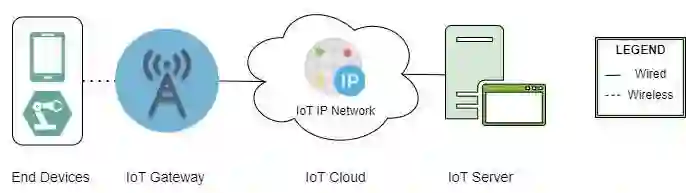
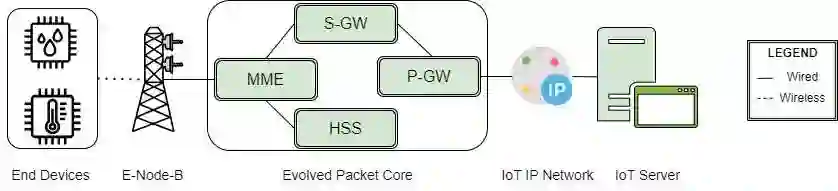
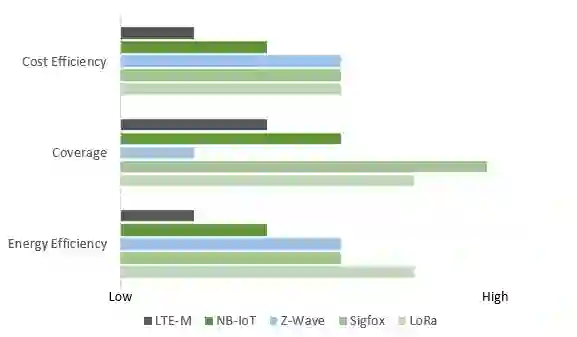
With the emergence of 5G, the Internet of Things (IoT) will bring about the next industrial revolution in the name of Industry 4.0. The communication aspect of IoT devices is one of the most important factors in choosing the right device for the right usage. So far, the IoT physical layer communication challenges have been met with various communications protocols that provide varying strengths and weaknesses. And most of them are wireless protocols due to the sheer number of device requirements for IoT. In this paper, we summarize the network architectures of some of the most popular IoT wireless communications protocols. We also present them side by side and provide a comparative analysis revolving around some key features, including power consumption, coverage, data rate, security, cost, and Quality of Service (QoS). This comparative study shows that LTE-based protocols like NB-IoT and LTE-M can offer better QoS and robustness, while the Industrial, Scientific, and Medical (ISM) Band based protocols like LoRa, Sigfox, and Z-wave claim their place in usage where lower power consumption and lesser device complexity are desired. Based on their respective strengths and weaknesses, the study also presents an application perspective of the suitability of each protocol in a certain type of scenario and addresses some open issues that need to be researched in the future. Thus, this study can assist in the decision making regarding choosing the most suitable protocol for a certain field.
翻译:随着5G的出现,物联网(IoT)将引领以工业4.0为名的下一次工业革命。IoT设备的通信方面是选择合适设备用于特定用途的最重要因素之一。到目前为止,IoT物理层通信挑战已通过多种通信协议得到解决,这些协议各有优劣。由于IoT对设备数量的巨大需求,这些协议大多采用无线形式。本文总结了一些最流行的IoT无线通信协议的网络架构,并对它们进行了并列比较,围绕功耗、覆盖范围、数据速率、安全性、成本和服务质量(QoS)等关键特征展开分析。比较研究表明,基于LTE的协议(如NB-IoT和LTE-M)能够提供更好的QoS和鲁棒性,而基于工业、科学和医疗(ISM)频段的协议(如LoRa、Sigfox和Z-Wave)则在需要更低功耗和更低设备复杂度的应用中占有一席之地。基于各自的优缺点,本研究还从应用角度探讨了每种协议在特定场景下的适用性,并指出了未来需要研究的一些开放性问题。因此,本研究有助于在特定领域选择最合适的协议时做出决策。




相关内容


 微信扫码咨询专知VIP会员