

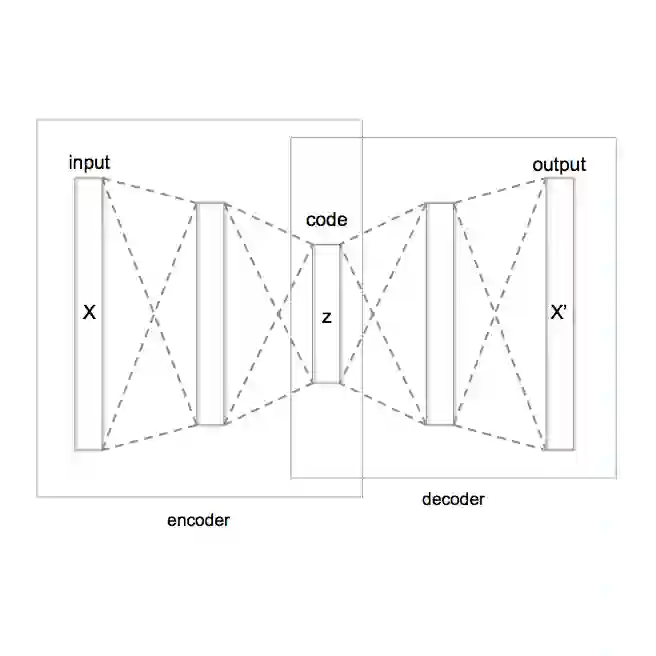
The generation of virtual populations (VPs) of anatomy is essential for conducting in silico trials of medical devices. Typically, the generated VP should capture sufficient variability while remaining plausible and should reflect the specific characteristics and demographics of the patients observed in real populations. In several applications, it is desirable to synthesise virtual populations in a \textit{controlled} manner, where relevant covariates are used to conditionally synthesise virtual populations that fit a specific target population/characteristics. We propose to equip a conditional variational autoencoder (cVAE) with normalising flows to boost the flexibility and complexity of the approximate posterior learnt, leading to enhanced flexibility for controllable synthesis of VPs of anatomical structures. We demonstrate the performance of our conditional flow VAE using a data set of cardiac left ventricles acquired from 2360 patients, with associated demographic information and clinical measurements (used as covariates/conditional information). The results obtained indicate the superiority of the proposed method for conditional synthesis of virtual populations of cardiac left ventricles relative to a cVAE. Conditional synthesis performance was evaluated in terms of generalisation and specificity errors and in terms of the ability to preserve clinically relevant biomarkers in synthesised VPs, that is, the left ventricular blood pool and myocardial volume, relative to the real observed population.
翻译:生成解剖虚拟人群(VPs)对于开展医疗器械的体外虚拟试验至关重要。通常,生成的虚拟人群应在保持合理性的同时捕捉足够的变异性,并反映真实人群中观察到的患者特定特征与人口学信息。在许多应用场景中,需要以“受控”方式合成虚拟人群,即利用相关协变量条件性地生成符合特定目标人群/特征的虚拟群体。我们提出在条件变分自编码器(cVAE)中引入标准化流,以增强所学近似后验分布的灵活性与复杂度,从而提升对解剖结构虚拟人群进行可控合成的灵活性。我们利用来自2360名患者的心脏左心室数据集(包含相关人口学信息及临床测量值作为协变量/条件信息)验证了所提出的条件流变分自编码器的性能。结果表明,相较于cVAE,该方法在心脏左心室虚拟人群的条件合成任务中具有优越性。条件合成性能通过以下指标评估:泛化误差与特异性误差,以及合成虚拟人群保留临床相关生物标志物(即与真实观测人群相比的左心室血池容积和心肌容积)的能力。




相关内容




 微信扫码咨询专知VIP会员