

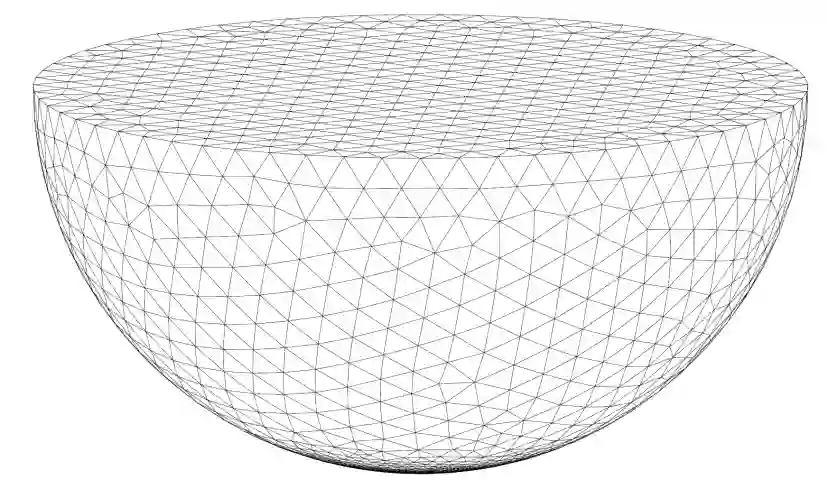
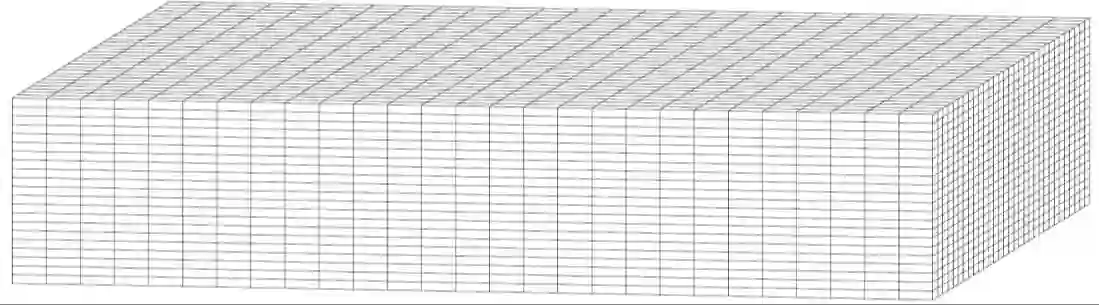
We propose a unified iterative framework for the solution of frictionless mechanical contact problems, which relies exclusively on the solution of standard stiffness systems. The framework is built upon a two-step fixed-point algorithm: first, the displacement is computed for given contact forces; second, the contact forces are updated based on the displacement solution. The choice of the dual update scheme depends on the numerical contact formulation under consideration. Specifically, the Uzawa iterative scheme is obtained for the Lagrange multiplier formulation, while a penalty-based operator-splitting strategy is proposed for the penalty contact formulation. The main interest of such displacement-force splitting strategy is to involve only standard rigidity matrices in the solving step: no saddle-point or penalized ill-conditionned coefficient matrices have to be handled. Moreover only the right-hand side of the system is updated throughout the iterations, which enables matrix factorization reuse or efficient iterative solvers initialization. The main limitation of such splitting iterative strategies lies in the inherently slow convergence of the underlying fixed-point iterations. Moreover, convergence is guaranteed only within a narrow range of numerical parameter values (i.e., the augmentation or penalty parameter). This work addresses both issues by applying the Crossed-Secant fixed-point acceleration strategy, which substantially improves the convergence rate and renders the iterative schemes effectively parameter-unconstrained. To the best of our knowledge, this contribution provides the first computational demonstration of efficient, parameter-unbounded convergence for such contact formulations. The substantial practical benefits of the proposed approach are illustrated through representative three-dimensional academic and industrial frictionless contact problems.
翻译:本文提出了一种用于求解无摩擦力学接触问题的统一迭代框架,该框架完全基于标准刚度系统的求解。该框架建立在两步定点算法之上:首先,在给定接触力条件下计算位移;其次,根据位移解更新接触力。对偶更新方案的选择取决于所采用的数值接触格式。具体而言,针对拉格朗日乘子格式推导出Uzawa迭代格式,而针对罚函数接触格式提出基于罚函数的算子分裂策略。此类位移-力分裂策略的主要优势在于求解步骤仅涉及标准刚度矩阵:无需处理鞍点问题或病态罚系数矩阵。此外,在整个迭代过程中仅更新系统的右侧向量,这使得矩阵分解可重复利用或支持高效迭代求解器的初始化。此类分裂迭代策略的主要局限在于底层定点迭代固有的收敛速度缓慢问题,且收敛性仅在数值参数(即增广参数或罚参数)的狭窄取值范围内得到保证。本研究通过应用交叉割线定点加速策略解决了这两个问题,该策略显著提升了收敛速率并使迭代格式实现有效的参数无约束化。据我们所知,本研究首次为这类接触格式提供了高效且参数无约束收敛的计算验证。通过典型的三维学术与工业无摩擦接触问题,展示了所提方法具有显著的实际应用价值。







相关内容



 微信扫码咨询专知VIP会员