

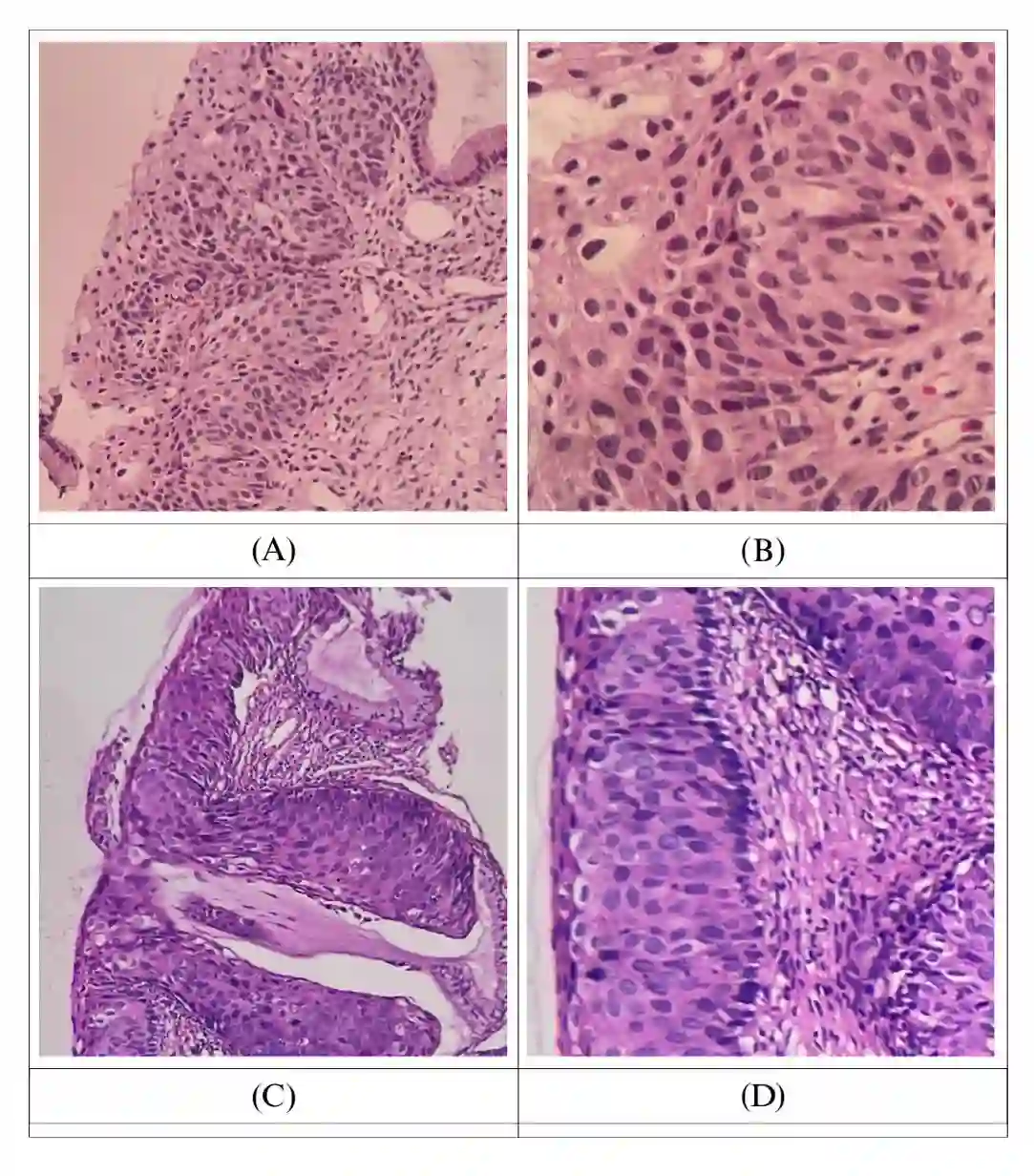
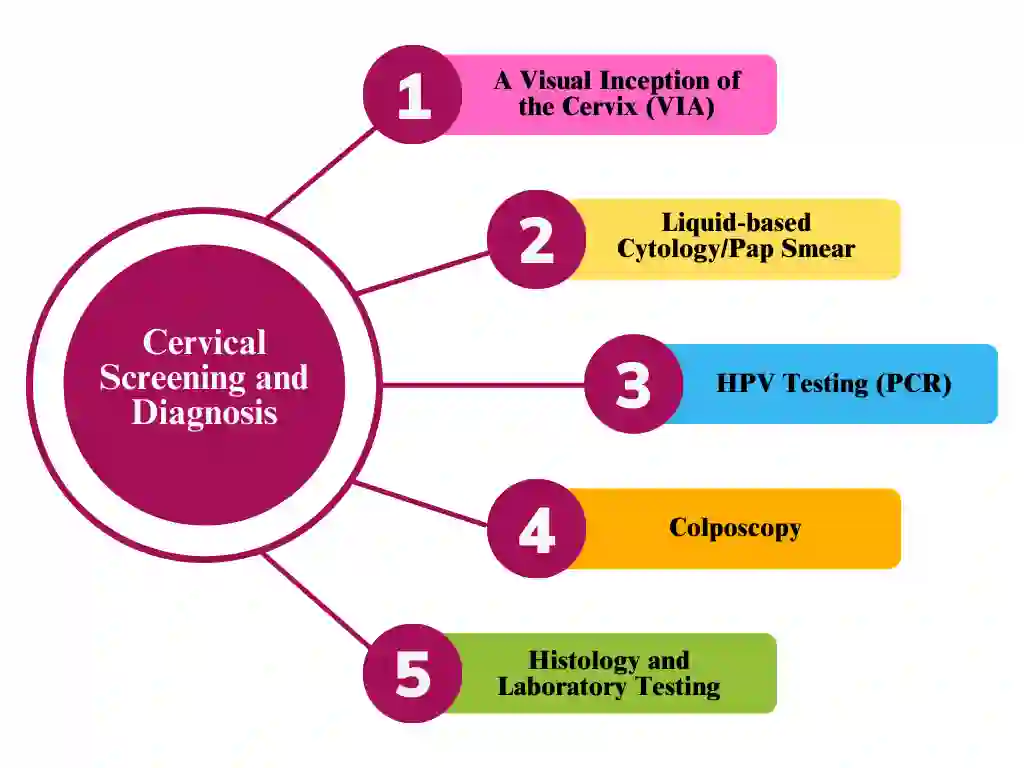
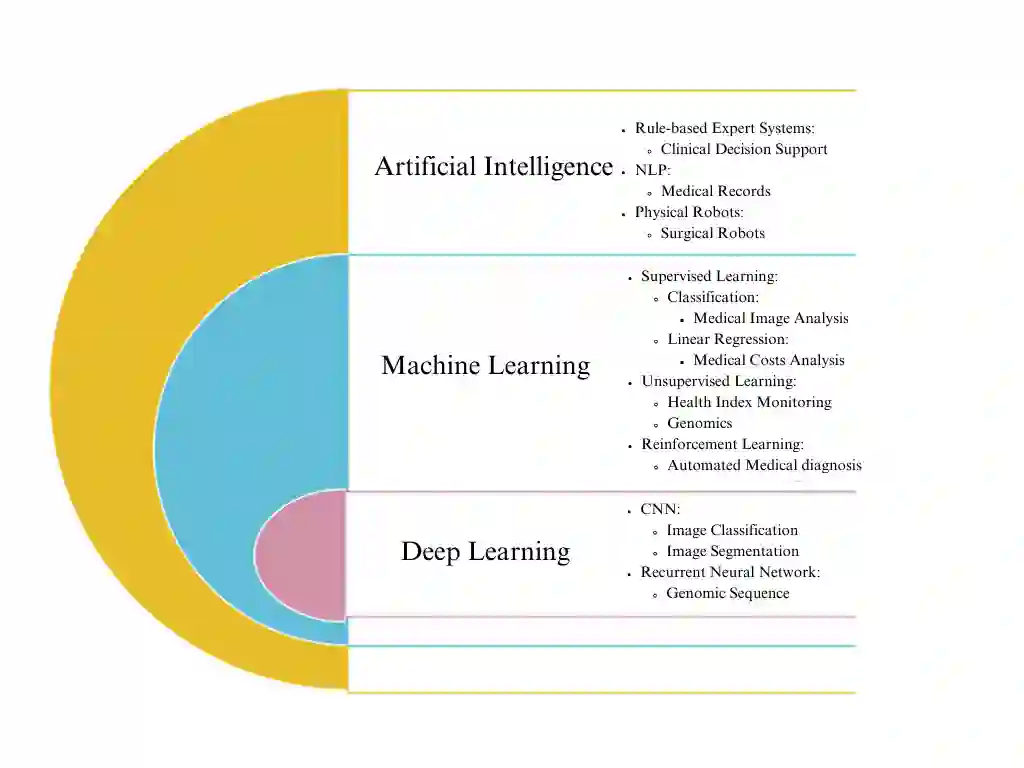
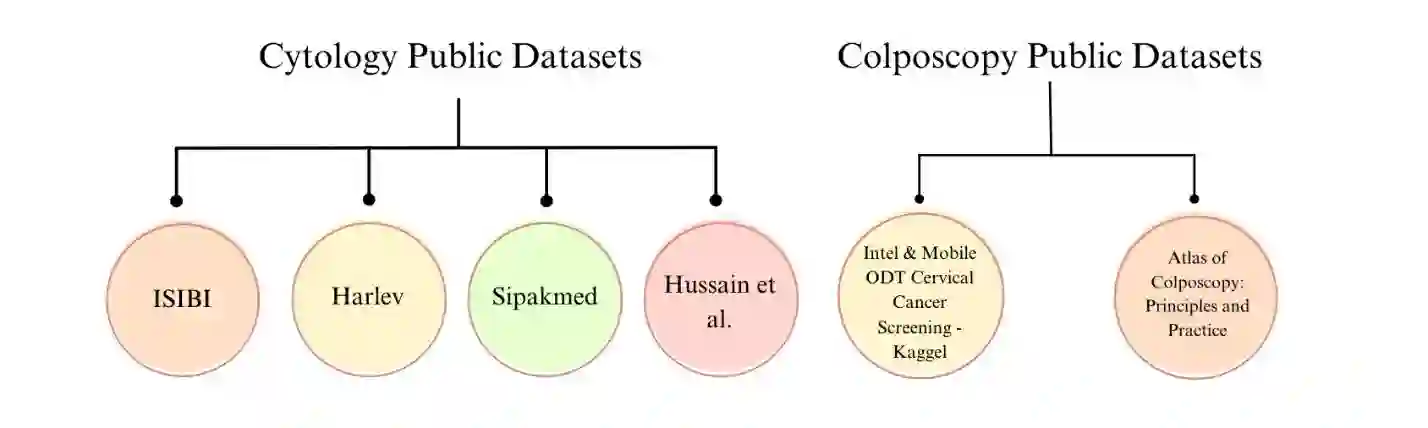
Cervical cancer is a prevalent disease affecting millions of women worldwide every year. It requires significant attention, as early detection during the precancerous stage provides an opportunity for a cure. The screening and diagnosis of cervical cancer rely on cytology and colposcopy methods. Deep learning, a promising technology in computer vision, has emerged as a potential solution to improve the accuracy and efficiency of cervical cancer screening compared to traditional clinical inspection methods that are prone to human error. This review article discusses cervical cancer and its screening processes, followed by the Deep Learning training process and the classification, segmentation, and detection tasks for cervical cancer diagnosis. Additionally, we explored the most common public datasets used in both cytology and colposcopy and highlighted the popular and most utilized architectures that researchers have applied to both cytology and colposcopy. We reviewed 24 selected practical papers in this study and summarized them. This article highlights the remarkable efficiency in enhancing the precision and speed of cervical cancer analysis by Deep Learning, bringing us closer to early diagnosis and saving lives.
翻译:宫颈癌是一种全球每年影响数百万妇女的常见疾病。由于在癌前病变阶段的早期检测提供了治愈机会,因此需要特别关注。宫颈癌的筛查和诊断依赖于细胞学和阴道镜检查方法。深度学习作为计算机视觉领域一项前景广阔的技术,相较于容易受人为错误影响的传统临床检查方法,已成为提高宫颈癌筛查准确性和效率的潜在解决方案。本文综述了宫颈癌及其筛查流程,随后讨论了深度学习训练过程以及用于宫颈癌诊断的分类、分割和检测任务。此外,我们探讨了细胞学和阴道镜检查中最常用的公共数据集,并重点介绍了研究人员应用于细胞学和阴道镜检查的流行且最常用的架构。我们筛选并总结了24篇具有实际应用价值的论文。本文突显了深度学习在提升宫颈癌分析精度和速度方面的卓越效率,这使我们更接近早期诊断并挽救生命。





相关内容



 微信扫码咨询专知VIP会员