

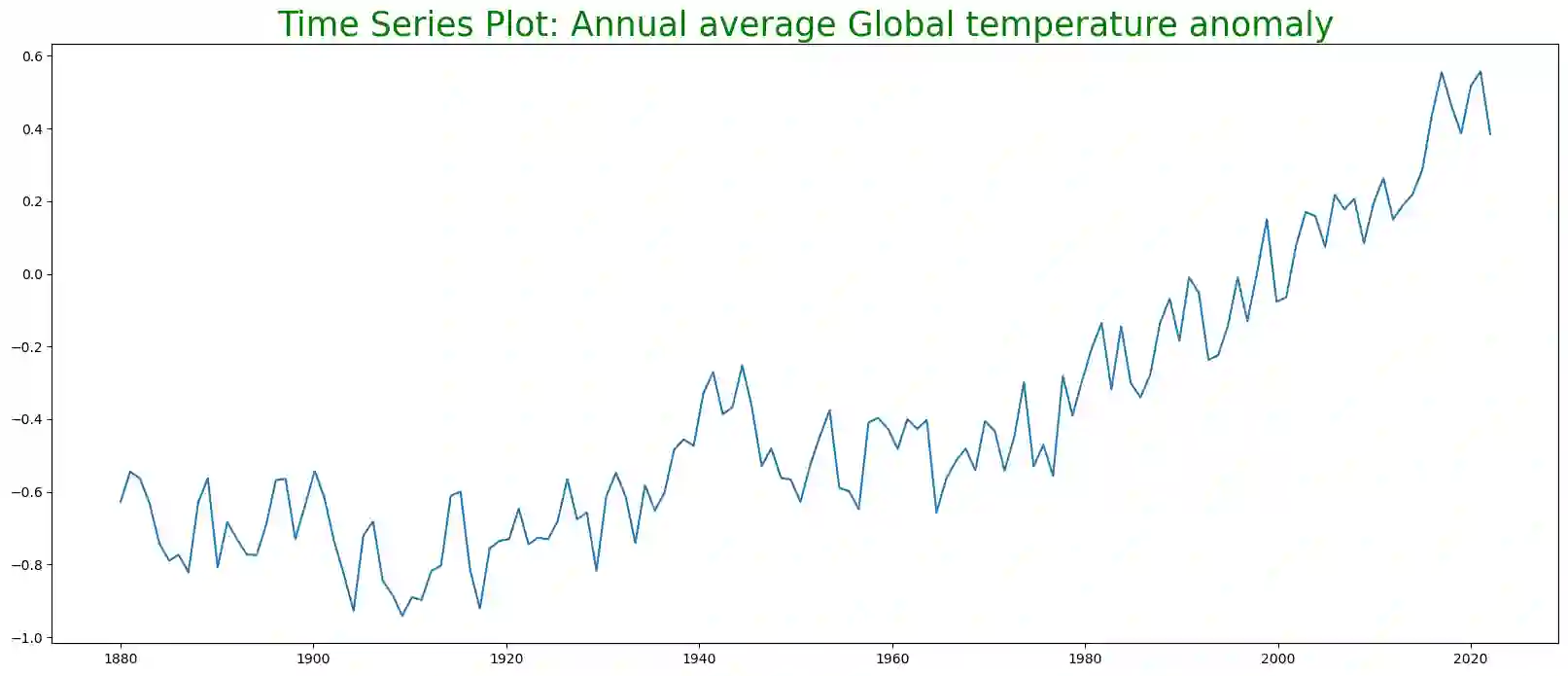
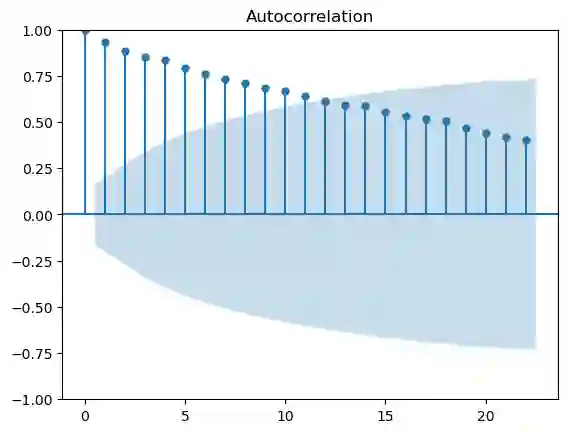
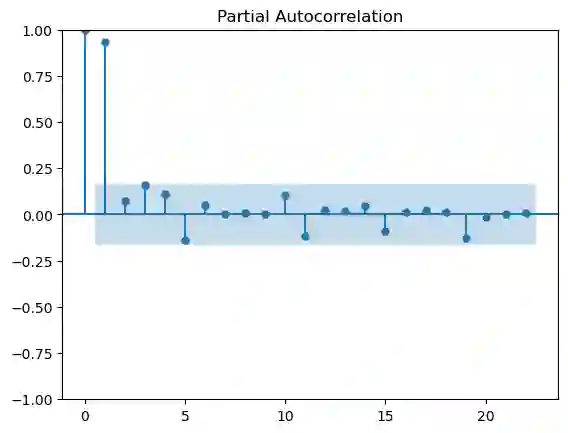
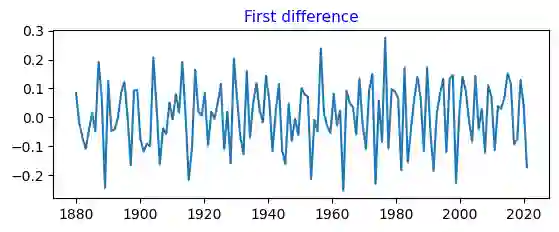
Temperature uncertainty models for land and sea surfaces can be developed based on statistical methods. In this paper, we developed a novel time series temperature uncertainty model which is the Auto-regressive Moving Average (ARMA)(1, 1) model. The model was developed for observed annual mean temperature anomaly X(t) which is a combination of true (latent) global anomaly Y (t) for a year (t) and normal variable w(t). The uncertainty is taken as the variance of w(t) which was decomposed to Land Surface Temperature (LST) uncertainty, Sea Surface Temperature (SST) uncertainty, and the corresponding source of uncertainty. The ARMA model was analyzed and compared with Auto-regressive (AR), and Auto-regressive integrated moving average (ARIMA) for the data taken from NASA, Goddard Institute for space studies Surface Temperature Analysis. The statistical analysis of the Auto-correlation function (ACF), Partial auto-correlation function (PACF), Normal quantile-quantile (Normal Q-Q) plot, the density of the residuals, and variance of normal variable w(t) show that ARMA(1, 1)is better than AR(1) and ARIMA(1, d, 1) for d = 1, 2.
翻译:基于统计方法可构建陆地和海洋表面的温度不确定性模型。本文提出了一种新型时间序列温度不确定性模型——自回归滑动平均(ARMA)(1,1)模型。该模型针对观测到的年均温度异常值X(t)进行构建,其中X(t)由真实(潜在)全球温度异常Y(t)(对应年份t)与正态变量w(t)组合而成。不确定性定义为w(t)的方差,其被分解为陆地表面温度(LST)不确定性、海洋表面温度(SST)不确定性及相应的不确定性来源。基于美国国家航空航天局(NASA)戈达德空间研究所地表温度分析数据,对ARMA模型与自回归(AR)模型及自回归积分滑动平均(ARIMA)模型进行了分析与比较。通过自相关函数(ACF)、偏自相关函数(PACF)、正态分位数-分位数(Normal Q-Q)图、残差密度及正态变量w(t)方差的统计分析表明,ARMA(1,1)模型优于AR(1)模型及d=1, 2时的ARIMA(1,d,1)模型。




相关内容




 微信扫码咨询专知VIP会员