

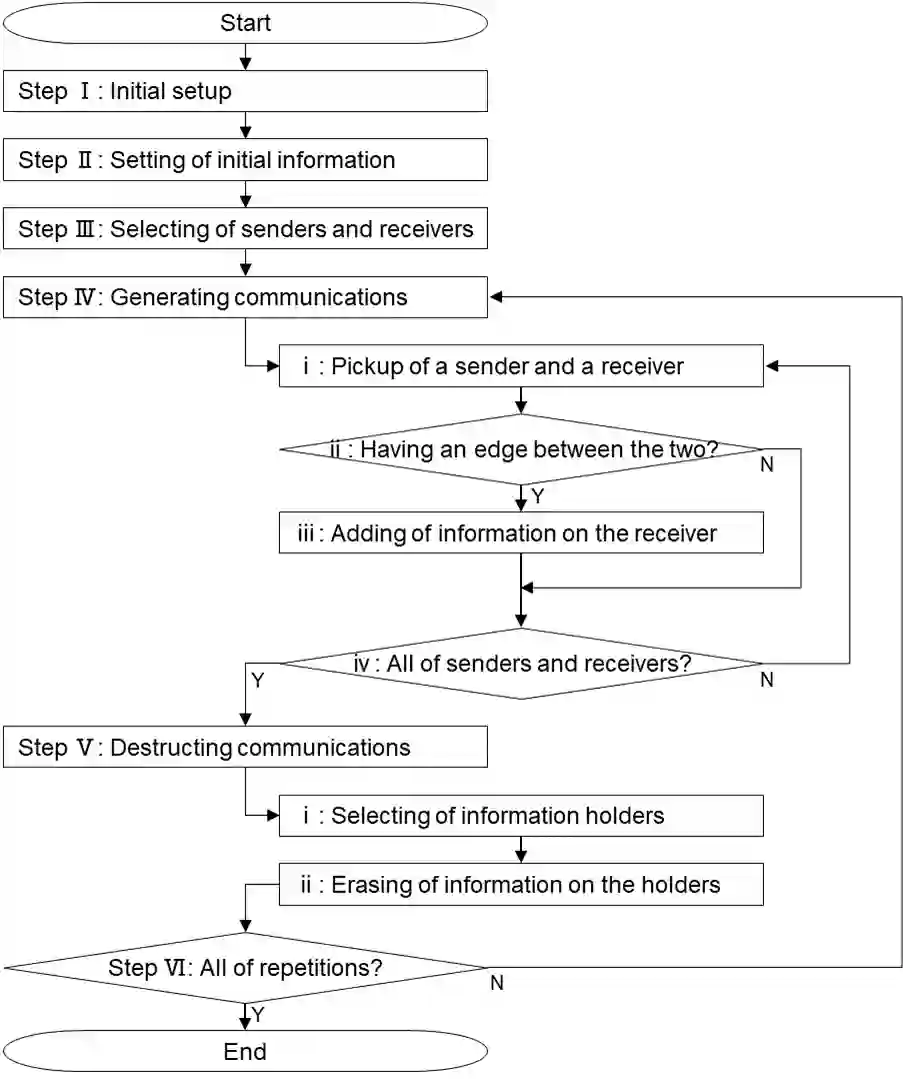
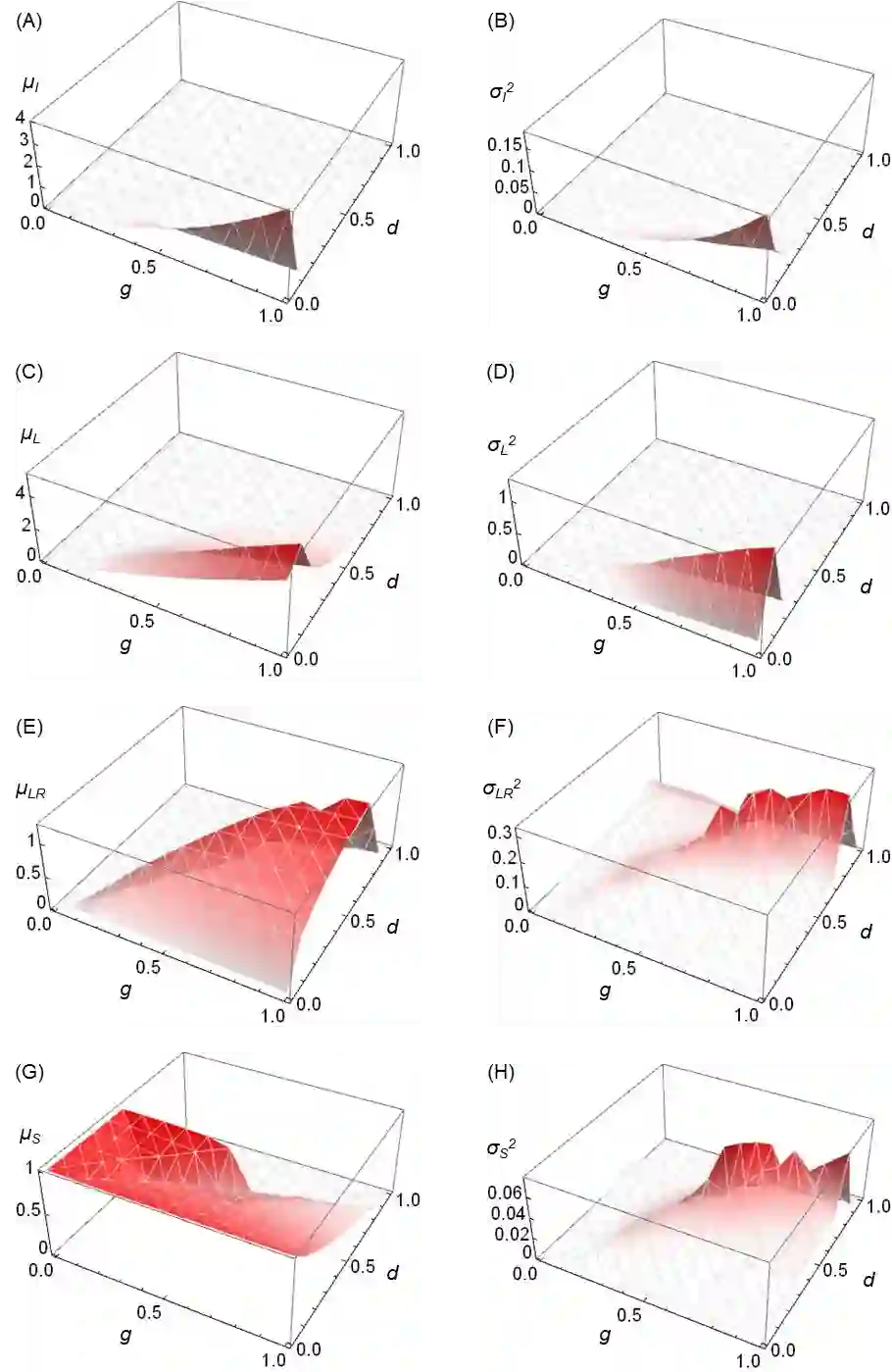
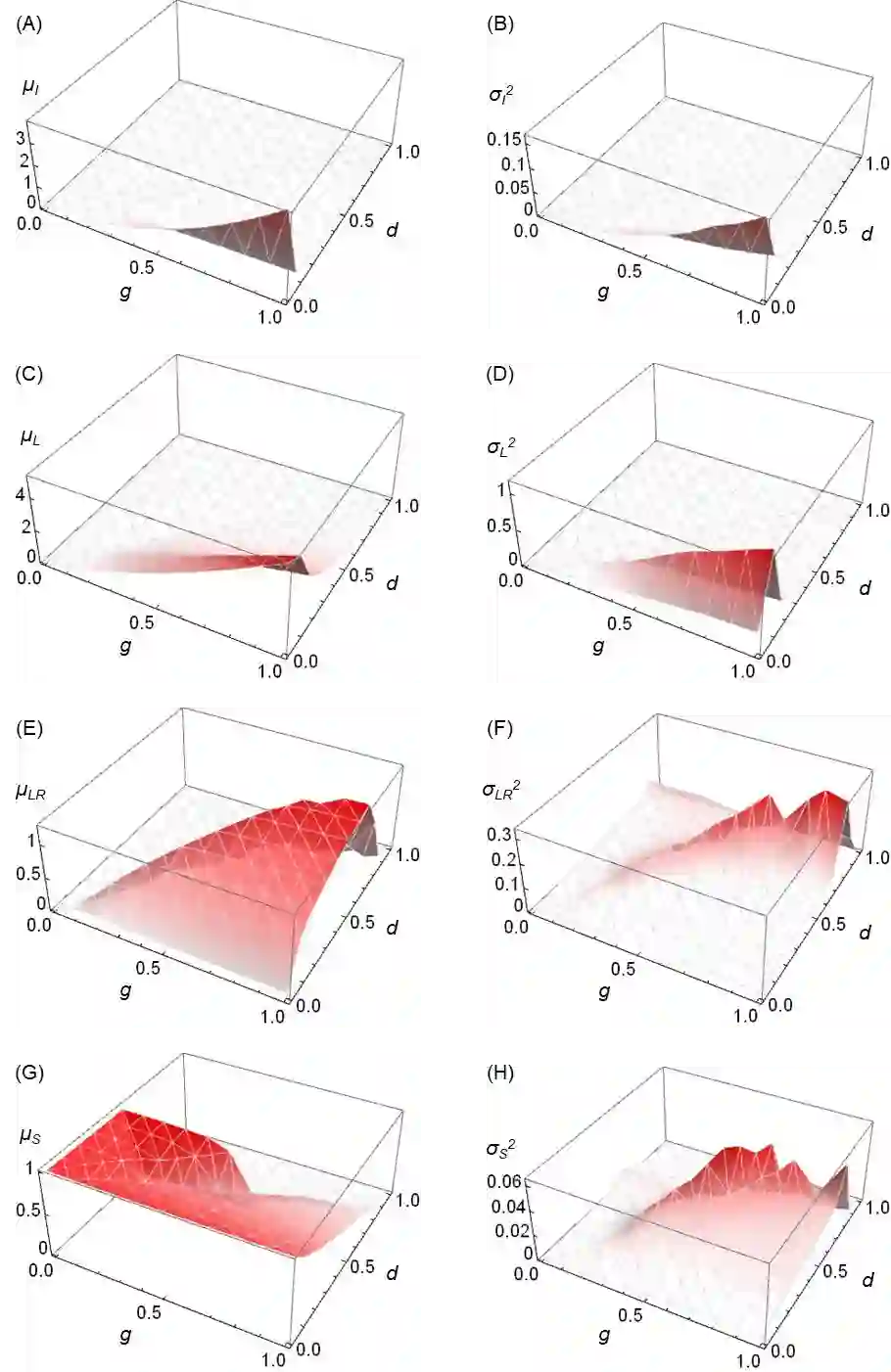
Social isolation is caused by the impoverishment of community (atomism) and fragmentation is caused by the enlargement of in-group (mobism), both of which can be viewed as social problems related to communication. To solve these problems, the philosophical world has proposed the concept of "mixbiotic society," in which individuals with freedom and diverse values mix and mingle to recognize their respective "fundamental incapability" each other and sublimate into solidarity. Based on this concept, this study proposes new mixbiotic society measures to evaluate dynamic communication patterns with reference to classification in cellular automata and particle reaction diffusion that simulate living phenomena. Specifically, the hypothesis of measures corresponding to the four classes was formulated, and the hypothesis was validated by simulating the generation and disappearance of communication. As a result, considering communication patterns as multidimensional vectors, it found that the mean of Euclidean distance for "mobism," the variance of the relative change in distance for "atomism," the composite measure that multiplies the mean and variance of cosine similarity for "mixism," which corresponds to the well-going of mixbiotic society, and the almost zero measures for "nihilism," are suitable. Then, evaluating seven real-society datasets using these measures, we showed that the mixism measure is useful for assessing the livingness of communication, and that it is possible to typify communities based on plural measures. The measures established in this study are superior to conventional analysis in that they can evaluate dynamic patterns, they are simple to calculate, and their meanings are easy to interpret. As a future development, the mixbiotic society measures will be used in the fields of digital democracy and platform cooperativism toward a desirable society.
翻译:社会孤立源于社群的贫瘠化(原子主义),而碎片化则源于群体内部的膨胀(群体主义),两者皆可视为与沟通相关的社会问题。为应对这些问题,哲学界提出了“混合共生社会”概念,其中拥有自由与多元价值观的个体相互混合交融,认识到彼此各自的“根本无能”,并升华至团结。基于此概念,本研究提出新的混合共生社会度量方法,通过参照模拟生命现象的元胞自动机与粒子反应扩散中的分类,评估动态沟通模式。具体而言,我们制定了与四种类别相对应的度量假设,并通过模拟沟通的产生与消亡对该假设进行验证。结果显示,将沟通模式视为多维向量时,对应于“群体主义”的欧氏距离均值、对应于“原子主义”的距离相对变化方差、对应于混合共生社会良好运行的“混合主义”(由余弦相似度的均值与方差相乘构成组合度量),以及几乎为零的“虚无主义”度量,为适配度量。随后,利用这些度量评估七个真实社会数据集,我们表明混合主义度量有助于评估沟通的生命力,并可能基于多项度量对社群进行类型化归类。本研究所确立的度量优于传统分析方法,因其能评估动态模式、计算简便且含义易于解读。未来发展方向上,混合共生社会度量将被应用于数字民主与平台合作主义领域,以迈向理想社会。




相关内容



 微信扫码咨询专知VIP会员