

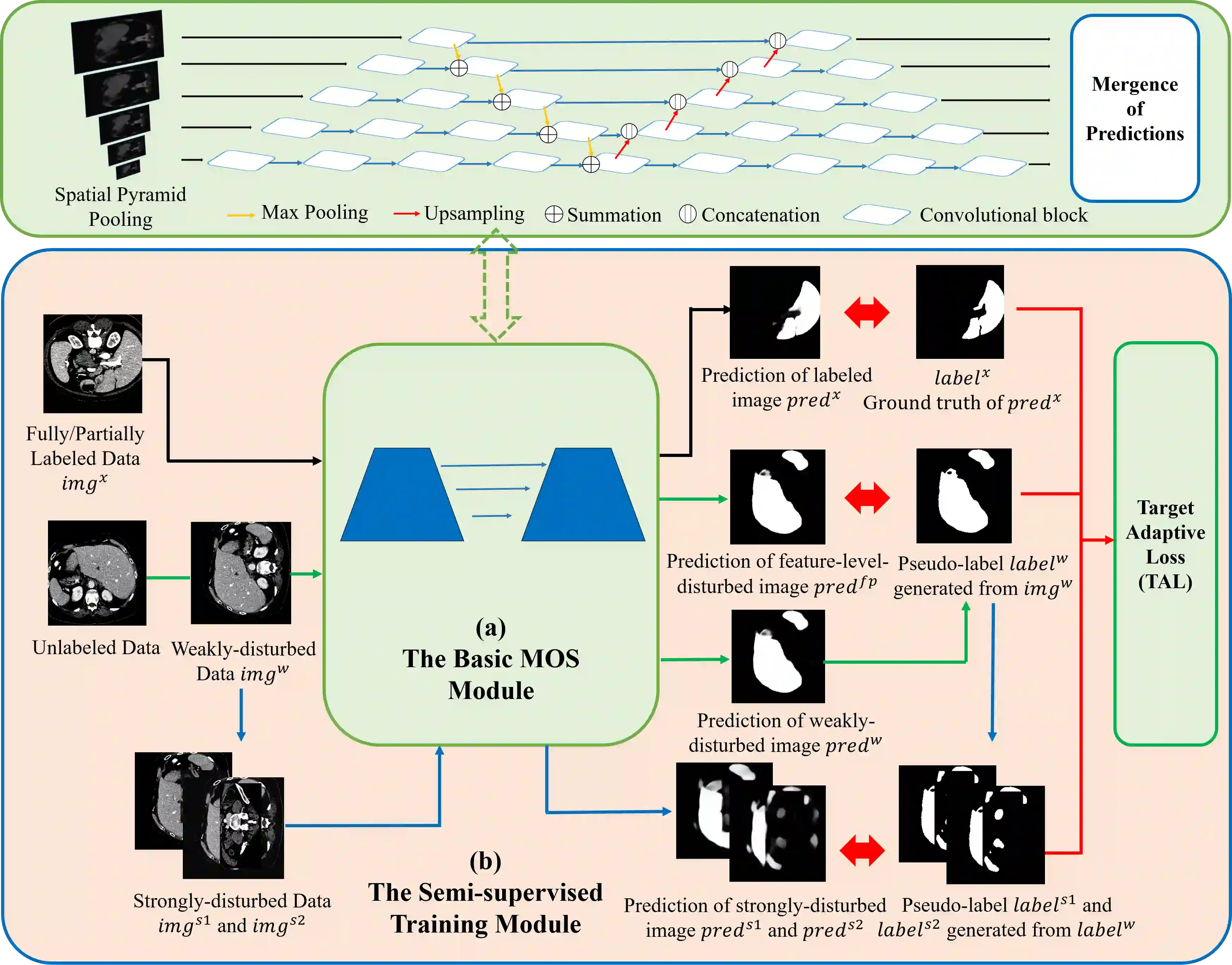
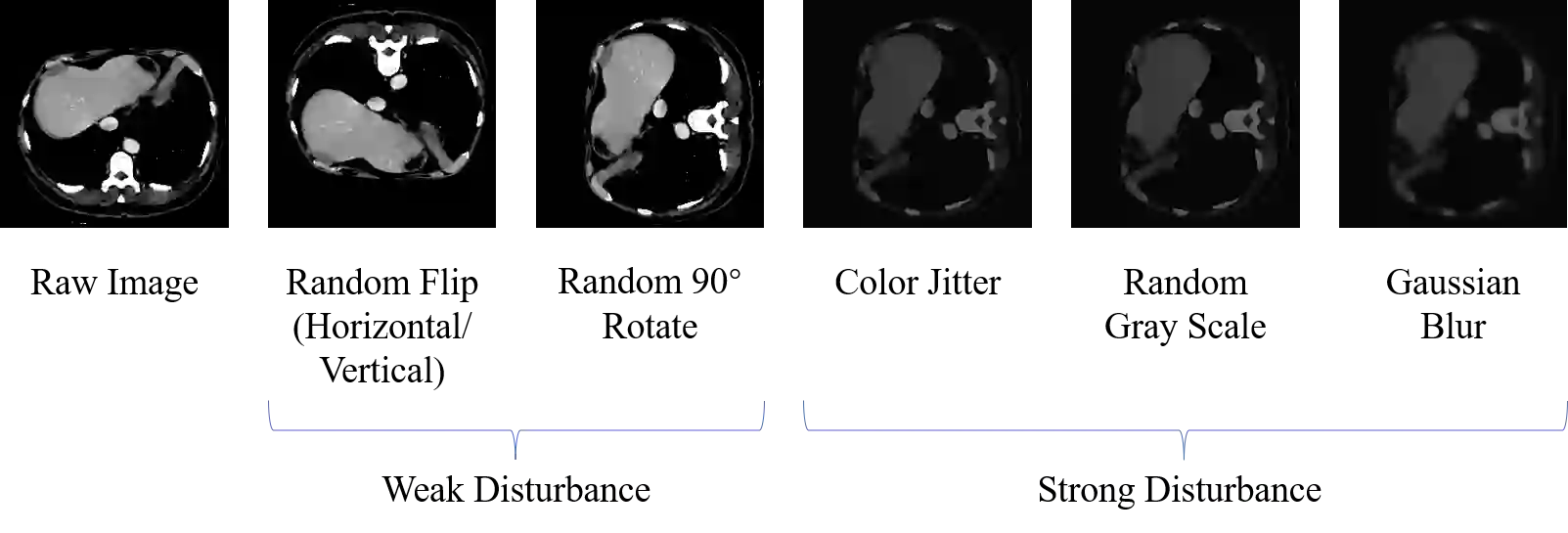
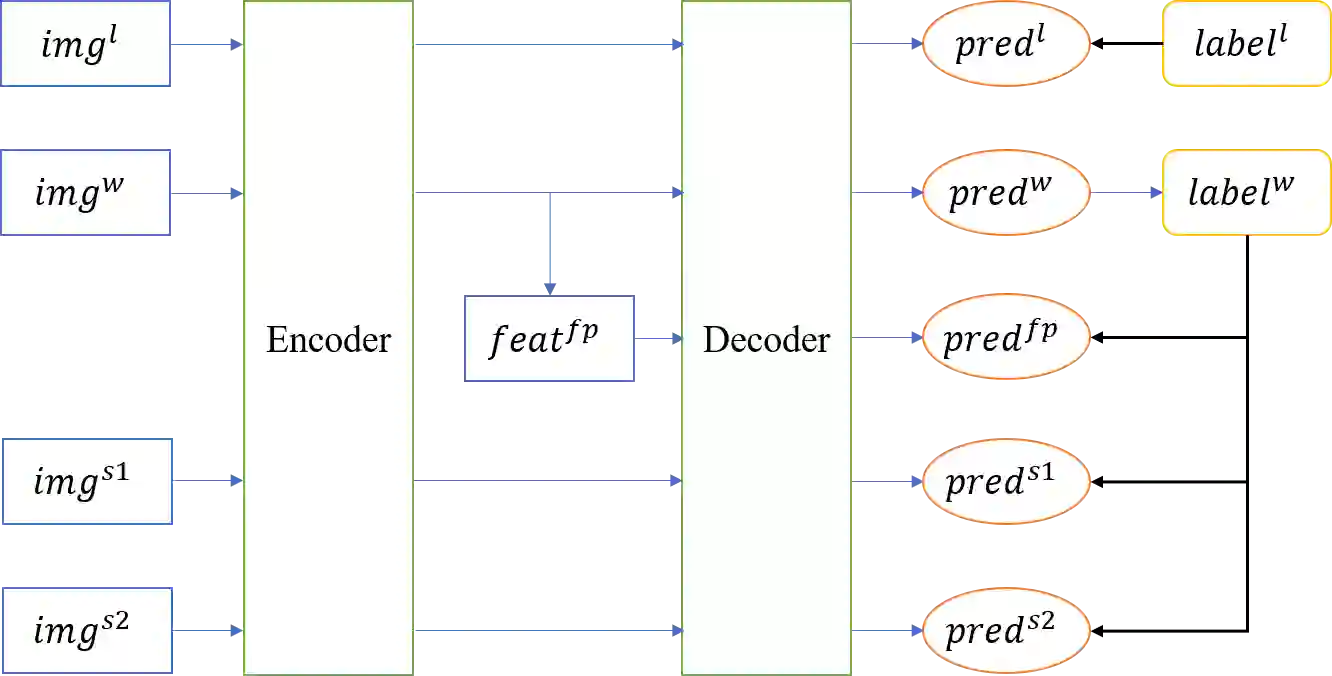
Machine learning models for medical images can help physicians diagnose and manage diseases. However, due to the fact that medical image annotation requires a great deal of manpower and expertise, as well as the fact that clinical departments perform image annotation based on task orientation, there is the problem of having fewer medical image annotation data with more unlabeled data and having many datasets that annotate only a single organ. In this paper, we present UniMOS, the first universal framework for achieving the utilization of fully and partially labeled images as well as unlabeled images. Specifically, we construct a Multi-Organ Segmentation (MOS) module over fully/partially labeled data as the basenet and designed a new target adaptive loss. Furthermore, we incorporate a semi-supervised training module that combines consistent regularization and pseudolabeling techniques on unlabeled data, which significantly improves the segmentation of unlabeled data. Experiments show that the framework exhibits excellent performance in several medical image segmentation tasks compared to other advanced methods, and also significantly improves data utilization and reduces annotation cost. Code and models are available at: https://github.com/lw8807001/UniMOS.
翻译:摘要:面向医学图像的机器学习模型能够辅助医生进行疾病诊断与管理。然而,由于医学图像标注需要大量人力和专业知识,且临床科室基于任务导向进行标注,导致存在标注数据稀少、未标注数据众多,以及大量数据集仅标注单一器官的问题。本文提出UniMOS——首个实现全标注、部分标注及未标注图像统一利用的通用框架。具体而言,我们在全标注/部分标注数据上构建多器官分割(MOS)模块作为基础网络,并设计了一种新型目标自适应损失函数。此外,我们引入半监督训练模块,在未标注数据上结合一致性正则化与伪标签技术,显著提升了未标注数据的分割性能。实验表明,与其他先进方法相比,该框架在多项医学图像分割任务中展现出卓越性能,同时大幅提高了数据利用率并降低了标注成本。代码与模型开源地址:https://github.com/lw8807001/UniMOS。




相关内容




 微信扫码咨询专知VIP会员