

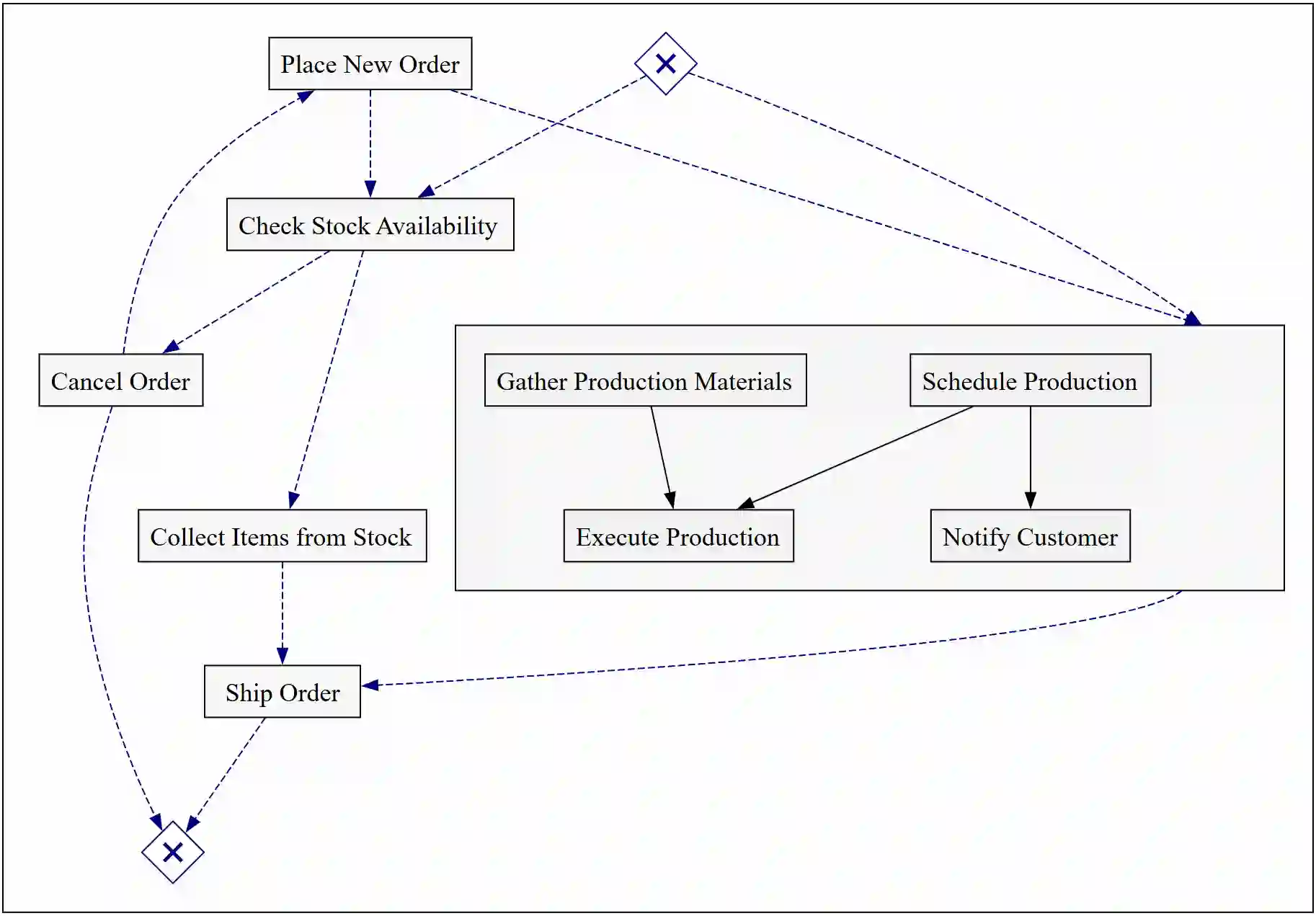
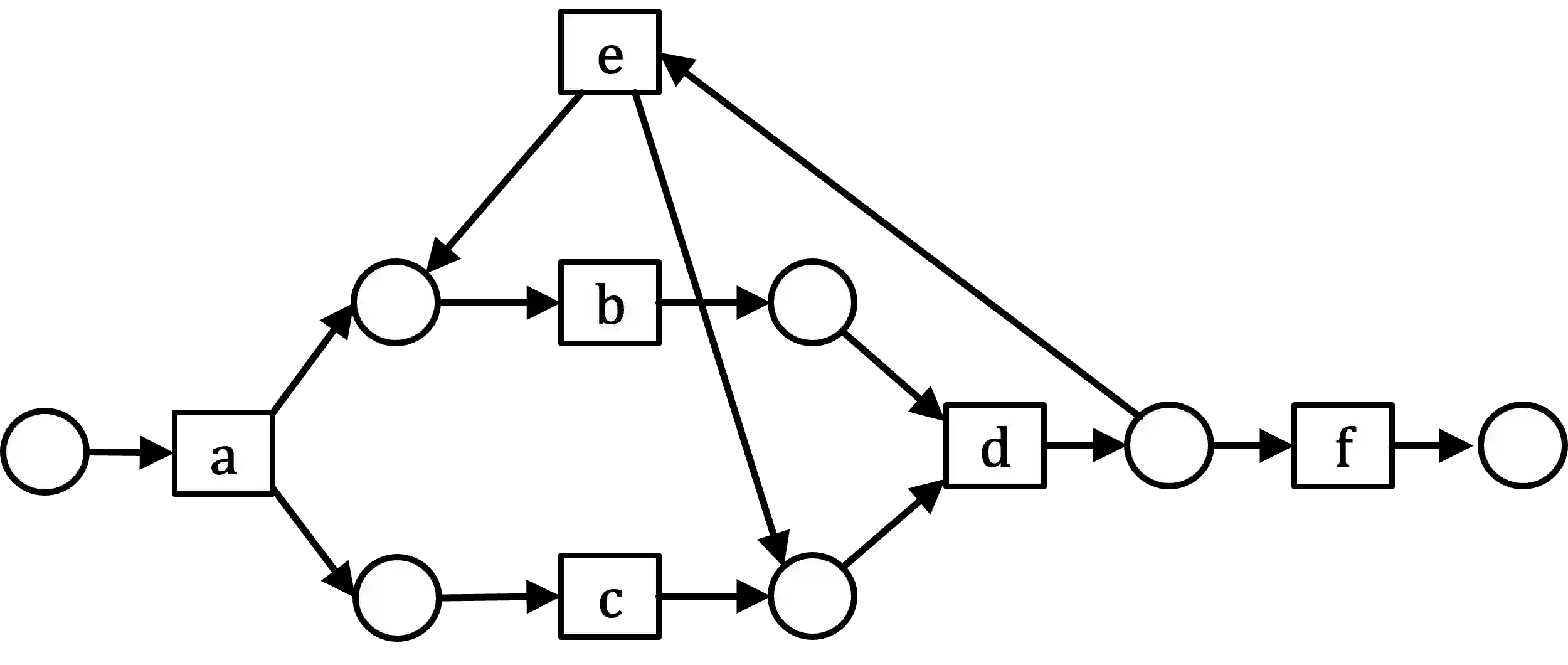
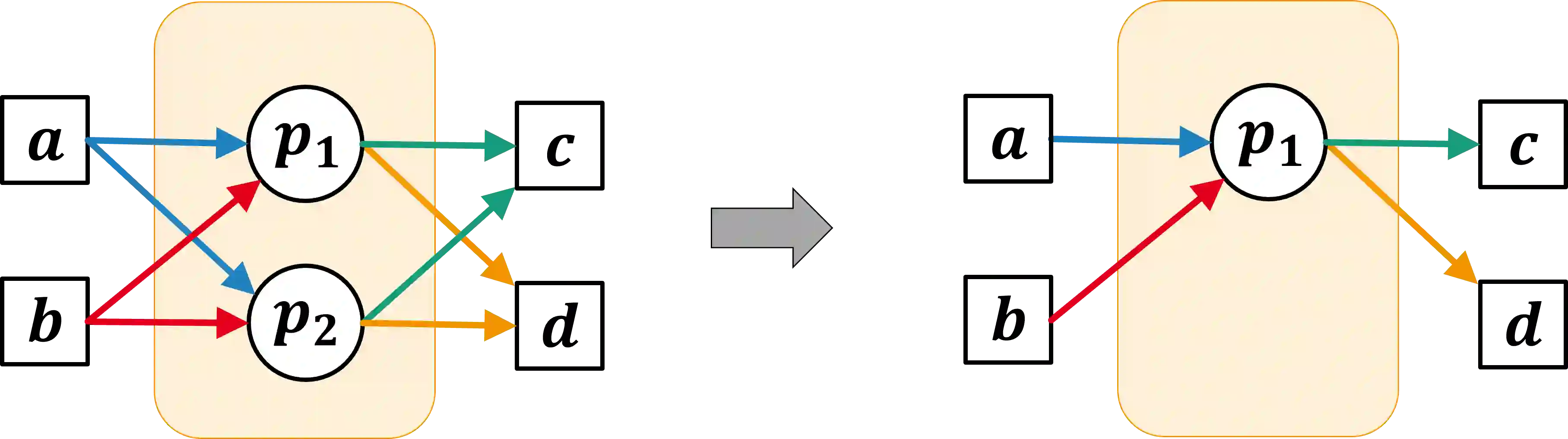
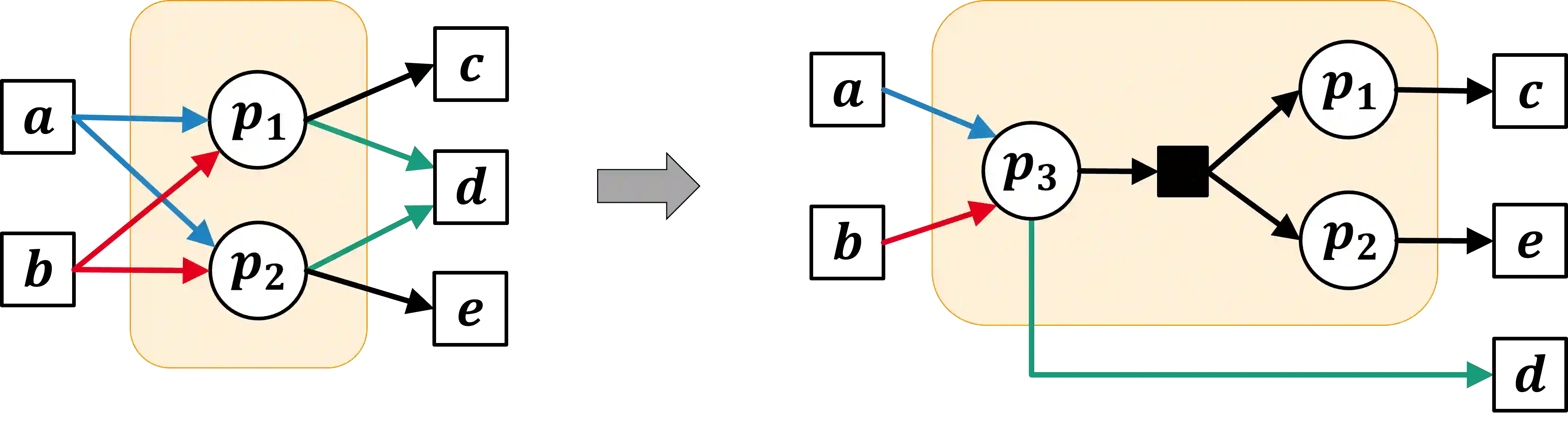
The Partially Ordered Workflow Language (POWL) has recently emerged as a process modeling notation, offering strong quality guarantees and high expressiveness. While early versions of POWL relied on strict block-structured operators for choices and loops, the language has recently evolved into POWL 2.0, introducing choice graphs to enable the modeling of non-block-structured decisions and cycles. To bridge the gap between the theoretical advantages of POWL and the practical need for compatibility with established notations, robust model transformations are required. This paper presents a novel algorithm for transforming safe and sound workflow nets (WF-nets) into equivalent POWL 2.0 models. The algorithm recursively identifies structural patterns within the WF-net and translates them into their POWL representation. Unlike the previous approach that required separate detection strategies for exclusive choices and loops, our new algorithm utilizes choice graphs to capture generalized decision and cyclic patterns. We formally prove the correctness of our approach, showing that the generated POWL model preserves the language of the input WF-net. Furthermore, we prove the completeness of our algorithm on the class of separable WF-nets, which corresponds to nets constructed via the hierarchical nesting of state machines and marked graphs. We evaluate our algorithm on large-scale process models to demonstrate its high scalability. Furthermore, to test its practical expressiveness, we applied it to a benchmark of 1,493 industrial and synthetic process models. Our algorithm successfully transformed all models in this benchmark, suggesting that POWL 2.0's expressive power is generally sufficient to capture the complex logic found in real-world business processes. This work paves the way for broader adoption of POWL in practical process analysis and improvement applications.
翻译:部分有序工作流语言(POWL)作为一种过程建模表示法近年来逐渐兴起,它提供了强大的质量保证和高度的表达能力。虽然早期版本的POWL依赖严格的块结构运算符来处理选择和循环,但该语言近期已发展为POWL 2.0,引入了选择图以实现非块结构决策和循环的建模。为了弥合POWL理论优势与现有表示法兼容性实际需求之间的差距,需要建立稳健的模型转换方法。本文提出了一种将安全可靠的工作流网(WF-net)转换为等效POWL 2.0模型的新算法。该算法递归识别WF-net内的结构模式,并将其转换为相应的POWL表示。与先前需要分别检测互斥选择和循环的策略不同,我们的新算法利用选择图来捕获广义的决策和循环模式。我们通过形式化证明验证了方法的正确性,表明生成的POWL模型能够保持输入WF-net的语言特性。此外,我们证明了算法在可分离WF-net类上的完备性,这类网络对应于通过状态机和标记图的层次嵌套构建的网络。我们通过大规模过程模型评估了算法的高可扩展性。为测试其实际表达能力,我们将算法应用于包含1,493个工业与合成过程模型的基准测试集。算法成功转换了该基准中的所有模型,这表明POWL 2.0的表达能力通常足以捕捉现实世界业务流程中的复杂逻辑。这项工作为POWL在实际过程分析与改进应用中的广泛采用铺平了道路。





相关内容




 微信扫码咨询专知VIP会员