

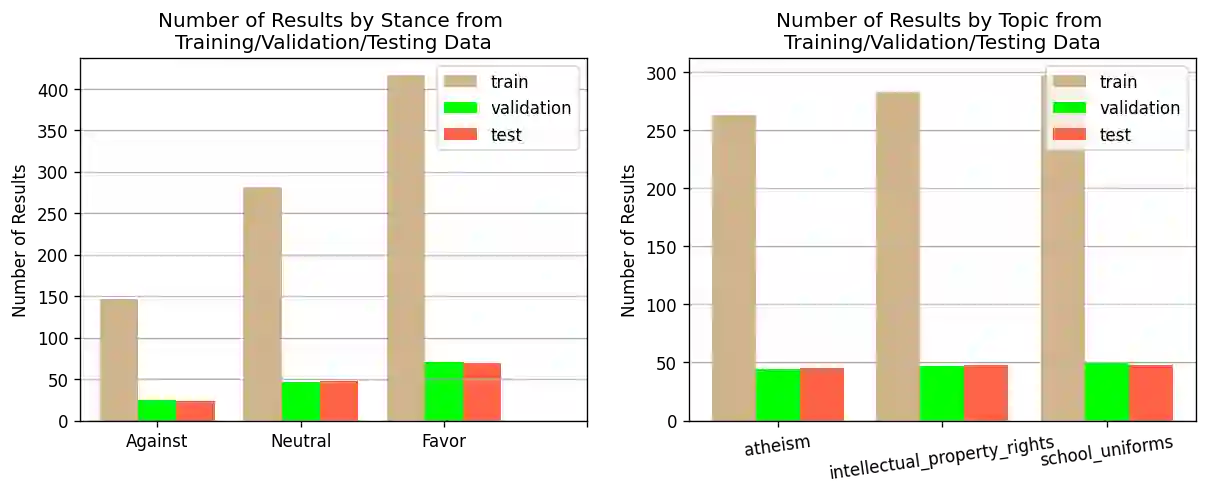
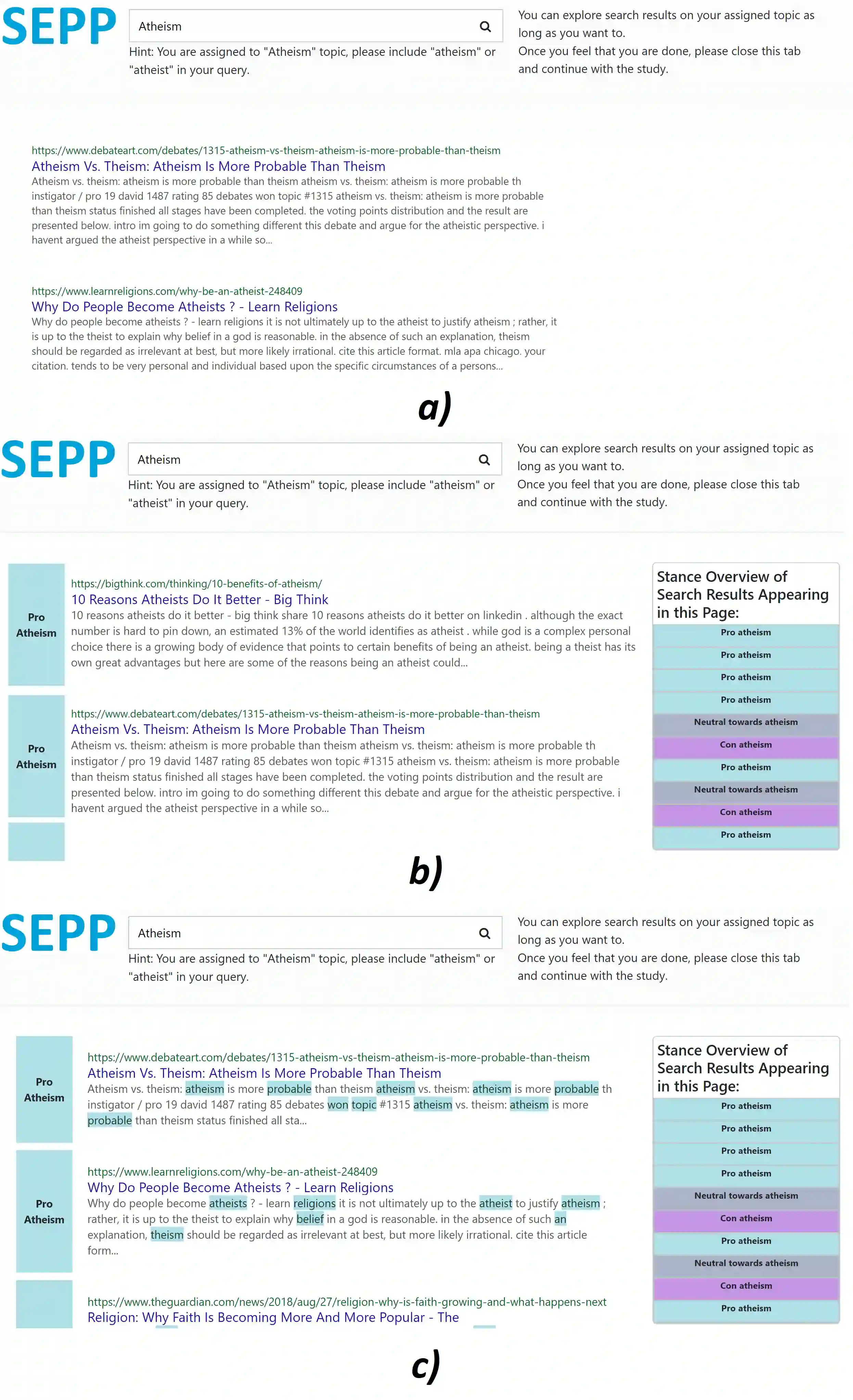
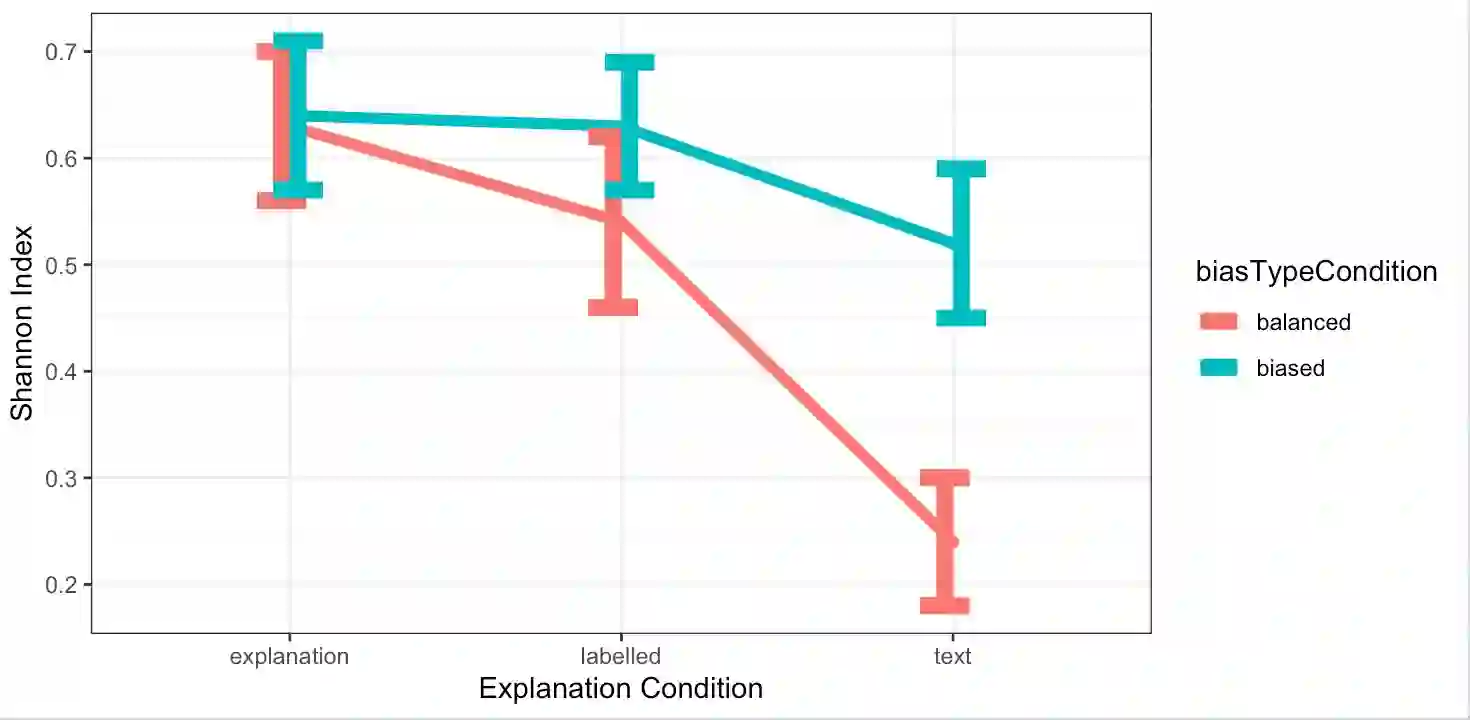
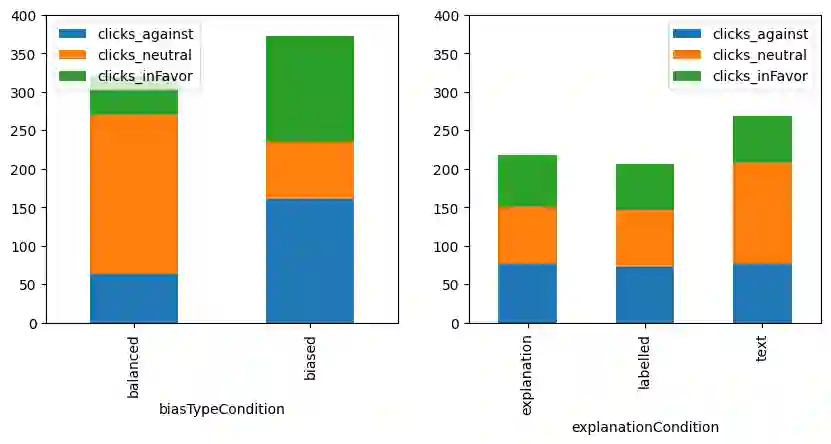
People use web search engines to find information before forming opinions, which can lead to practical decisions with different levels of impact. The cognitive effort of search can leave opinionated users vulnerable to cognitive biases, e.g., the confirmation bias. In this paper, we investigate whether stance labels and their explanations can help users consume more diverse search results. We automatically classify and label search results on three topics (i.e., intellectual property rights, school uniforms, and atheism) as against, neutral, and in favor, and generate explanations for these labels. In a user study (N =203), we then investigate whether search result stance bias (balanced vs biased) and the level of explanation (plain text, label only, label and explanation) influence the diversity of search results clicked. We find that stance labels and explanations lead to a more diverse search result consumption. However, we do not find evidence for systematic opinion change among users in this context. We believe these results can help designers of search engines to make more informed design decisions.
翻译:人们在使用网络搜索引擎形成观点之前,会先搜索信息,这可能导致具有不同影响程度的实际决策。搜索过程中的认知负荷使有观点的用户容易受到认知偏见的影响,例如确认偏误。本文研究立场标签及其解释是否有助于用户消费更多样化的搜索结果。我们自动分类并标注了三个主题(即知识产权、校服和无神论)的搜索结果,将其标记为反对、中立和支持,并为这些标签生成解释。通过一项用户研究(N=203),我们探讨了搜索结果立场偏差(平衡 vs. 有偏)和解释层次(纯文本、仅标签、标签与解释)如何影响用户点击搜索结果的多样性。结果发现,立场标签和解释有助于用户消费更多样化的搜索结果。然而,在本研究背景下,我们并未发现有证据表明用户观点发生了系统性改变。我们认为,这些结果可帮助搜索引擎设计者做出更为知情的设计决策。




相关内容



 微信扫码咨询专知VIP会员