

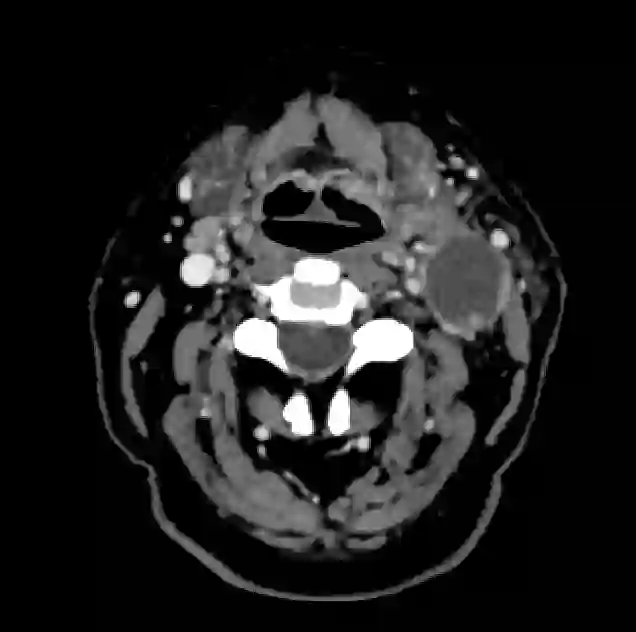
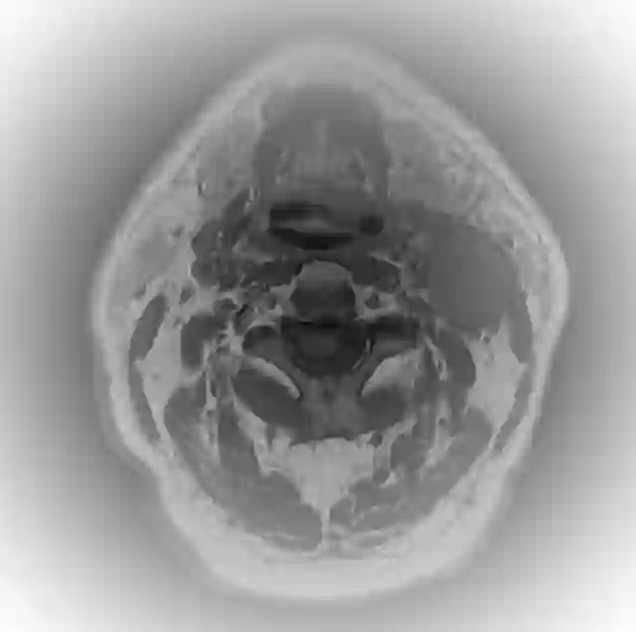
Organ at risk (OAR) segmentation is a critical process in radiotherapy treatment planning such as head and neck tumors. Nevertheless, in clinical practice, radiation oncologists predominantly perform OAR segmentations manually on CT scans. This manual process is highly time-consuming and expensive, limiting the number of patients who can receive timely radiotherapy. Additionally, CT scans offer lower soft-tissue contrast compared to MRI. Despite MRI providing superior soft-tissue visualization, its time-consuming nature makes it infeasible for real-time treatment planning. To address these challenges, we propose a method called SegReg, which utilizes Elastic Symmetric Normalization for registering MRI to perform OAR segmentation. SegReg outperforms the CT-only baseline by 16.78% in mDSC and 18.77% in mIoU, showing that it effectively combines the geometric accuracy of CT with the superior soft-tissue contrast of MRI, making accurate automated OAR segmentation for clinical practice become possible. See project website https://steve-zeyu-zhang.github.io/SegReg
翻译:危及器官(OAR)分割是头颈部肿瘤等放射治疗计划中的关键环节。然而,在临床实践中,放射肿瘤医师通常需要在CT扫描图像上手动进行OAR分割。这种人工操作耗时且成本高昂,限制了能够及时接受放疗的患者数量。此外,与MRI相比,CT扫描的软组织对比度较低。尽管MRI能够提供更优的软组织可视化效果,但其耗时特性使其难以应用于实时治疗计划。为解决这些挑战,我们提出了一种名为SegReg的方法,该方法利用弹性对称归一化进行MRI配准以实现OAR分割。SegReg在mDSC和mIoU指标上分别比仅使用CT的基线方法提升16.78%和18.77%,表明该方法有效结合了CT的几何精度与MRI的优越软组织对比度,使临床实践中实现准确的自动OAR分割成为可能。详见项目网站 https://steve-zeyu-zhang.github.io/SegReg




相关内容




 微信扫码咨询专知VIP会员