

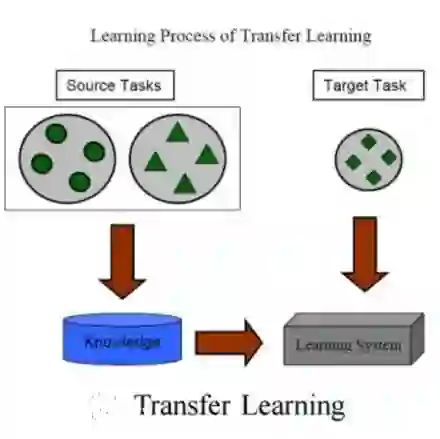
Automating the monitoring of industrial processes has the potential to enhance efficiency and optimize quality by promptly detecting abnormal events and thus facilitating timely interventions. Deep learning, with its capacity to discern non-trivial patterns within large datasets, plays a pivotal role in this process. Standard deep learning methods are suitable to solve a specific task given a specific type of data. During training, deep learning demands large volumes of labeled data. However, due to the dynamic nature of the industrial processes and environment, it is impractical to acquire large-scale labeled data for standard deep learning training for every slightly different case anew. Deep transfer learning offers a solution to this problem. By leveraging knowledge from related tasks and accounting for variations in data distributions, the transfer learning framework solves new tasks with little or even no additional labeled data. The approach bypasses the need to retrain a model from scratch for every new setup and dramatically reduces the labeled data requirement. This survey first provides an in-depth review of deep transfer learning, examining the problem settings of transfer learning and classifying the prevailing deep transfer learning methods. Moreover, we delve into applications of deep transfer learning in the context of a broad spectrum of time series anomaly detection tasks prevalent in primary industrial domains, e.g., manufacturing process monitoring, predictive maintenance, energy management, and infrastructure facility monitoring. We discuss the challenges and limitations of deep transfer learning in industrial contexts and conclude the survey with practical directions and actionable suggestions to address the need to leverage diverse time series data for anomaly detection in an increasingly dynamic production environment.
翻译:自动监控工业过程有望通过及时检测异常事件并促进及时干预,从而提升效率并优化质量。深度学习凭借其从大规模数据集中识别复杂模式的能力,在这一过程中发挥着关键作用。标准的深度学习方法适用于解决给定数据类型下的特定任务。训练过程中,深度学习需要大量标注数据。然而,由于工业过程及其环境的动态特性,针对每种略有不同的情况重新收集大规模标注数据进行标准深度学习训练并不现实。深度迁移学习为这一问题提供了解决方案。通过利用相关任务的知识并考虑数据分布的差异,迁移学习框架能够在几乎没有甚至没有额外标注数据的情况下解决新任务。该方法避免了为每个新设置从头训练模型的需求,并显著降低了标注数据的要求。本综述首先深入回顾了深度迁移学习,探讨了迁移学习的问题设置,并对主流深度迁移学习方法进行了分类。此外,我们深入探讨了深度迁移学习在主要工业领域(如制造过程监控、预测性维护、能源管理和基础设施设施监控)中普遍存在的各类时间序列异常检测任务中的应用。我们讨论了深度迁移学习在工业场景中的挑战与局限性,并以实际方向与可行建议作为综述的结尾,旨在满足在日益动态的生产环境中利用多样化时间序列数据进行异常检测的需求。




相关内容



 微信扫码咨询专知VIP会员