

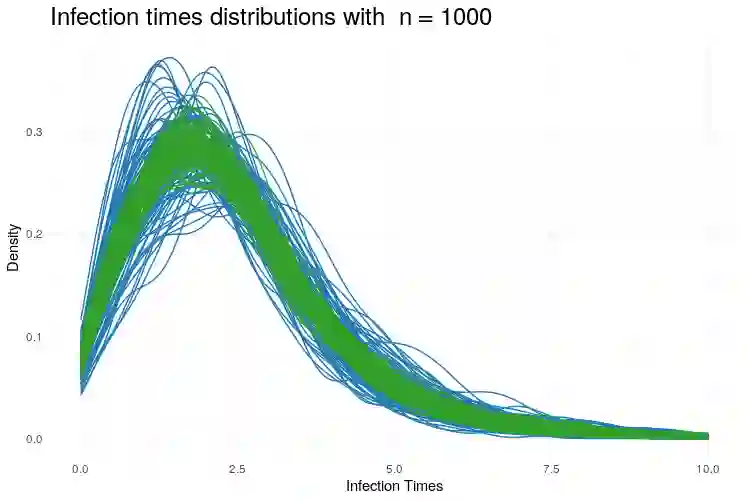
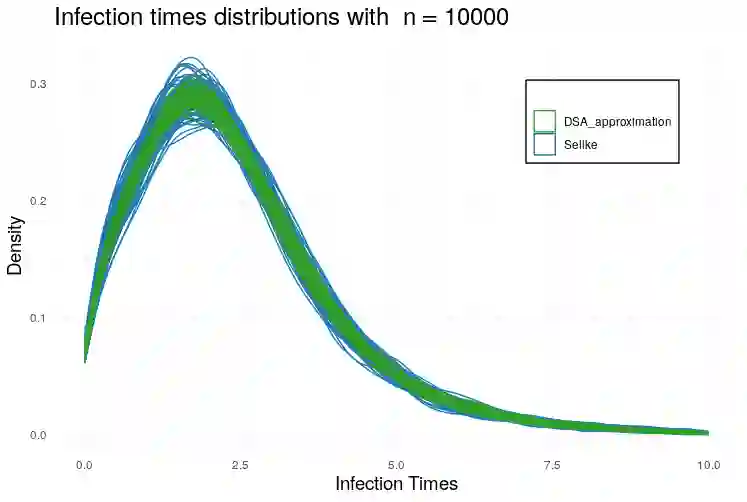
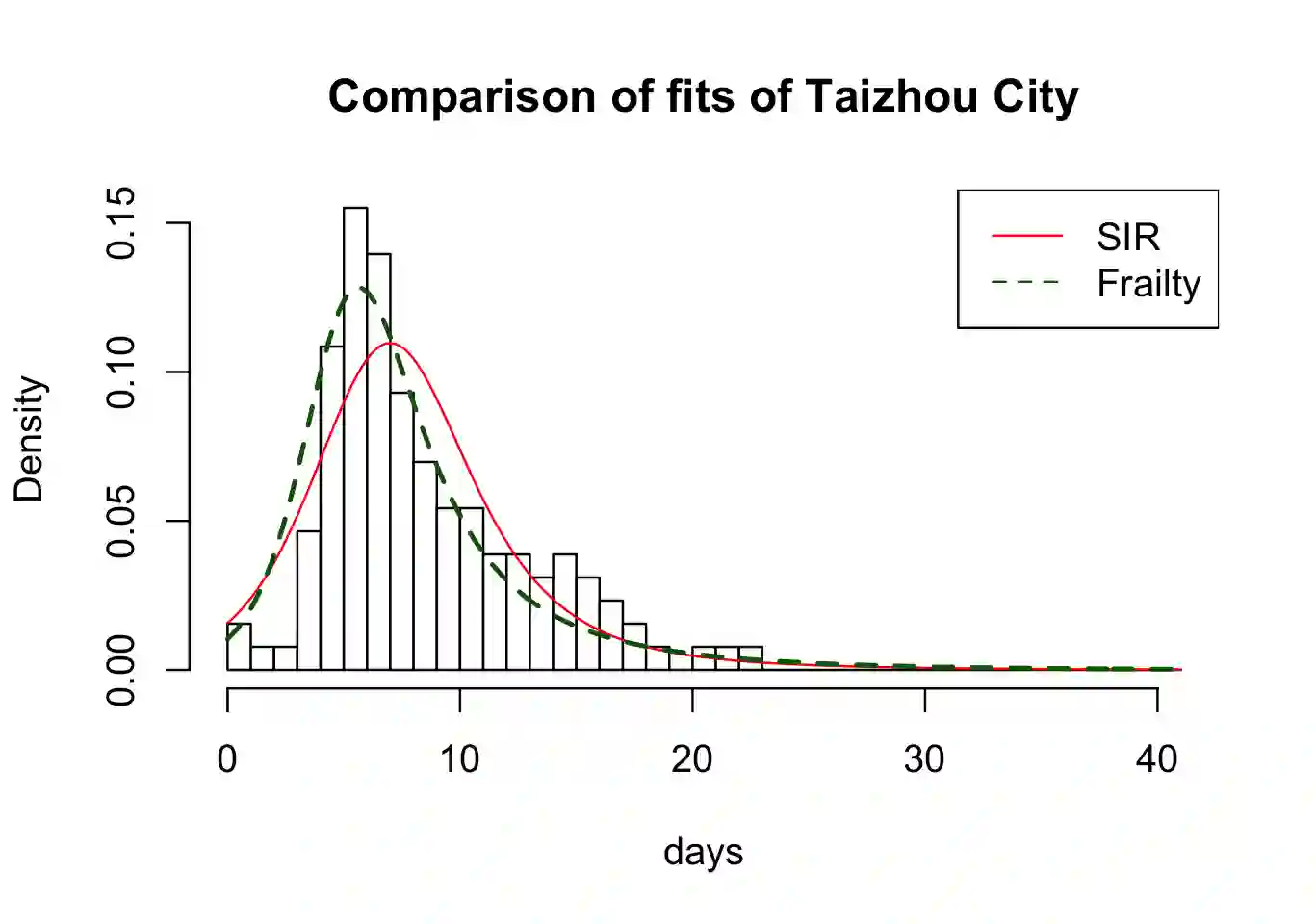
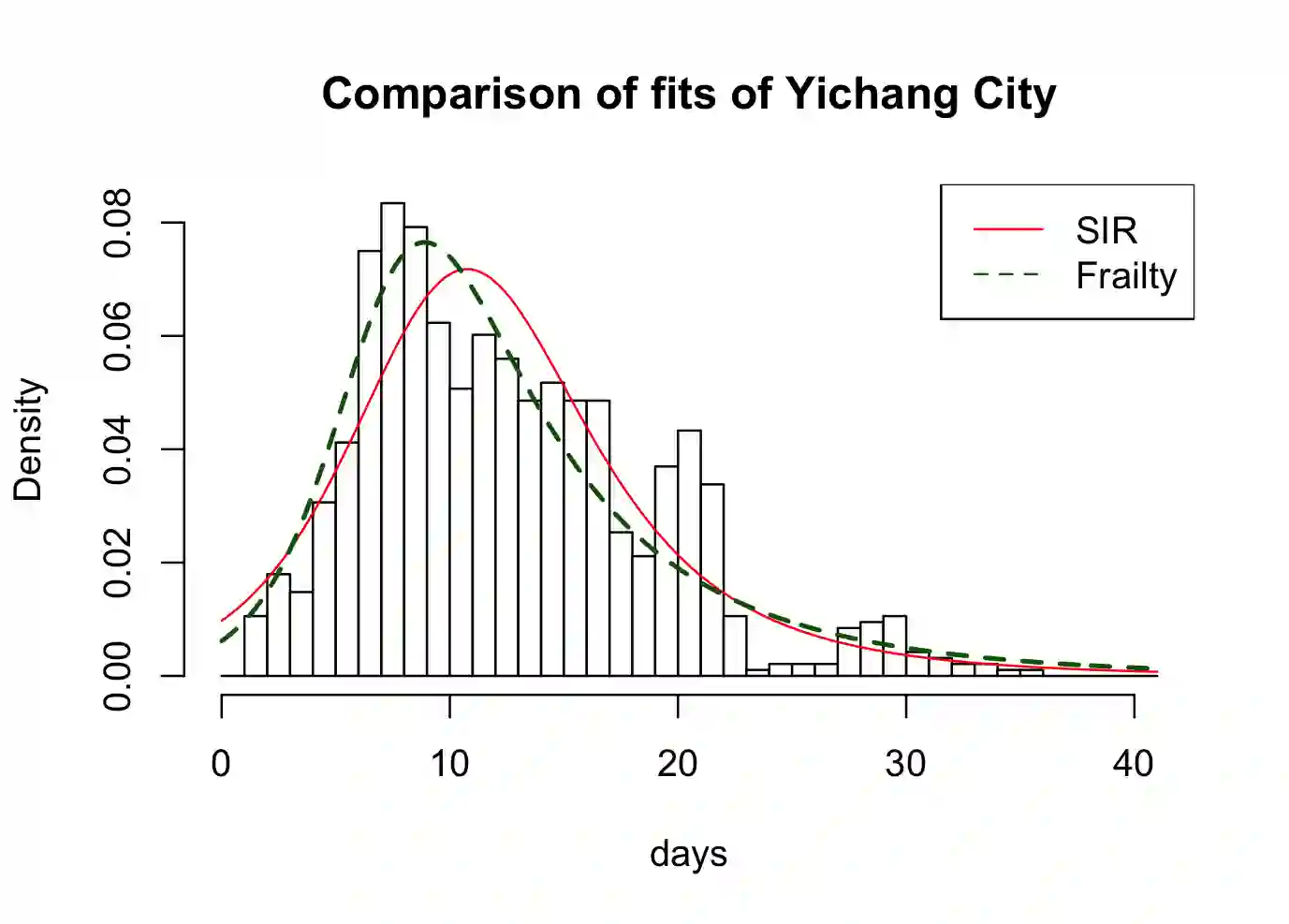
Stochastic compartmental models are prevalent tools for describing disease spread, but inference under these models is challenging for many types of surveillance data when the marginal likelihood function becomes intractable due to missing information. To address this, we develop a closed-form likelihood for discretely observed incidence count data under the dynamical survival analysis (DSA) paradigm. The method approximates the stochastic population-level hazard by a large population limit while retaining a count-valued stochastic model, and leads to survival analytic inferential strategies that are both computationally efficient and flexible to model generalizations. Through simulation, we show that parameter estimation is competitive with recent exact but computationally expensive likelihood-based methods in partially observed settings. Previous work has shown that the DSA approximation is generalizable, and we show that the inferential developments here also carry over to models featuring individual heterogeneity, such as frailty models. We consider case studies of both Ebola and COVID-19 data on variants of the model, including a network-based epidemic model and a model with distributions over susceptibility, demonstrating its flexibility and practical utility on real, partially observed datasets.
翻译:随机分室模型是描述疾病传播的常用工具,但在许多监测数据类型下,由于信息缺失导致边缘似然函数难以处理,使得基于这些模型的推断面临挑战。为解决此问题,我们在动态生存分析(DSA)范式下,为离散观测的发病率计数数据开发了闭式似然函数。该方法通过大群体极限逼近随机群体水平风险,同时保留计数值的随机模型,从而产生既计算高效又对模型泛化具有灵活性的生存分析推断策略。通过模拟实验,我们证明在部分观测场景下,参数估计与近期精确但计算成本高昂的基于似然的方法具有可比性。先前研究表明DSA近似具有可推广性,我们在此证明本文的推断方法同样适用于具有个体异质性的模型,如脆弱模型。我们通过对埃博拉和COVID-19数据的案例研究,考察了该模型的多种变体,包括基于网络的流行病模型和具有易感性分布的模型,展示了其在真实、部分观测数据集上的灵活性和实用价值。




相关内容



 微信扫码咨询专知VIP会员