

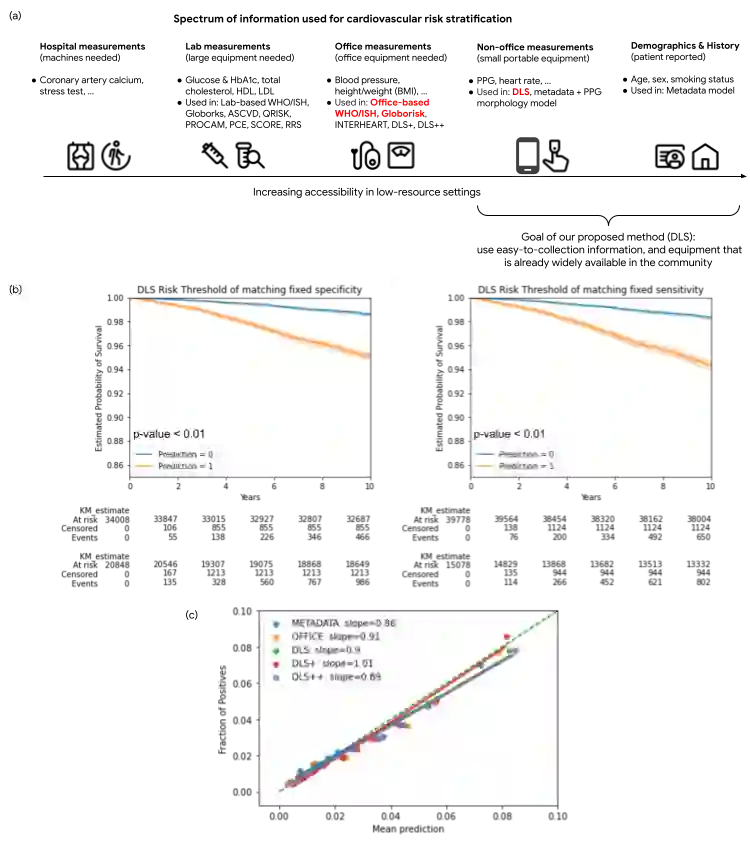
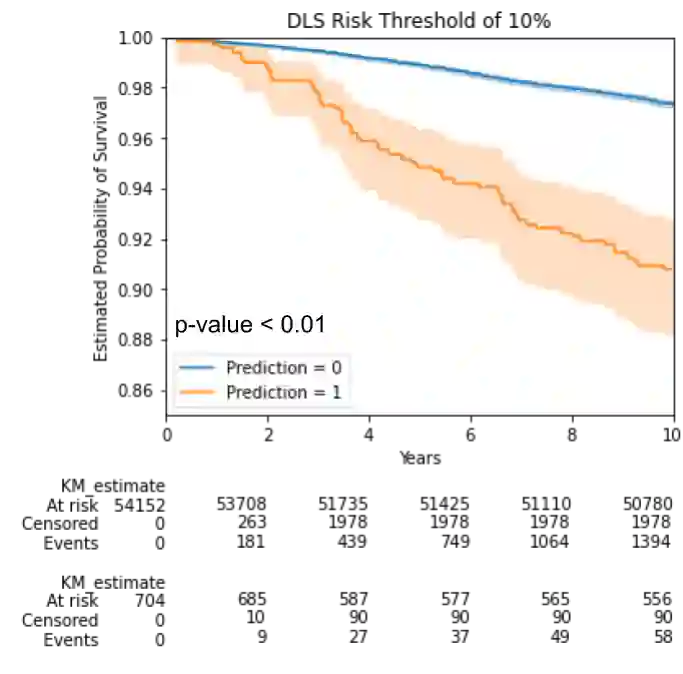
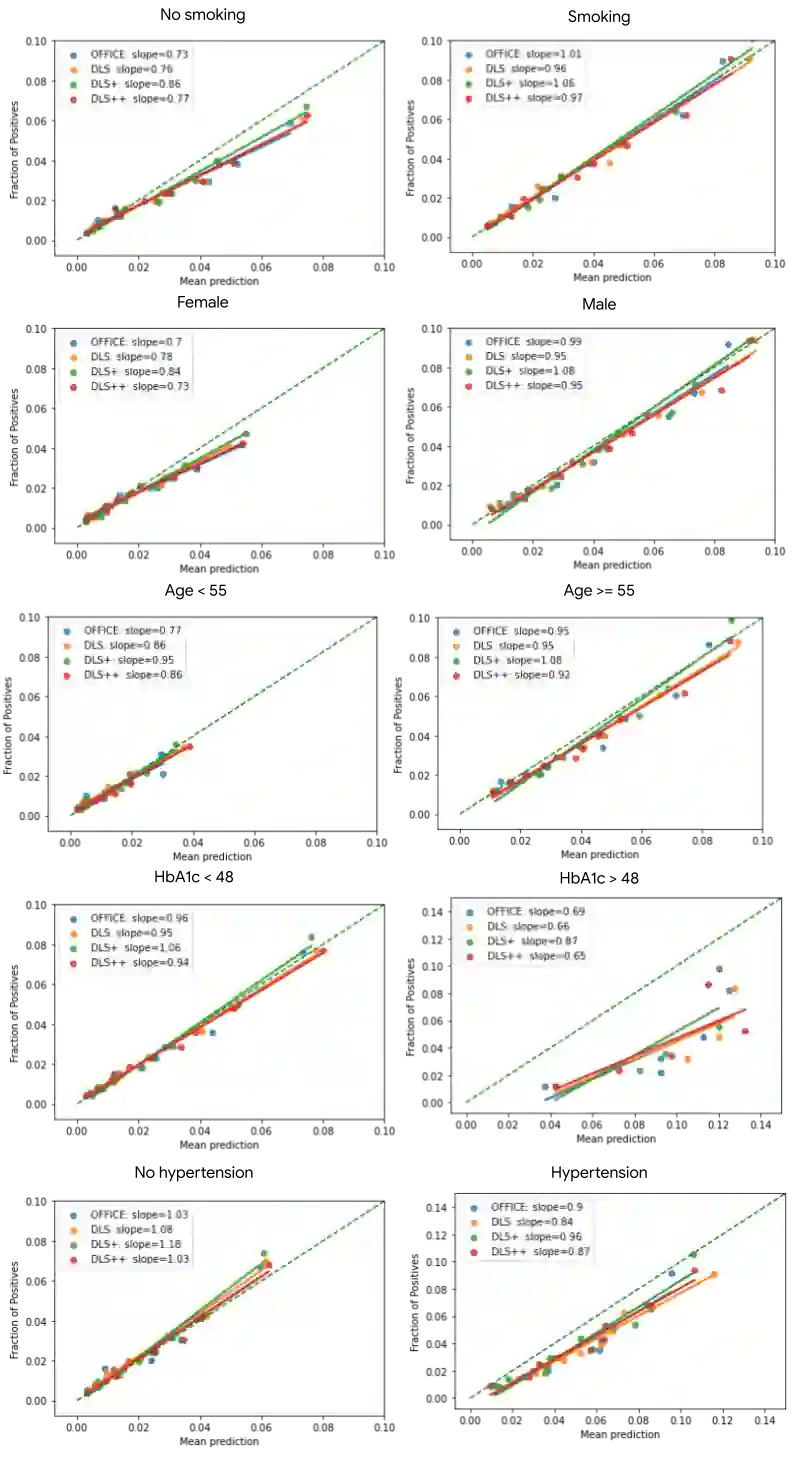
Cardiovascular diseases (CVDs) are responsible for a large proportion of premature deaths in low- and middle-income countries. Early CVD detection and intervention is critical in these populations, yet many existing CVD risk scores require a physical examination or lab measurements, which can be challenging in such health systems due to limited accessibility. Here we investigated the potential to use photoplethysmography (PPG), a sensing technology available on most smartphones that can potentially enable large-scale screening at low cost, for CVD risk prediction. We developed a deep learning PPG-based CVD risk score (DLS) to predict the probability of having major adverse cardiovascular events (MACE: non-fatal myocardial infarction, stroke, and cardiovascular death) within ten years, given only age, sex, smoking status and PPG as predictors. We compared the DLS with the office-based refit-WHO score, which adopts the shared predictors from WHO and Globorisk scores (age, sex, smoking status, height, weight and systolic blood pressure) but refitted on the UK Biobank (UKB) cohort. In UKB cohort, DLS's C-statistic (71.1%, 95% CI 69.9-72.4) was non-inferior to office-based refit-WHO score (70.9%, 95% CI 69.7-72.2; non-inferiority margin of 2.5%, p<0.01). The calibration of the DLS was satisfactory, with a 1.8% mean absolute calibration error. Adding DLS features to the office-based score increased the C-statistic by 1.0% (95% CI 0.6-1.4). DLS predicts ten-year MACE risk comparable with the office-based refit-WHO score. It provides a proof-of-concept and suggests the potential of a PPG-based approach strategies for community-based primary prevention in resource-limited regions.
翻译:心血管疾病(CVD)是低收入和中等收入国家过早死亡的主要原因。在这些人群中,早期发现和干预至关重要,但现有许多心血管疾病风险评分需要体检或实验室检测,而由于医疗可及性有限,这在相关卫生体系中难以实现。本研究探讨了利用光电容积描记(PPG)——一种大多数智能手机配备的传感技术,有望以低成本实现大规模筛查——进行心血管疾病风险预测的潜力。我们开发了基于深度学习的PPG心血管疾病风险评分(DLS),仅以年龄、性别、吸烟状况和PPG作为预测因子,预测十年内发生主要不良心血管事件(MACE:非致命性心肌梗死、中风和心血管死亡)的概率。我们将DLS与基于诊室的重新拟合WHO评分进行比较,后者采用了WHO和Globorisk评分共同的预测因子(年龄、性别、吸烟状况、身高、体重和收缩压),但基于英国生物银行(UKB)队列重新拟合。在UKB队列中,DLS的C统计量(71.1%,95%置信区间69.9-72.4)不劣于基于诊室的重新拟合WHO评分(70.9%,95%置信区间69.7-72.2;非劣效性界值为2.5%,p<0.01)。DLS的校准令人满意,平均绝对校准误差为1.8%。将DLS特征加入基于诊室的评分后,C统计量增加了1.0%(95%置信区间0.6-1.4)。DLS预测十年MACE风险的能力与基于诊室的重新拟合WHO评分相当。这提供了概念验证,表明基于PPG的方法在资源有限地区基层预防中具有潜在应用价值。






相关内容




 微信扫码咨询专知VIP会员