

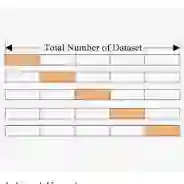
In this study, we present a deep learning framework designed to integrate with our previously developed system that facilitates large-scale 1D fetal Doppler data collection, aiming to enhance data quality. This system, tailored for traditional Indigenous midwives in low-resource communities, leverages a cost-effective Android phone to improve the quality of recorded signals. We have shown that the Doppler data can be used to identify fetal growth restriction, hypertension, and other concerning issues during pregnancy. However, the quality of the signal is dependent on many factors, including radio frequency interference, position of the fetus, maternal body habitus, and usage of the Doppler by the birth attendants. In order to provide instant feedback to allow correction of the data at source, a signal quality metric is required that can run in real-time on the mobile phone. In this study, 191 DUS signals with durations mainly in the range between 5 to 10 minutes were evaluated for quality and classified into five categories: Good, Poor, (Radiofrequency) Interference, Talking, and Silent, at a resolution of 3.75 seconds. A deep neural network was trained on each 3.75-second segment from these recordings and validated using five-fold cross-validation. An average micro F1 = 97.4\% and macro F1 = 94.2\% were achieved, with F1 = 99.2\% for `Good' quality data. These results indicate that the algorithm, which will now be implemented in the midwives' app, should allow a significant increase in the quality of data at the time of capture.
翻译:本研究提出了一种深度学习框架,旨在与我们先前开发的大规模一维胎儿多普勒数据采集系统集成,以提升数据质量。该系统专为资源匮乏社区的土著传统助产士设计,通过低成本安卓手机改善记录信号质量。研究表明,胎儿多普勒数据可用于识别胎儿生长受限、妊娠期高血压及其他孕期异常情况。然而,信号质量受射频干扰、胎儿体位、母体体型及助产人员操作规范等多种因素影响。为提供即时现场反馈以修正数据采集问题,需建立能在手机上实时运行的信号质量评估指标。本研究对191段时长主要为5-10分钟的胎儿多普勒超声信号进行质量评估,以3.75秒为时间分辨率将其分为五类:优质信号、劣质信号、(射频)干扰信号、语音干扰信号和静默信号。基于每段3.75秒的录音片段训练深度神经网络,并通过五折交叉验证进行评估。结果显示,平均微观F1值为97.4%,宏观F1值为94.2%,其中"优质"信号的F1值达99.2%。这些结果表明,该算法将在助产士应用程序中得到应用,有望显著提升数据采集时的信号质量。




相关内容




 微信扫码咨询专知VIP会员