

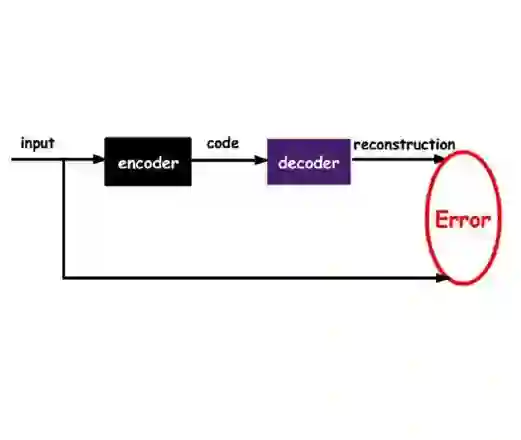
With the advent of the big data era, the data quality problem is becoming more critical. Among many factors, data with missing values is one primary issue, and thus developing effective imputation models is a key topic in the research community. Recently, a major research direction is to employ neural network models such as self-organizing mappings or automatic encoders for filling missing values. However, these classical methods can hardly discover interrelated features and common features simultaneously among data attributes. Especially, it is a very typical problem for classical autoencoders that they often learn invalid constant mappings, which dramatically hurts the filling performance. To solve the above-mentioned problems, we propose a missing-value-filling model based on a feature-fusion-enhanced autoencoder. We first incorporate into an autoencoder a hidden layer that consists of de-tracking neurons and radial basis function neurons, which can enhance the ability of learning interrelated features and common features. Besides, we develop a missing value filling strategy based on dynamic clustering that is incorporated into an iterative optimization process. This design can enhance the multi-dimensional feature fusion ability and thus improves the dynamic collaborative missing-value-filling performance. The effectiveness of the proposed model is validated by extensive experiments compared to a variety of baseline methods on thirteen data sets.
翻译:随着大数据时代的到来,数据质量问题日益突出。在众多影响因素中,数据缺失是一个主要问题,因此开发有效的插补模型已成为研究领域的关键课题。近期,主要研究方向之一是利用神经网络模型(如自组织映射或自动编码器)进行缺失值填充。然而,这些经典方法难以同时发现数据属性间的关联特征和共性特征。特别是,经典自编码器常存在学习无效常量映射的典型问题,这严重影响了填充性能。为解决上述问题,我们提出了一种基于特征融合增强自编码器的缺失值填充模型。首先在自编码器中引入由去跟踪神经元和径向基函数神经元构成的隐藏层,以增强对关联特征和共性特征的学习能力。此外,我们开发了基于动态聚类的缺失值填充策略,并将其融入迭代优化过程。该设计增强了多维特征融合能力,从而提升了动态协同缺失值填充性能。通过在十三个数据集上与多种基线方法的广泛实验对比,验证了所提模型的有效性。




相关内容




 微信扫码咨询专知VIP会员