

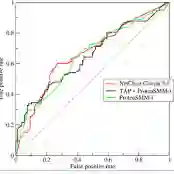
Parkinson's Disease (PD) is associated with gait movement disorders, such as bradykinesia, stiffness, tremors and postural instability, caused by progressive dopamine deficiency. Today, some approaches have implemented learning representations to quantify kinematic patterns during locomotion, supporting clinical procedures such as diagnosis and treatment planning. These approaches assumes a large amount of stratified and labeled data to optimize discriminative representations. Nonetheless these considerations may restrict the approaches to be operable in real scenarios during clinical practice. This work introduces a self-supervised generative representation to learn gait-motion-related patterns, under the pretext of video reconstruction and an anomaly detection framework. This architecture is trained following a one-class weakly supervised learning to avoid inter-class variance and approach the multiple relationships that represent locomotion. The proposed approach was validated with 14 PD patients and 23 control subjects, and trained with the control population only, achieving an AUC of 95%, homocedasticity level of 70% and shapeness level of 70% in the classification task considering its generalization.
翻译:帕金森病(PD)与进行性多巴胺缺乏引起的步态运动障碍相关,表现为运动迟缓、僵硬、震颤及姿势不稳。现有方法通过学习表征量化运动过程中的运动学模式,辅助诊断及治疗计划制定等临床流程。这些方法需依赖大量分层标注数据以优化判别性表征,然而该前提可能限制其在临床实践真实场景中的可操作性。本文提出一种自监督生成式表征方法,以视频重建为代理任务,结合异常检测框架学习步态运动相关模式。该架构采用单类弱监督学习训练策略,规避类间方差并建模表征运动的多元关系。基于14例PD患者与23例健康对照者的验证实验(仅使用对照组数据进行训练),所提方法在分类任务中达到95%的AUC值、70%的方差齐性水平及70%的锐度水平,展现出良好的泛化性能。




相关内容




 微信扫码咨询专知VIP会员