

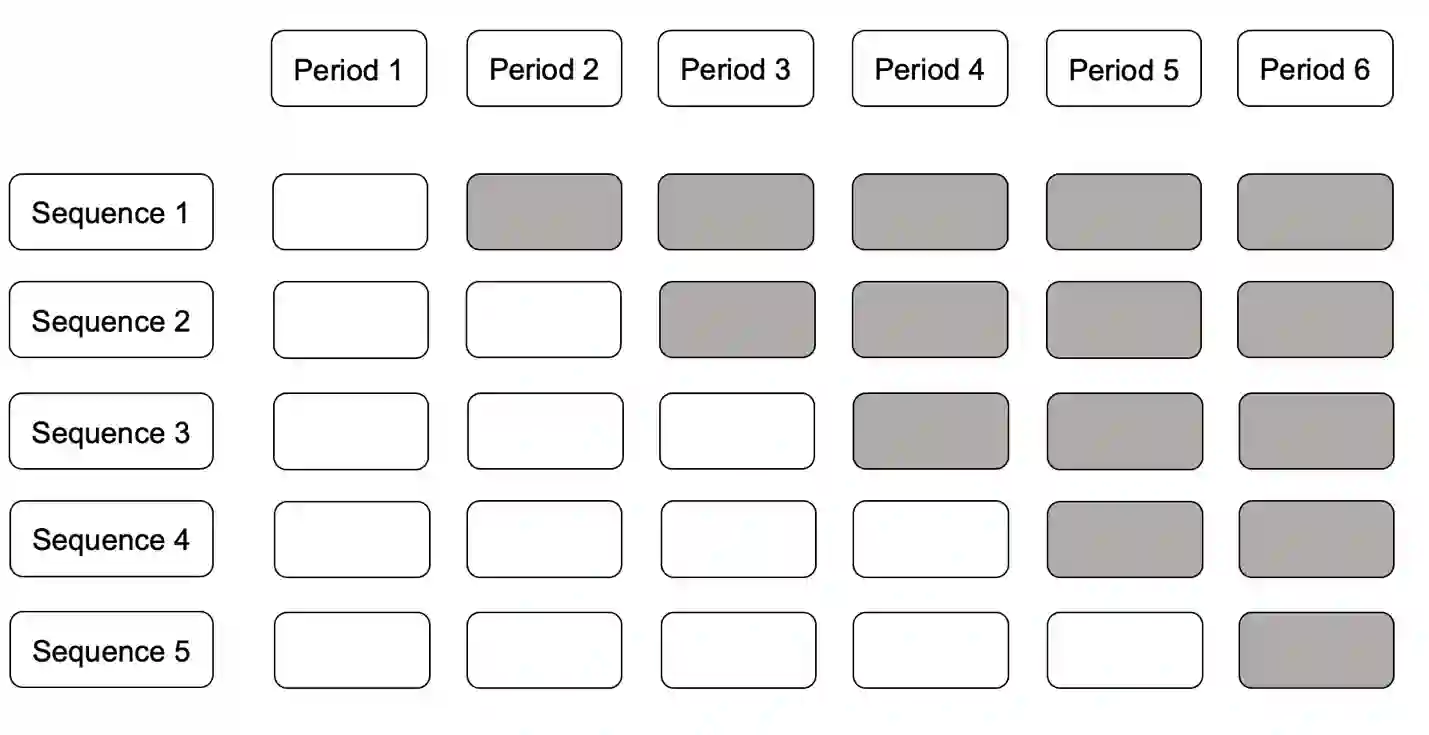
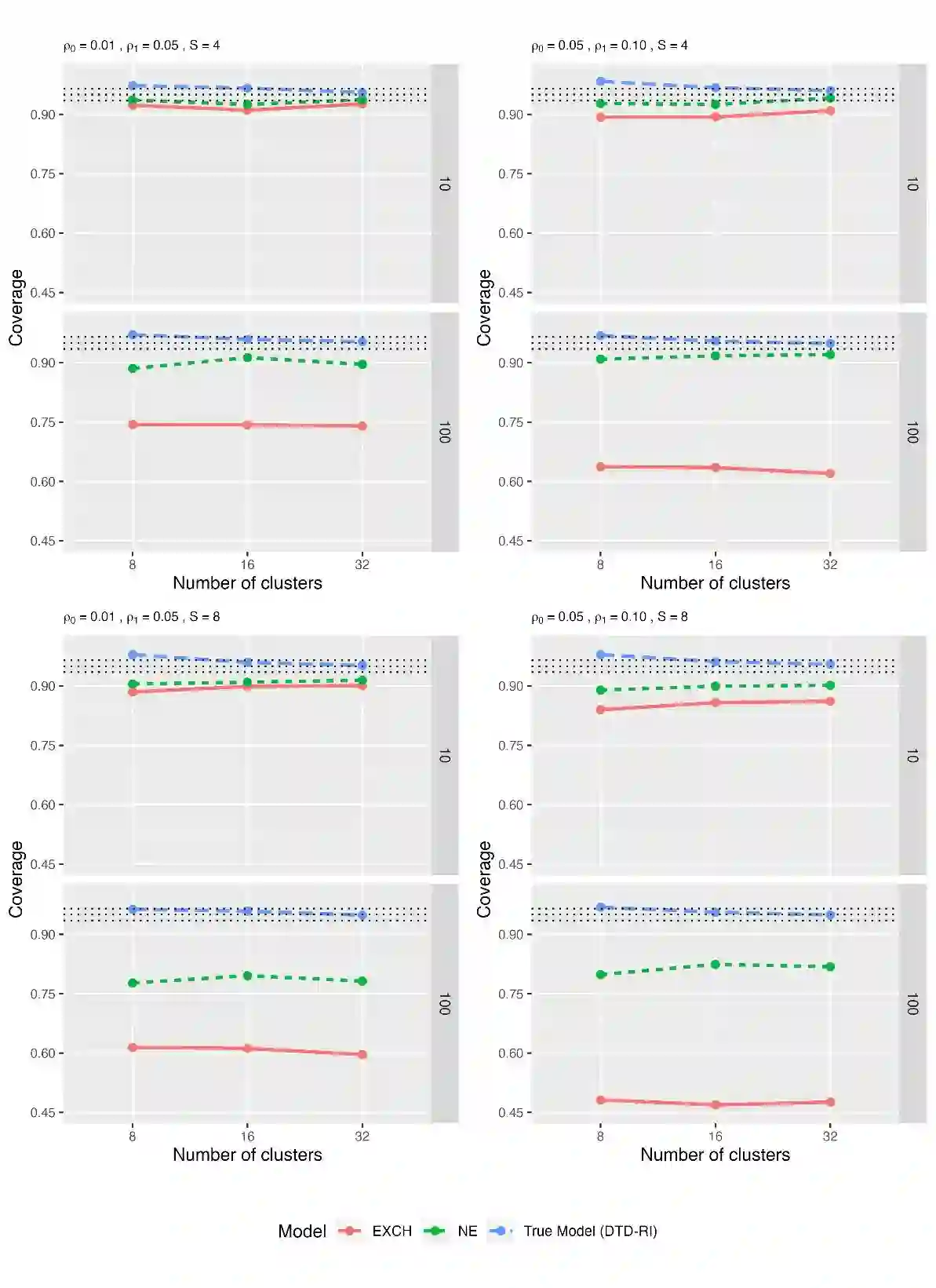
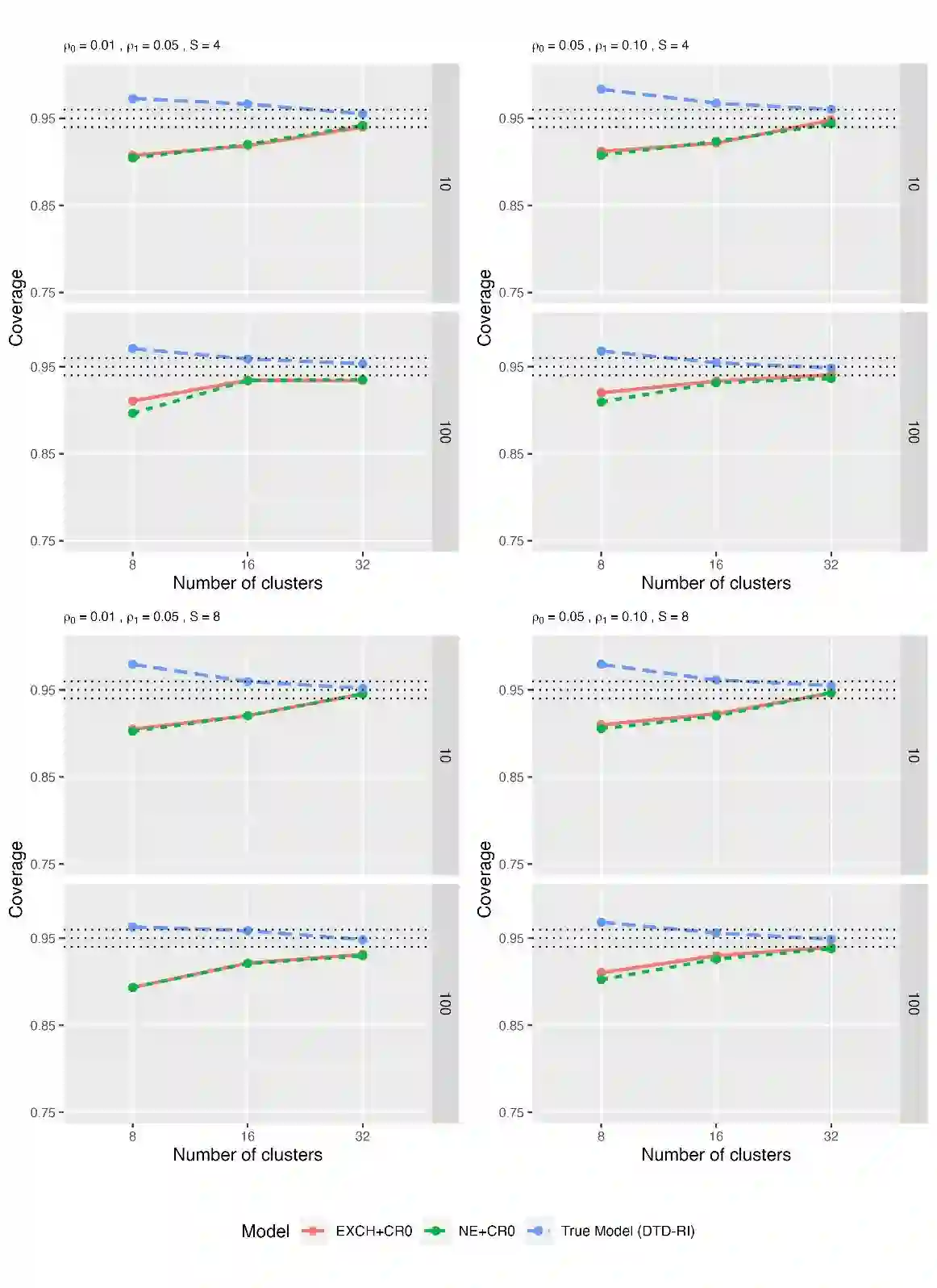
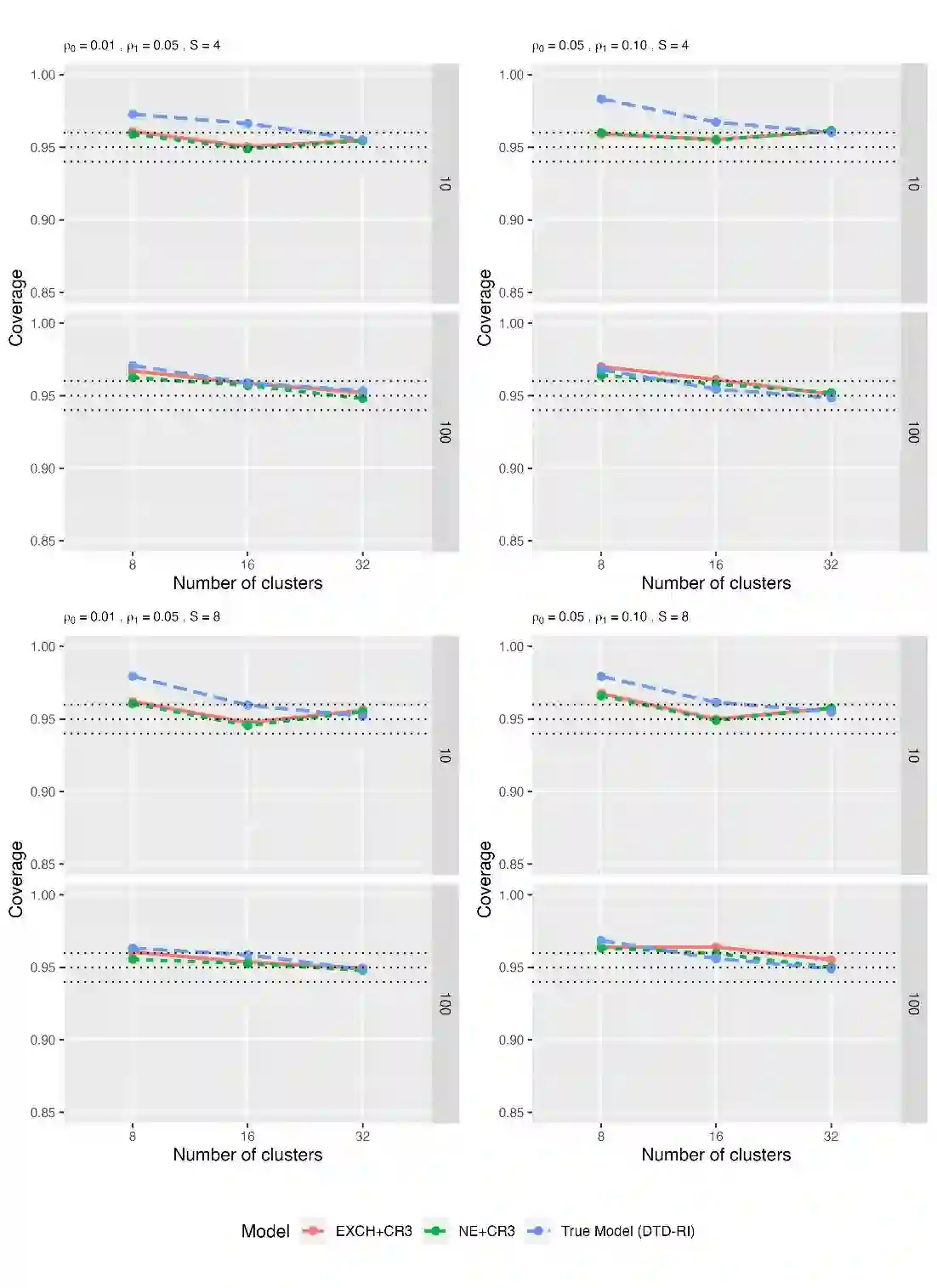
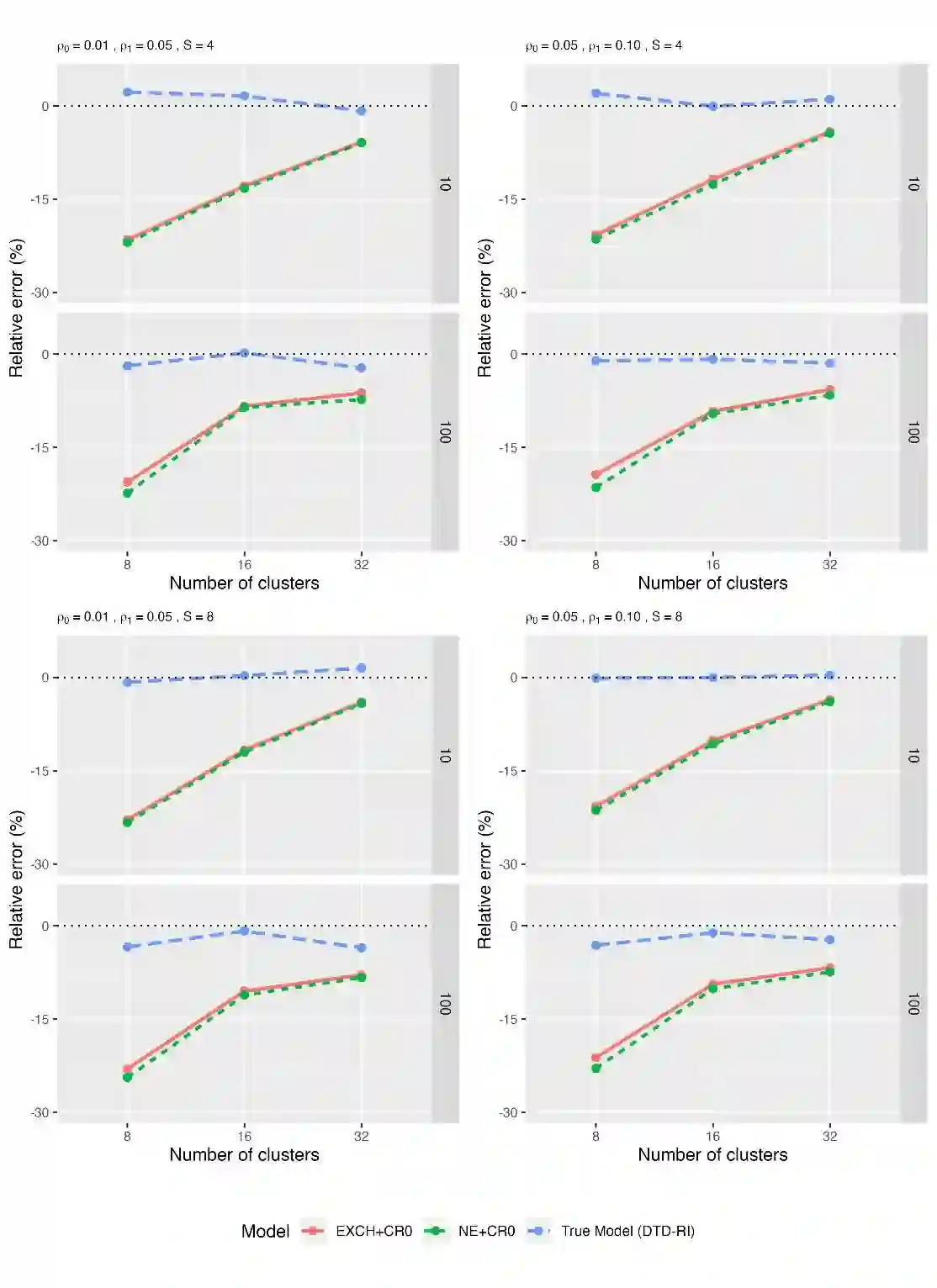
Linear mixed models are commonly used in analyzing stepped-wedge cluster randomized trials (SW-CRTs). A key consideration for analyzing a SW-CRT is accounting for the potentially complex correlation structure, which can be achieved by specifying a random effects structure. Common random effects structures for a SW-CRT include random intercept, random cluster-by-period, and discrete-time decay. Recently, more complex structures, such as the random intervention structure, have been proposed. In practice, specifying appropriate random effects can be challenging. Robust variance estimators (RVE) may be applied to linear mixed models to provide consistent estimators of standard errors of fixed effect parameters in the presence of random-effects misspecification. However, there has been no empirical investigation of RVE for SW-CRT. In this paper, we first review five RVEs (both standard and small-sample bias-corrected RVEs) that are available for linear mixed models. We then describe a comprehensive simulation study to examine the performance of these RVEs for SW-CRTs with a continuous outcome under different data generators. For each data generator, we investigate whether the use of a RVE with either the random intercept model or the random cluster-by-period model is sufficient to provide valid statistical inference for fixed effect parameters, when these working models are subject to misspecification. Our results indicate that the random intercept and random cluster-by-period models with RVEs performed similarly. The CR3 RVE estimator, coupled with the number of clusters minus two degrees of freedom correction, consistently gave the best coverage results, but could be slightly anti-conservative when the number of clusters was below 16. We summarize the implications of our results for linear mixed model analysis of SW-CRTs in practice.
翻译:摘要:线性混合模型常用于分析阶梯楔形集群随机试验(SW-CRT)。分析SW-CRT的关键考量在于处理潜在的复杂相关结构,这可通过指定随机效应结构来实现。SW-CRT常见的随机效应结构包括随机截距、随机集群-周期交互项以及离散时间衰减。近期还提出了更复杂的结构,如随机干预效应结构。实践中,指定适当的随机效应可能具有挑战性。稳健方差估计量(RVE)可应用于线性混合模型,在随机效应错误指定情况下为固定效应参数的标准误提供一致估计。然而,目前尚无针对SW-CRT中RVE的实证研究。本文首先回顾了线性混合模型中可用的五种RVE(包括标准RVE及小样本偏差校正RVE)。随后,我们描述了一项全面的模拟研究,旨在评估这些RVE在不同数据生成机制下、针对连续结局变量的SW-CRT中的表现。对于每种数据生成机制,我们探究了当工作模型(随机截距模型或随机集群-周期交互模型)存在错误指定时,使用RVE是否足以提供固定效应参数的有效统计推断。结果表明,结合RVE的随机截距模型与随机集群-周期交互模型表现相似。采用CR3型RVE估计量并配合"集群数减二"自由度校正时,始终获得最佳的覆盖率结果;但当集群数低于16时,可能略微趋于反保守。我们总结了对实践中SW-CRT线性混合模型分析的意义。




相关内容




 微信扫码咨询专知VIP会员