

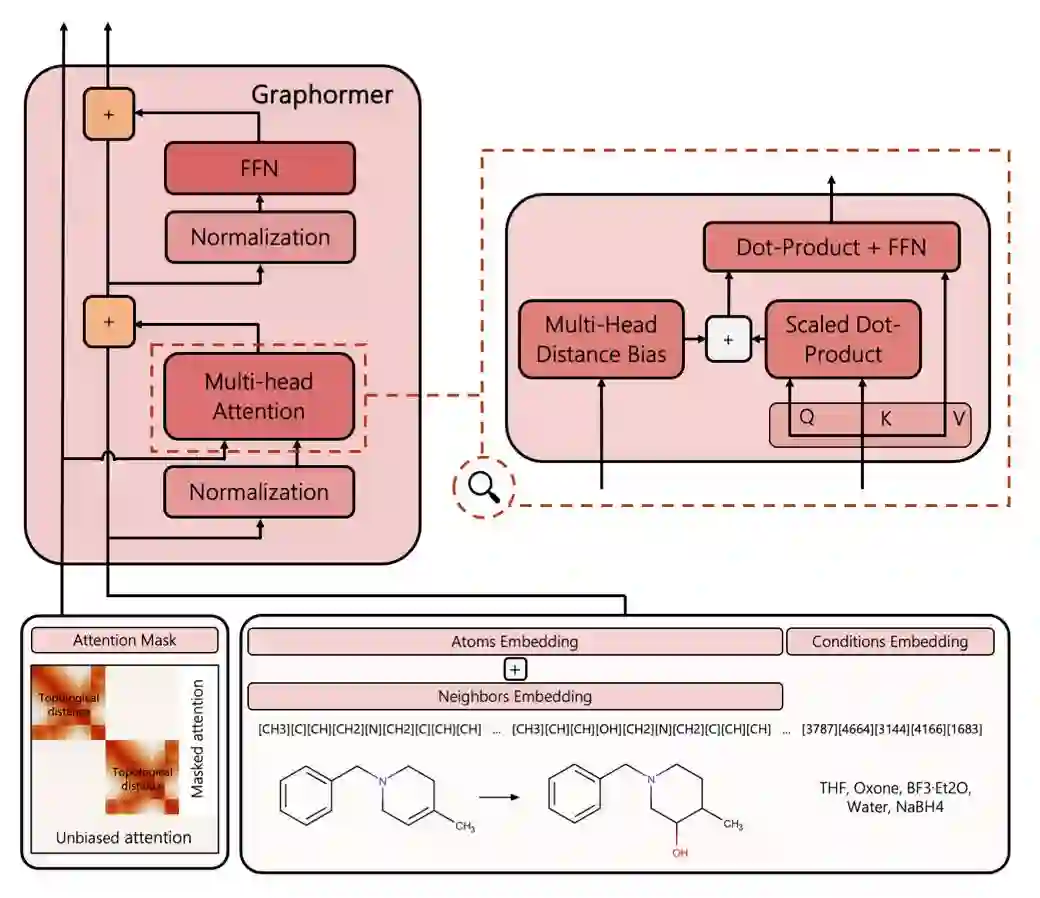
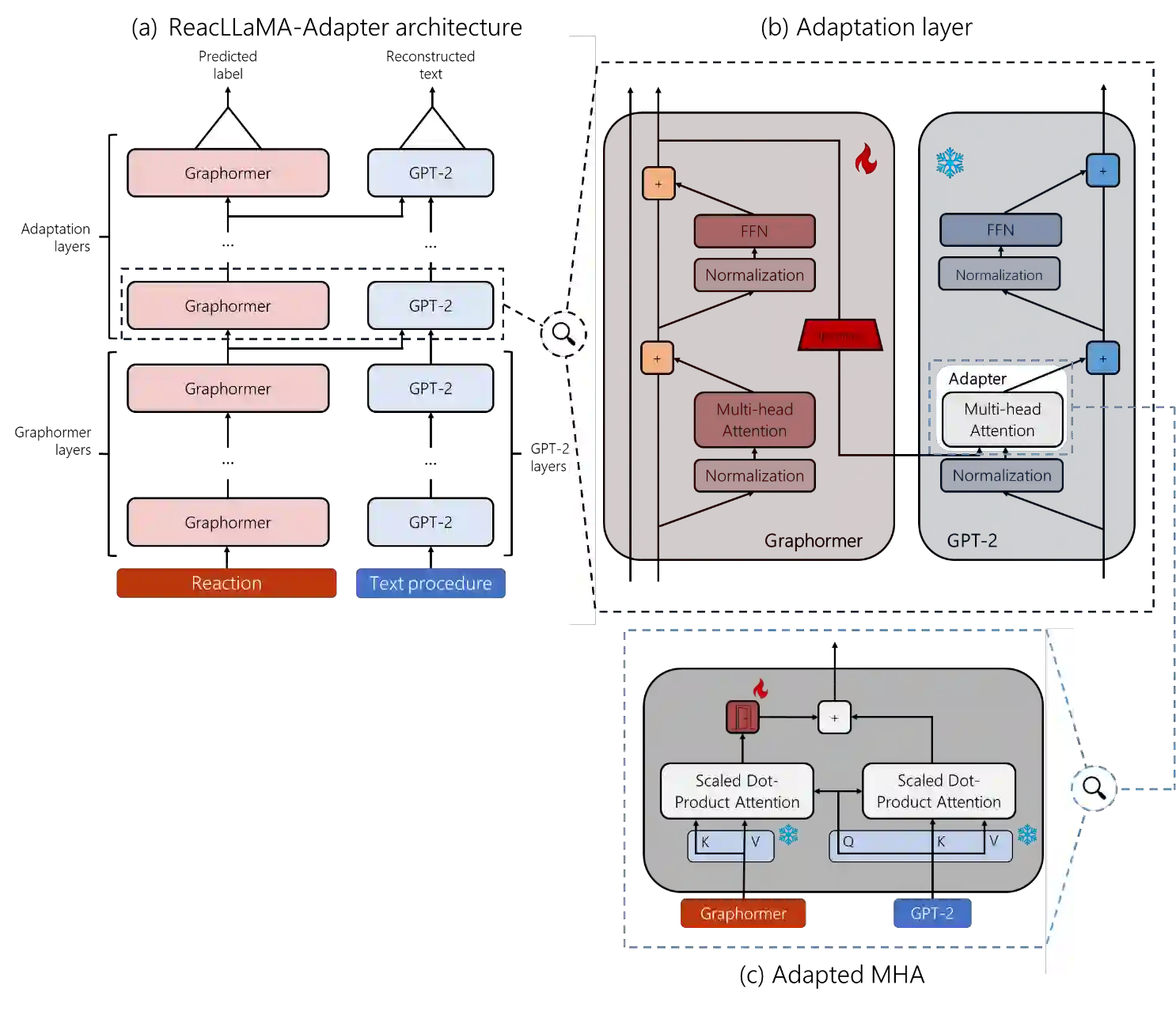
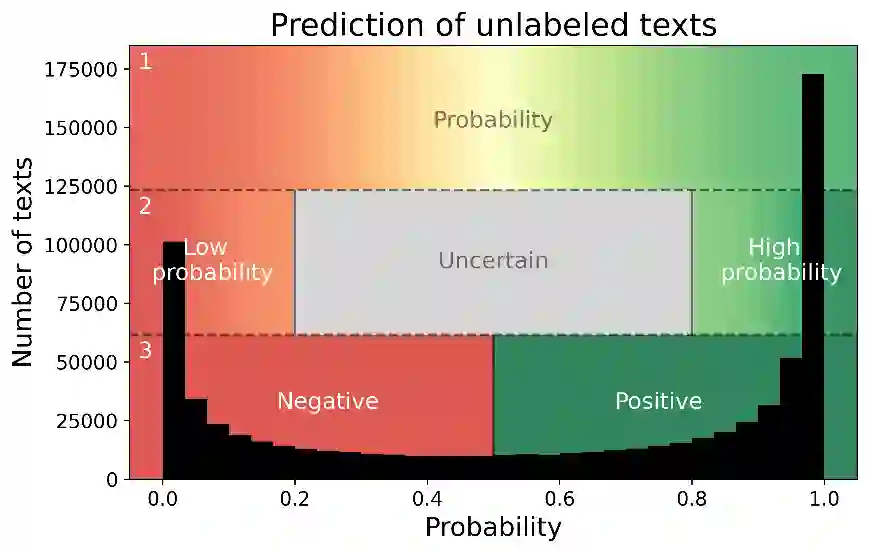
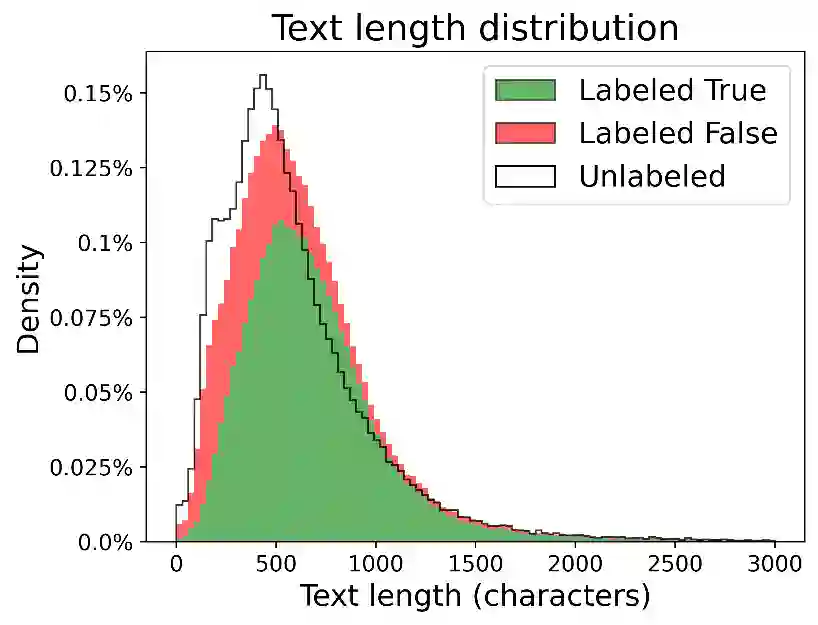
Chemical reactivity models are developed to predict chemical reaction outcomes in the form of classification (success/failure) or regression (product yield) tasks. The vast majority of the reported models are trained solely on chemical information such as reactants, products, reagents, and solvents, but not on the details of a synthetic protocol. Herein incorporation of procedural text with the aim to augment the Graphormer reactivity model and improve its accuracy is presented. Two major approaches are used: training an adapter Graphormer model that is provided with a GPT-2-derived latent representation of the text procedure (ReacLLaMA-Adapter) and labeling an unlabeled part of a dataset with the LLaMA 2 model followed by training the Graphormer on an extended dataset (Zero-Shot Labeling ReacLLaMA). Both methodologies enhance the discernment of unpromising reactions, thereby providing more accurate models with improved specificity.
翻译:[translated abstract in Chinese]
化学反应性模型旨在以分类(成功/失败)或回归(产物产率)任务的形式预测化学反应结果。现有绝大多数模型仅基于反应物、产物、试剂和溶剂等化学信息进行训练,而忽略了合成方案的细节描述。本文提出了将过程文本信息融入Graphormer反应性模型的方法,旨在提升其预测精度。主要采用两种策略:一是训练适配器型Graphormer模型,为其提供经GPT-2编码的文本过程潜在表示(ReacLLaMA-Adapter);二是利用LLaMA 2模型对未标注数据集进行伪标注,进而基于扩展数据集训练Graphormer模型(零样本标注ReacLLaMA)。两种方法均增强了模型对低潜力反应的识别能力,从而构建了特异性更高的精确模型。




相关内容




 微信扫码咨询专知VIP会员