

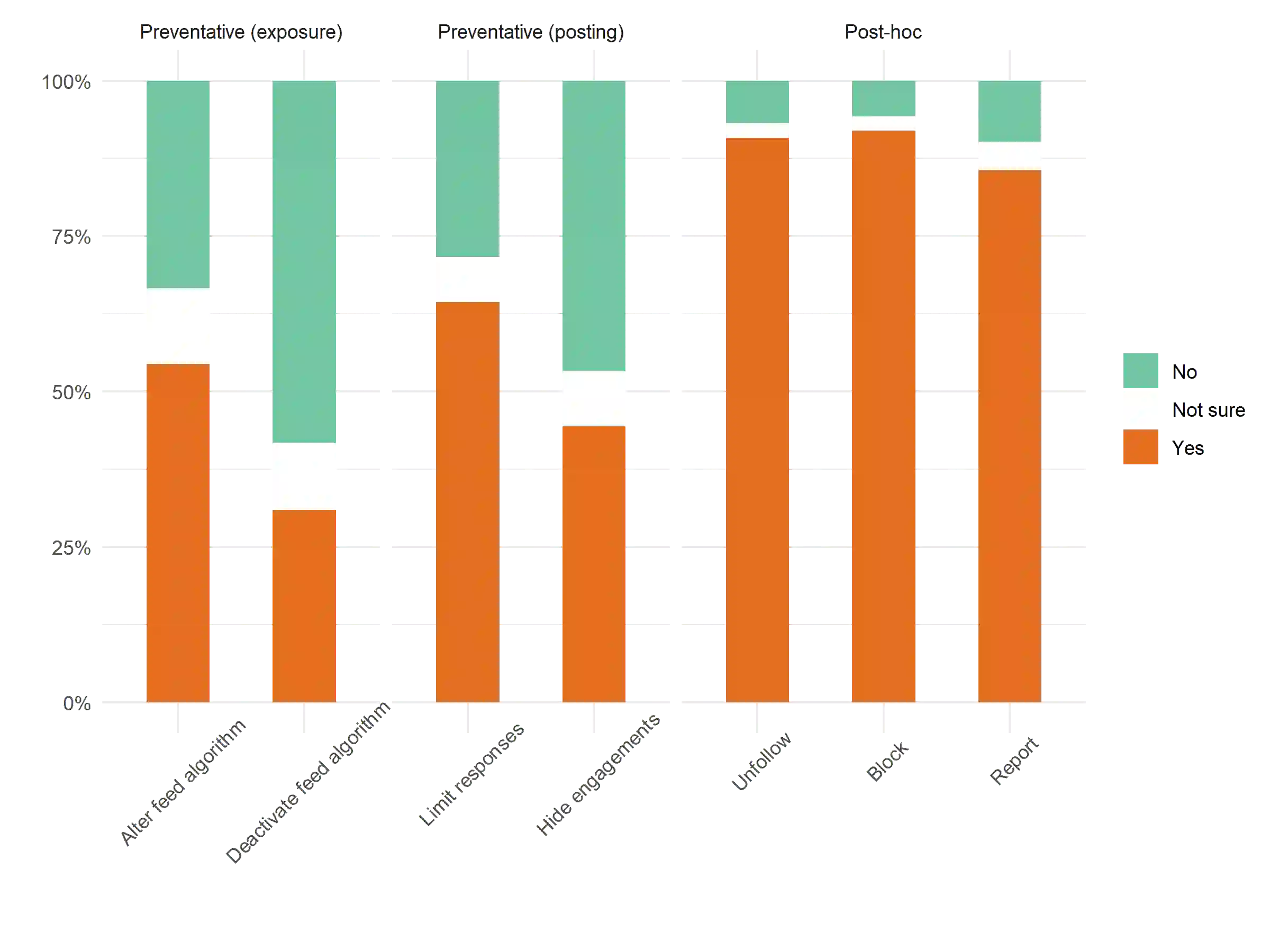
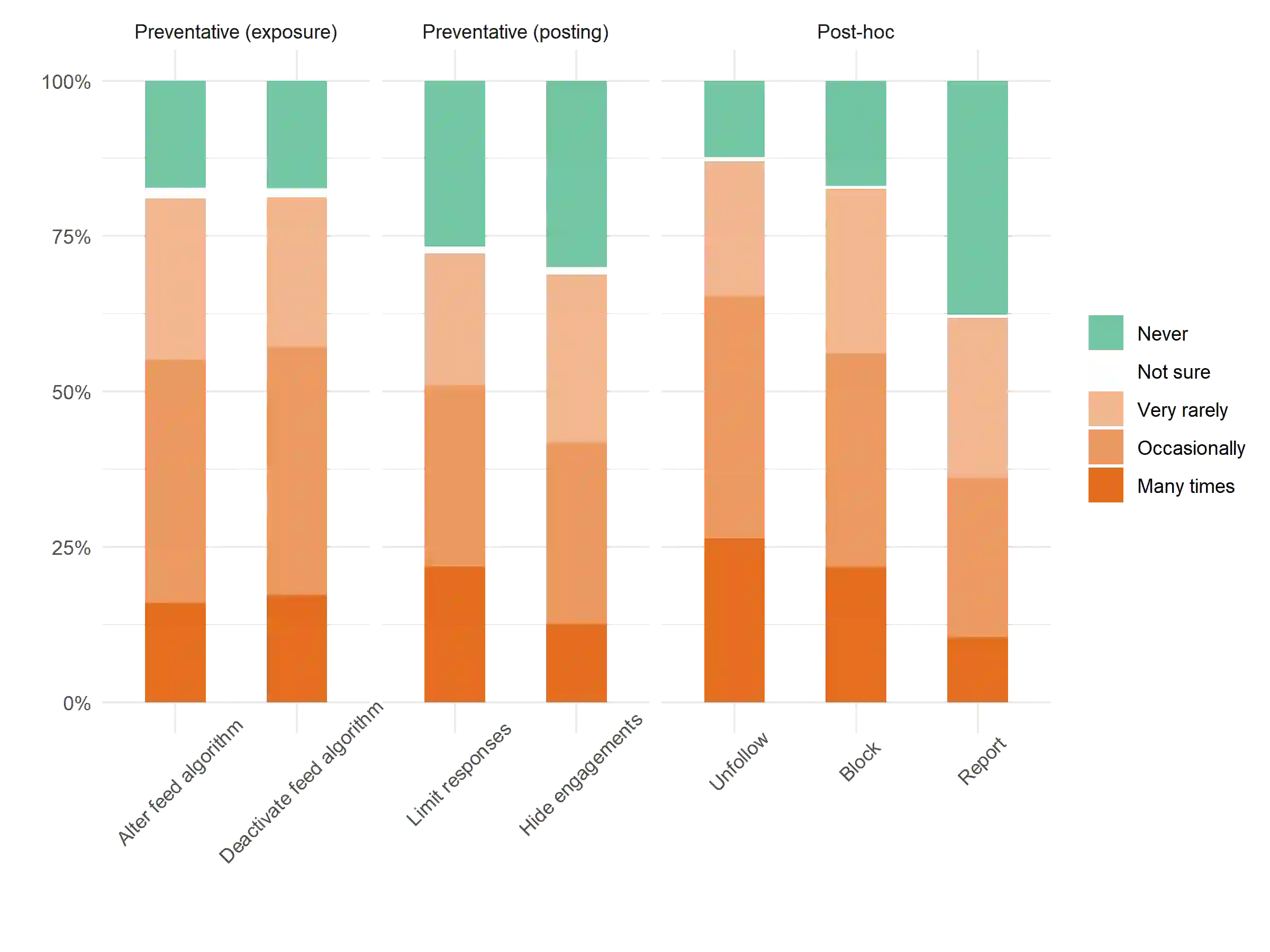
User facing 'platform safety technology' encompasses an array of tools offered by platforms to help people protect themselves from harm, for example allowing people to report content and unfollow or block other users. These tools are an increasingly important part of online safety: in the UK, legislation has made it a requirement for large platforms to offer them. However, little is known about user engagement with such tools. We present findings from a nationally representative survey of UK adults covering their awareness of and experiences with seven common safety technologies. We show that experience of online harms is widespread, with 67% of people having seen what they perceived as harmful content online; 26% of people have also had at least one piece of content removed by content moderation. Use of safety technologies is also high, with more than 80\% of people having used at least one. Awareness of specific tools is varied, with people more likely to be aware of 'post-hoc' safety tools, such as reporting, than preventative measures. However, satisfaction with safety technologies is generally low. People who have previously seen online harms are more likely to use safety tools, implying a 'learning the hard way' route to engagement. Those higher in digital literacy are also more likely to use some of these tools, raising concerns about the accessibility of these technologies to all users. Additionally, women are more likely to engage in particular types of online 'safety work'. We discuss the implications of our results for those seeking a safer online environment.
翻译:用户端的“平台安全技术”涵盖了平台提供的各类工具,旨在帮助人们自我保护免受伤害,例如允许用户举报内容、取消关注或屏蔽其他用户。这些工具在网络安全领域日益重要:在英国,立法已要求大型平台必须提供此类功能。然而,目前关于用户如何参与使用这些工具的研究甚少。我们基于一项英国全国代表性成人调查,呈现了受访者对七种常见安全技术的认知与使用经验。研究表明,网络危害的普遍性极高:67%的人曾目睹自认为有害的在线内容;26%的人至少经历过一次内容被审核系统移除。安全技术的使用率同样较高,超过80%的人至少使用过一种工具。但用户对具体工具的认知程度存在差异,人们更熟悉“事后”安全工具(如举报),而非预防性措施。同时,用户对安全技术的总体满意度较低。曾经历过网络危害的人更倾向于使用安全工具,这暗示了“吃一堑长一智”的参与路径。数字素养较高者也更倾向于使用部分工具,这引发了对技术可及性的担忧。此外,女性更可能参与特定类型的在线“安全行为”。我们讨论了研究结果对构建更安全网络环境的启示。





相关内容



 微信扫码咨询专知VIP会员